Home Blog Page 56

Wyomia Tyus Was First to Win Consecutive 100-Meter Olympic Gold Medals

0
Wyomia Tyus Was First to Win Consecutive 100-Meter Olympic Gold Medals
Wyomia Tyus, center, won the women’s 100-meter sprint at the 1964 Olympic Games in Tokyo, a feat that she repeated at the 1968 Olympic Games in Mexico City. Tyus, from Griffin, Ga. also ran as a Tigerbelle for Tennessee State University. In her international career, she won a total of three Olympic gold medals and one silver, and a gold medal in the Pan American Games. Photo: AP file

By Dr. Fred J. Cromartie, Ed.D. |

Born on August 29, 1945, in Griffin, Ga., Wyomia Tyus was the first person to win consecutive Olympic gold medals in the 100-meter dash in 1964 and 1968. 

Her father, Willie Tyus, encouraged his only daughter to participate and compete in sports. Tyus began her high school sports career playing basketball and enjoyed the competition so much that she decided to try the high jump for the track and field team. Though she struggled at the high jump, she realized she had a natural talent for running.

Edward Stanley Temple, coach of the legendary Tigerbelles at Tennessee State University (TSU), noticed Tyus at the 1961 Georgia High School State Track Championships. Only 15 years old, Tyus impressed Temple with her drive and determination. Temple invited Tyus to his summer track and field camp in Nashville, Tenn. The next year, Temple took Tyus to the 1962 Girls’ Amateur Athletic Union (AAU) championships, where she set a new American record in the 100-yard dash. In 1963 she won her age group in the 100-yard dash for a second time and competed in her first AAU senior meet, finishing second in the 100-yard dash.

Also in 1963, Tyus accepted a scholarship to TSU. Now officially a Tigerbelle, Tyus continued to train and excel under the influence of Coach Temple.

She won a number of AAU titles, including the 100-yard/meter dash three times (1964, 1965, and 1966) and the 220-yard dash twice (1966 and 1967). In 1964 Tyus narrowly earned a spot on the Olympic team, which traveled to Tokyo, Japan, for the games. She captured the gold in the 100-meter dash and anchored the second-place 400-meter relay team at only 19 years of age. After the Olympics Tyus’s mother tried again to discourage the young champion, but Tyus wanted another Olympic gold medal.

During the Mexico City Olympics in 1968, Tyus faced an atmosphere of racial tension. African American athletes threatened to boycott the games. 

Although the boycott never occurred, two sprinters, bronze medalist John Carlos and gold medalist Tommie Smith, were suspended from the U.S. team for raising a Black Power salute during their victory ceremony. For Tyus the 1968 games were personally and professionally important. She won gold in the 100-meter dash for a second consecutive time, something no one else did until Carl Lewis competed 20 years later, and she also proved herself the fastest woman in the world for a second time. In response to the suspension of her fellow athletes, Tyus’s 400-meter relay team, which won the gold medal and set a new record, dedicated their medal to Carlos and Smith.

After the 1968 Olympics Tyus retired to Los Angeles, married Duane Tillman, and had a daughter, Simone, and a son, Tyus. In 1973 she was invited to compete in the 60-yard dash in the new Professional International Track Association competitions. Her first year back she won eight of 18 events, but the following year she won every event she entered, a total of 22 races. Tyus went on to coach at Beverly Hills High School and was a founding member of the Women’s Sports Foundation, for which she also served as an advisory board member. One of the most popular runners in history, Tyus capitalized on her celebrity by serving as a goodwill ambassador to Africa. She has been inducted into the Georgia Sports Hall of Fame (1976), the National Track and Field Hall of Fame (1980), and the International Women’s Sports Hall of Fame (1981).

Dr. Cromartie is the Director of Doctoral Studies at the United States Sports Academy.
Responses to Athlete Survey Paint Worrying Picture for Sport

0
Responses to Athlete Survey Paint Worrying Picture for Sport
Photo: fitnesshq.com

By Liam Morgan |

Almost a year ago to the day, a new advocacy group for athletes burst onto the scene with promises to give competitors across sport an enhanced voice and to repair the “disconnect” between them and governing bodies.

Since then, Global Athlete has appeared publicly only to criticize every move made by pretty much every organization in the Olympic Movement and beyond.

A statement from the group would appear almost immediately after the likes of the World Anti-Doping Agency (WADA) and the International Olympic Committee (IOC) made a decision it did not agree with.

In the background, director general Rob Koehler and British Olympic cyclist Callum Skinner had been working on what they called a “listening exercise”, essentially a survey of athletes on a range of topics which affect them most.

The results of the survey, published this week, are not surprising. 

Athletes want more money, representation and a greater say in the decision-making process in sport.

But some of the finer details, sprinkled in the responses to specific questions raised by Global Athlete, paint a worrying picture for competitors from grassroots level to the Olympic Games.

Fifty-eight percent of the 498 athletes who replied to the survey, spanning 48 countries and 56 sports, said they did not feel financially stable.

Many of the reasons why, expressed by athletes in their unedited responses, are telling.

One said sport leaves athletes with a “net loss” as a result of having no assistance with travel and accommodation, as well as team, competition and entrance fees.

Another highlighted how their paycheck “depends on how I perform at a major Championships once every two to four years”. 

“If I do not perform well in one moment I cannot financially support myself,” the response read.

Others had even more fundamental issues, with one claiming they had to be supported by their parents as their sport “provides no money for me”.

One simply put “administrators get money but athletes don’t”, a point which is difficult to argue with. 

How can it be fair that officials, collect per diems for doing very little while a small number of athletes have to crowdfund to achieve their Olympic dream?

Granted, there are some representatives who do earn their keep, but the disparity between the two is stark nonetheless.

The responses tie into a wider belief from some athletes that they should be allowed to control their marketing rights at the Olympic and Paralympic Games to increase the amount of money they can earn from their respective sports.

A decision in Germany last year, which significantly scaled back the powers of the IOC’s much-lamented Rule 40, has opened a can of proverbial worms and led to athletes across numerous countries calling for their own National Olympic Committees to follow suit.

According to the survey, a majority of athletes surveyed believe they should have the “right to build and sell their own brands” at sports events at all levels, including the Olympics and Paralympics.

Four out of the five respondents either agreed or strongly agreed that they should be allowed to control their marketing rights at the Games, a luxury which they are not currently afforded under Rule 40.

The IOC vigorously defends Rule 40, claiming it is designed to protect its TOP marketing program which indirectly benefits athletes through revenue redistribution.

But it was not surprising to see several responses from athletes which called for Rule 40 to be abolished altogether. 

Others believe in its principal but feel it needs a radical overhaul, while there are athletes who take the IOC’s stance on an issue that shows no sign of going away.

A more extreme viewpoint was that athletes should be paid to attend events such as the Olympics and Paralympics. 

A total of 57 percent and 51 percent of respondents said the IOC and the IPC, respectively, should offer remuneration to competitors.

Just over a quarter of respondents said athletes should not be paid, however, demonstrating how such an opinion is not shared by everyone.

When it comes to speaking out – which remains culturally unacceptable in dozens of countries, including those who regularly enjoy Olympic and Paralympic success – 16 per cent strongly agreed that they had the freedom to express their opinion without the fear of retribution. 

The figure was the same for those who strongly disagreed with the statement.

Athlete representation was another topic explored in the survey, but the responses were largely as expected.

Given the calls for a greater say in the backroom and boardroom decisions which have a direct impact on them, it was somewhat surprising to see 54 per cent of athletes say they already have a “moderate” level of representation.

But 82 percent said they should have a “high” level of representation, while 87 percent answered yes when asked if they believe athletes should have at least 50 percent of the voting within sporting organisations when rules that affect them are being developed.

The trouble with the subject is finding a unified, united voice among athletes is neither easy nor essential – divergent views are the pillar of democracy after all – and there has been little progress since the volume of calls from competitors for increased representation began to grow.

A survey was not required to find out there is a “need for collective independent athlete representation”, which is what groups including Global Athlete have lobbied for without any clear idea of how that should be achieved.

A process to give athletes exactly that within WADA has hit several stumbling blocks, providing a perfect example of how getting enhanced representation is far easier said than done.

More generally, a worrying seven percent of respondents – around 34 athletes – said they had suffered some form of sexual abuse, while 47 percent had been subjected to verbal abuse during their careers.

Unfair team selection and the fear of retribution for speaking out against the establishments were highlighted among the other main concerns, along with classification for Para athletes.

What the survey, unquestionably the most important piece of work done by Global Athlete in its short history so far, showed is that plenty of athletes have legitimate concerns, ranging from their income to a lack of proper help when it comes to mental health, post-career transitions and ongoing medical care.

Of course, the survey was not all negative, but it is up to sport to ensure they are listened to, one way or the other.

Republished with permission from insidethegames.biz.

Armour: Coronavirus Prompts Russia to Withdraw from Gymnastics Events in Milwaukee, Tokyo

0
Armour: Coronavirus Prompts Russia to Withdraw from Gymnastics Events in Milwaukee, Tokyo
The gymnastics rings hang at the 2016 Summer Olympics. Photo: Julio Cortez/AP Photo

By Nancy Armour |

Russia is not sending gymnasts to next weekend’s World Cup meet in Milwaukee because of coronavirus fears.

Russia is also opting out of a World Cup event April 4-5 in Tokyo, all but assuring its men’s and women’s teams won’t be able to claim one of the extra spots available for the Summer Olympics.

“Imagine, if someone will sneeze on the plane, we will be left [in quarantine] for two weeks,” Andrei Rodionenko, head coach of the Russian team, said in comments translated by Gymnovosti.com, which follows Russian gymnastics.  

“Russia is doing the right thing, protecting its citizens,” Rodionenko added, “and we must protect our gymnasts.”

The lengthy trip was a factor in Russia’s decision to withdraw from the American Cup, said Valentina Rodionenko, a senior national team coach. Reigning world champion Nikita Nagornyy and Lilia Akhaimova would have had to make two stops to get to Milwaukee, including one in Amsterdam, one of the world’s largest airports.

The American Cup is March 7 at the Fiserv Forum in Milwaukee.

“If even one person will be suspected [of carrying coronavirus], all the passengers will be quarantined, and that’s two weeks minimum,” Valentina Rodionenko said, according to Gymnovosti. “Imagine what it means for a gymnast to be quarantined for two weeks, while the European Championships are around the corner.”

The American Cup is the first of four all-around World Cups, while Tokyo is the last, and the top three countries in the standings at the end of the series get an additional spot at the Olympics. But even if Russian gymnasts win the remaining two World Cups – in Birmingham, England, and Stuttgart, Germany – the chances of it cracking the top three are very slim.

The International Gymnastics Federation did not return an email Friday from USA TODAY Sports asking about the impact on Olympic qualifying. It has said previously that it is consulting with the International Olympic Committee but did not give specifics.  

The Russians could still pick up the extra spots that go to the winners of the European championships, which are April 30-May 3 in Paris for the women and May 27-31 in Baku, Azerbaijan, for the men. And the Russian men are still in the running for a spot that’s available through the individual event World Cups.  

This article was republished with permission from the original author and 2015 Ronald Reagan Media Award recipient, Nancy Armour, and the original publisher, USA Today. Follow columnist Nancy Armour on Twitter @nrarmour.

Japan Closes Schools Over Coronavirus as Tokyo 2020 Concerns Continue

0
Japan Closes Schools Over Coronavirus as Tokyo 2020 Concerns Continue
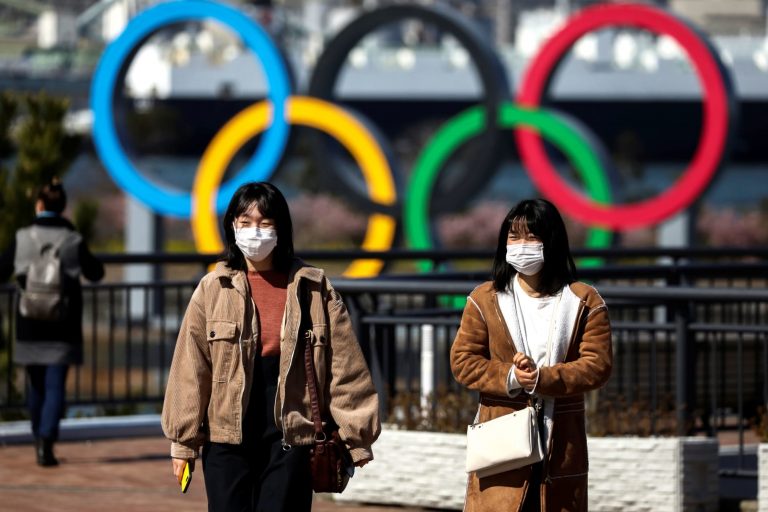
People wearing protective face masks, following an outbreak of the coronavirus, are seen in front of the Giant Olympic rings at the waterfront area at Odaiba Marine Park in Tokyo, Japan, February 27, 2020. Photo: Athit Perawongmetha | Reuters

By Daniel Etchells |

Schools across Japan will be closed starting next week to prevent the spread of coronavirus, it has been announced by the country’s Prime Minister Shinzō Abe.

Abe has asked all elementary, middle and high schools to remain closed from Monday (March 2) until spring holidays begin in late March.

It is thought it will affect 13 million students.

The measure comes amid growing concern about the increase in the number of untraceable cases in northern Japan and elsewhere.

The nation now has more than 900 cases, including at least 700 from a cruise ship which has been quarantined in Yokohama since February 3.

Abe said the first weeks of March would be an “extremely critical period” for preventing transmission of coronavirus, given the official title of COVID-19 by the World Health Organization, whose director general Tedros Adhanom Ghebreyesus has said the global outbreak had now reached a “decisive point” and had “pandemic potential”.

“The Government attaches the top priority to the health and safety of children,” Abe said.

The decision follows that of China to not reopen schools on the mainland after the Spring Festival holiday, instead asking close to 200 million students to follow classes online from their homes.

Hong Kong is also closing its schools until April.

Globally, there are now more than 83,000 confirmed coronavirus cases and the number of new cases outside of China is eclipsing new cases in the country where the outbreak originated.

The virus has had a significant impact on qualifiers for this year’s Olympics in Tokyo and sparked suggestions the Games may be postponed or cancelled – claims which organisers and the International Olympic Committee (IOC) have consistently played down.

Richard Pound, the IOC’s most senior member, told the Associated Press this week they did not have to make a decision until late May.

Pound said Tokyo 2020 could be cancelled if the virus is not under control by that time.

In response to Pound’s comments, Olympics Minister Seiko Hashimoto dismissed the concerns and reiterated the Games, scheduled to begin with the Opening Ceremony on July 24, would go ahead as planned.

Republished with permission from insidethegames.biz.

Olympic Champion Sun Yang Banned for Eight Years

0
Olympic Champion Sun Yang Banned for Eight Years
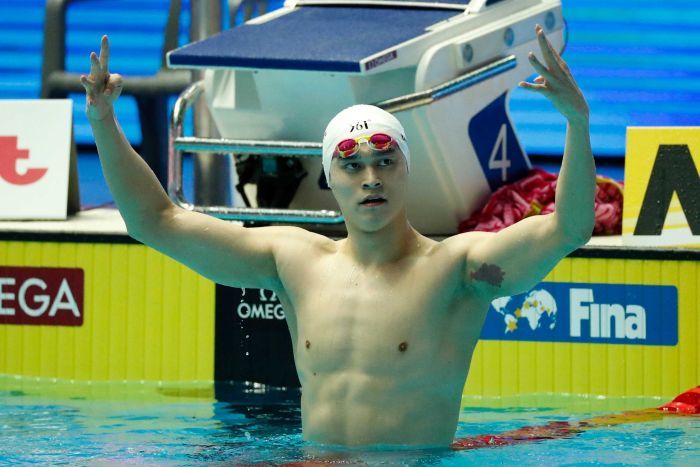
Photo: Reuters / Kim Hong-Ji

By Liam Morgan |

Chinese Olympic swimming champion Sun Yang has been banned for eight years after one of his entourage destroyed his blood vial with a hammer during an attempted drugs test in September 2018, the Court of Arbitration for Sport (CAS) announced today.

The CAS panel upheld an appeal by the World Anti-Doping Agency (WADA) against a decision from the International Swimming Federation (FINA) to let Sun off with a warning after finding him guilty of tampering with the doping control process.

Sun, a three-times Olympic champion who served a three-month drugs ban in 2014, received the maximum eight-year sanction for a second doping offence and will not be able to return until February 2028.

The decision, which comes after a 10-hour public hearing in November, effectively ends Sun’s career and rules him out of competing at this year’s Olympic Games in Tokyo.

Sun is set to appeal the verdict to the Swiss Federal Tribunal.

The CAS ruled the 28-year-old had “failed to establish that he had a compelling justification to destroy his sample collection containers”.

His vial was smashed with a hammer on the instruction of Sun’s mother.

“As the panel noted, it is one thing, having provided a blood sample, to question the accreditation of the testing personnel while keeping the intact samples in the possession of the testing authorities; it is quite another thing, after lengthy exchanges and warnings as to the consequences, to act in such a way that results in destroying the sample containers, thereby eliminating any chance of testing the sample at a later stage,” the ruling read.

The panel agreed with WADA that the accreditation of the doping control officer at the centre of the row which led to the vial being smashed were in line with international standards.

“WADA decided to appeal the original FINA ruling having carefully reviewed it and having concluded that there were a number of points that seemed to be incorrect under the code,” said WADA director general Olivier Niggli.

“Today’s CAS ruling confirms those concerns and is a significant result.”

In its ruling, FINA’s independent doping panel declared the attempted sample collection “invalid and void” amid concerns over the accreditation of the testers from Swedish firm IDTM.

The panel also claimed Sun had “compelling justification” not to deal with the chaperone, who allegedly took photos and video of the swimmer on his phone.

During the hearing, marred by translation issues, the 11-times world champion protested his innocence and claimed the officials’ credentials did not adhere to anti-doping regulations.

Sun, the subject of protests from rival swimmers after he won two gold medals at last year’s FINA World Championships, appeared evasive under questioning and irked the panel’s President Franco Frattini by attempting to bring a member of the gallery into proceedings to translate his closing statement.

The controversial swimmer, one of the biggest names in the sport, had requested the hearing be held in public.

The CAS also confirmed Sun would keep the two titles he claimed at the World Championships in Gwangju.

Republished with permission from insidethegames.biz.

Five-Time Grand Slam Champ Sharapova Retires from Tennis

0
Five-Time Grand Slam Champ Sharapova Retires from Tennis
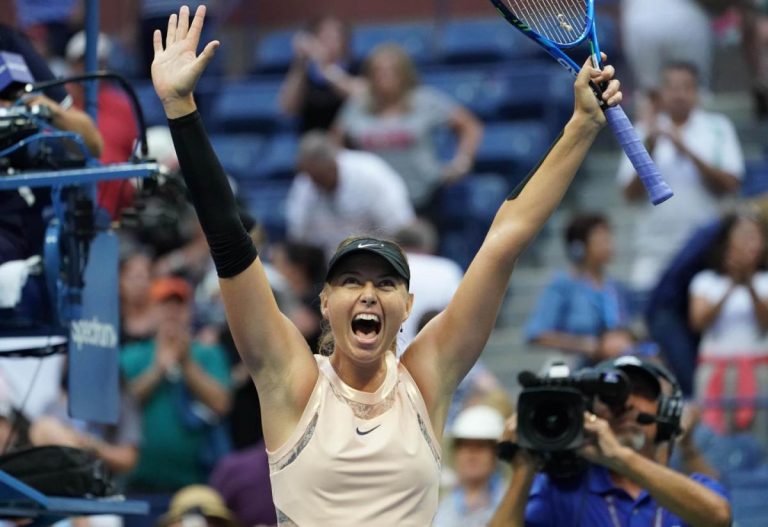
Photo: ROBERT DEUTSCH/USA TODAY SPORTS

By Daniel Etchells |

Five-time Grand Slam champion Maria Sharapova has announced her retirement from tennis at the age of 32.

In an article written for Vogue and Vanity Fair, the Russian said her body “had become a distraction” because of long-standing shoulder problems.

Sharapova won her first Grand Slam title at Wimbledon in 2004, aged 17, and completed the career Grand Slam by winning the French Open in 2012.

She struggled to regain her best form following her 15-month suspension after a positive test for banned heart drug meldonium at the 2016 Australian Open. 

Sharapova required shoulder surgery last year and has dropped to 373rd in the world, her lowest ranking since August 2002, and has lost in the first round of the three most recent Grand Slam events.

“I’m new to this, so please forgive me,” she said in announcing her retirement.

“Tennis – I’m saying goodbye.”

She added: “Looking back now, I realise that tennis has been my mountain. 

“My path has been filled with valleys and detours, but the views from its peak were incredible.

“After 28 years and five Grand Slam titles, though, I’m ready to scale another mountain – to compete on a different type of terrain.

“That relentless chase for victories, though? 

“That won’t ever diminish. 

“No matter what lies ahead, I will apply the same focus, the same work ethic, and all of the lessons I’ve learned along the way.”

Sharapova said one of the “final signals” came at last year’s US Open, where she lost 6-1, 6-1 to American great Serena Williams in the first round.

“Behind closed doors, 30 minutes before taking the court, I had a procedure to numb my shoulder to get through the match,” she said.

“Shoulder injuries are nothing new for me – over time my tendons have frayed like a string. 

“I’ve had multiple surgeries – once in 2008, another procedure last year – and spent countless months in physical therapy.

“Just stepping on to the court that day felt like a final victory, when of course it should have been merely the first step toward victory.

“I share this not to garner pity, but to paint my new reality: my body had become a distraction.”

Sharapova did not play again in 2019 after that loss to Williams and has played just twice this year, losing to the United States’ Jennifer Brady at the Brisbane International and then to Croatia’s Donna Vekić in the first round of the Australian Open.

They proved to be her last two competitive outings.

Sharapova shot to fame in 2004, when, as a 17-year-old, she beat Williams in the Wimbledon final to become the third-youngest woman to win Wimbledon behind England’s Lottie Dod and Switzerland’s Martina Hingis.

She became world number one in 2005, at the age of 18, and won the US Open the following year.

But in 2007, Sharapova started her long battle with shoulder trouble.

She won the 2008 Australian Open before a second shoulder injury kept her off the Women’s Tennis Association tour for the second half of the season, missing the US Open and the 2008 Olympic Games in Beijing.

In 2012, Sharapova claimed the French Open title to become the 10th woman to complete a career Grand Slam. 

She added Olympic silver to her lengthy list of accolades at London 2012, losing to Williams in the final.

Another shoulder injury saw her miss the second half of the 2013 season, although she returned the following year to win her second French Open crown.

In March 2016, Sharapova revealed she had failed a drug test at the Australian Open two months earlier.

After serving her 15-month ban, which was reduced from two years after an appeal to the Court of Arbitration for Sport, she returned to tennis in April 2017.

Sharapova won what proved to be her last career singles title at the Tianjin Open in China in October that year.

Republished with permission from insidethegames.biz.

Black Sports History in Alabama: William Clark

1
Black Sports History in Alabama: William Clark
This article highlights William Clark, a former athlete and coach at Mobile County Training School (MTCS). Clark attended MCTS from 1953-1957. He received a football scholarship to play quarterback at Dillard University and graduated in 1961. He later served on the Board of Trustees of the United States Sports Academy.

By Dr. Brandon Spradley |

This article is part of a larger project by the United States Sports Academy and the Mobile County Training School Alumni Association that captures the historical significance of the memories and feelings of African Americans who played sports and lived in the Mobile area during the time of segregation. You can take a look at the project here.

This article highlights William Clark, a former athlete and coach at Mobile County Training School (MTCS). Clark attended MCTS from 1953-1957. He received a football scholarship to play quarterback at Dillard University and graduated in 1961.

Clark held a variety of positions throughout his career. His first job was teaching and working with his former coach Charles Rhodes at MCTS. He was the assistant coach on the 1966/67 state championship football team and served as the head basketball coach for his alma mater.

He played an integral part in impacting the city of Mobile (Alabama) and its surrounding African American communities in areas such as education, athletics, and politics. Clark served on the Board of Trustees at the United States Sports Academy. In addition, he served 26 years in the Alabama House of Representatives, District 98.

Here are two videos that highlight William Clark’s legacy:

Dr. Brandon Spradley is the chair of sports management at the United States Sports Academy. He recently discussed issues related to the rise of eSports in the sports profession.
World Short Track Speed Skating Championships Canceled Due to Coronavirus

0
World Short Track Speed Skating Championships Canceled Due to Coronavirus
Photo: AP

By Dan Palmer |

The World Short Track Speed Skating Championships in Seoul have been canceled due to the coronavirus outbreak.

A statement from the International Skating Union (ISU) also admitted that postponing the event or holding it elsewhere would be “difficult to achieve”.

It comes after authorities in the South Korean capital ordered the closure of the Mokdong Ice Rink and the cancellation of all competitions.

Action was due to take place between March 13 and 15.

“The ISU is closely following the coronavirus developments,” the governing body said. 

“The ISU stands by all those who have been affected and threatened by this situation and wishes success to all those fighting to overcome the crisis, with the expectation and hope that the situation will be restored to normal as quickly as possible. 

“The ISU expresses condolences to the families who have lost their loved ones due to this contagious disease.

“In view of the planned ISU World Short Track Speed Skating Championships in Seoul, South Korea, on March 13 to 15, 2020, the ISU was especially monitoring the situation in the Seoul area. 

“The ISU was informed through the Korea Skating Union that the competent authorities of the city of Seoul ordered the closing of the Mokdong Ice Rink and the cancellation of all planned competitions.

“The ISU therefore is unable to hold the ISU World Short Track Speed Skating Championships 2020 at the above-mentioned planned date.

“The ISU thanks the Korea Skating Union for their efforts to prepare for this event and for their cooperation during the critical monitoring phase leading up to this decision.”

Two major sporting events in South Korea have now been disrupted in the space of two days due to coronavirus, after the World Team Table Tennis Championships in Busan were postponed yesterday.

Rearranging the short track may not be possible due to a number of issues, the ISU said.

“Taking into account the uncertain worldwide development of the coronavirus, the limited and uncertain available time slots during the coming weeks and the logistical challenges of potential organisers and participating teams, a postponement and/or relocation of the Championships would be difficult to achieve,” the governing body added. 

“Nevertheless, a postponement and/or relocation of the Championships might be considered if the circumstances would allow so in due time. 

“Before taking a final decision, the ISU will remain in close contact with the Korea Skating Union and ISU members.

“The ISU regrets that the most important annual short track event cannot be staged as planned but believes that under the current circumstances ISU members, skaters and fans will understand this decision.”

South Korea has reported more than 1,200 cases of coronavirus, which has forced the cancellation or postponement of numerous sporting events.

It is the worst-affected country other than China, where the outbreak originated.

More than 2,700 deaths have been reported, and more than 81,000 people have now been infected across the world in all.

The huge majority of cases are within China itself.

Republished with permission from insidethegames.biz.

Willie O’Ree and Willy T. Ribbs, a Pair of ‘Firsts’ for the NHL and NASCAR

0
Willie O’Ree and Willy T. Ribbs, a Pair of ‘Firsts’ for the NHL and NASCAR
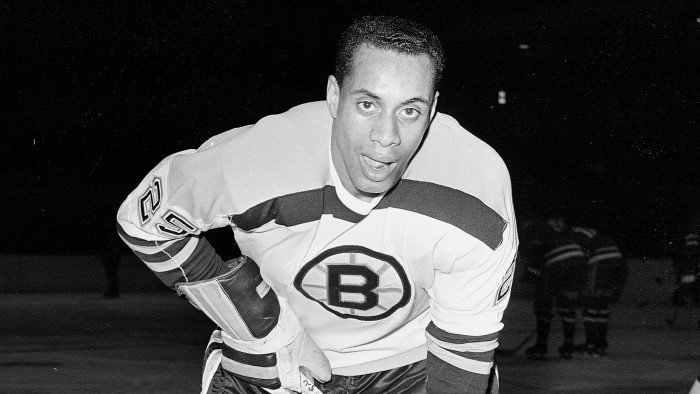
25-year-old left wing Willie O'Ree, the first black player of the National Hockey League, warms up in his Boston Bruins uniform, prior to the game with the New York Rangers, at New York's Madison Square Garden, on November 23, 1960. (AP Photo)

By Dr. Fred J. Cromartie, Ed.D. |

William Eldon “Willie” O’Ree and Willy T. Ribbs were pioneers.

O’Ree was the first black player in the National Hockey League. While O’Ree’s NHL career consisted of just 45 games over two seasons, it is the historical impact of his NHL career that led him to Honored Member status in the Hockey Hall of Fame.

Born in Fredericton, New Bruinswick, O’Ree learned to skate when he was three. He loved to skate any chance he could and started to play organized hockey when he was five. Growing up O’Ree played in competitive hockey leagues and would play for the Kitchner Canucks of the Ontario Hockey Association in the 1955-56 season. Then he would sign with the Quebec Aces for the 1956-57 season, which would be the start of a three decade (mostly minor) professional career. Willie scored 22 times, helping the Aces win the Edinburgh Trophy, awarded to the winners of a series between the senior champions of the Western Hockey League and the Quebec Hockey League.

Because of his playing style, O’Ree was noticed by the Boston Bruins and called up by the Bruins. His first game with the Bruins was on January 18, 1958 against the Montreal Canadians. That season, he played only two games for the Bruins and was sent back to the minors. O’Ree got a second opportunity with the Bruins in the 1960-61 season, playing in 43 games, scoring four goals, ten assists, for fourteen points.

While playing in the National Hockey League, O’Ree paid a price for being there: Racism. Although the Boston fans were friendly, he received racial taunts and slurs from fans while on the road. Opposing players did the same thing; in addition, he received many cheap shots and got into fights to defend himself. Unfortunately, after that season, his National Hockey League career came to an end, as he never played in another NHL game again. From there, he played in the minor professional leagues. First with the Ottawa-Hull Canadians of the Eastern Professional hockey League, then became a mainstay in the Western (Professional) Hockey League, with the Los Angeles Blades and the San Diego Gulls. His last stop was with the San Diego Hawks of the PHL, in the 1978-79 season.

After O’Ree’s playing career was over in 1998, he became the Director of Youth Development for the NHL/USA Hockey Diversity Task Force, a non-profit program for minority youth that encourages them to learn and play hockey.

Awards and honors later followed. He was inducted into the New Bruinswick Sports Hall of Fame in 1984. He received the Lester Patrick Award, which annually awards an individual for hockey service in the United States, in 2000; he received the Order of New Bruinswick in 2005 and was honored with the naming of Willie O’Ree Place, or Place Willie O’Ree in French, at the Fredericton Arena in 2008.

Willy T. Ribbs. Photo: http://marshallpruett.com/willy-t-ribbs-one-of-a-kind-pt-2/

William Theodore Ribbs raced cars professionally and was the first African American to compete in the Indianapolis 500 and one of the only African American NASCAR racers.

Ribbs’ racing began at the age of four, his first foray into motorsports driving Formula Ford cars in Europe after his high school graduation in 1975. He won the Dunlop Championship in his first year of competition, returning to the United States and racing Formula Atlantic cars. Ribbs won the pole in the Long Beach Formula Atlantic race in 1982, outpacing veteran drivers before his engine failed. In 1983, he won five races in the SCCA Trans-Am and was honored as Pro Rookie of the Year. After competing in two NASCAR Winston Cup races in 1986, financial difficulties including the lack of corporate sponsorship kept his team from finishing the season.

In 1989, Bill and Camille Cosby stepped in and funded the Raynor-Cosby Motorsports team with Ribbs as the star driver. Ribbs won two top-ten events in his 1990 Championship Auto Racing Team (CART) Indianapolis debut. In 1991, he became the first African American to qualify for the Indianapolis 500, and he qualified again in 1993. However, by 1994 it was clear that corporate sponsors were not yet willing to back an African American motorsports athlete, despite Cosby’s offer of free television commercials in return for sponsorship. Ribbs was released from his Indianapolis 500 contract and spent the year competing in the CART series, finishing in the top ten at Michigan and Denver Grand Prix races.

In 1999, Ribbs raced in the Las Vegas Indy Racing League (IRL). In 2000, he signed with Victoria Motorsports SCCA Trans-Am team and finished second at Long Beach, third at Detroit and fourth at Las Vegas. He was awarded the Johnson Triple Crown. In 2001, Ribbs joined the NASCAR Craftsman Truck Series with the support of Dodge, which initiated a motorsports diversity program to provide opportunities for minorities to race. This made Ribbs the first African American in the modern era to compete full-time in a major NASCAR division.

Dr. Cromartie is the Director of Doctoral Studies at the United States Sports Academy.
Trump Confirms US Government Support for Los Angeles 2028

1
Trump Confirms US Government Support for Los Angeles 2028
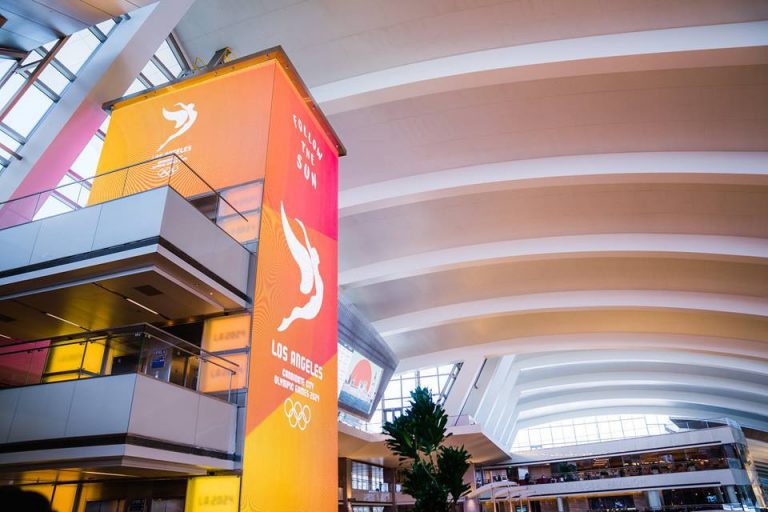
Photo: Los Angeles 2028

By Dan Palmer |

Donald Trump has promised that the United States Government will provide “tremendous support” to the Los Angeles 2028 Summer Olympics and Paralympics.

The American President confirmed that assistance would be given in key areas including security.

Trump was briefed by organizers during a trip to Los Angeles and described the Games as a “big deal.”

An agreement was signed at the Montage Beverly Hills, with the Government also pledging to help with transportation, communications and environmental contributions.

Los Angeles 2028 is due to be a privately-funded Games with a proposed $6.9 billion balanced budget, with revenues coming from sponsorship, television deals and ticket sales.

However, the US Government was still expected to contribute several million dollars which has now been agreed.

The Games have been designated as a “National Special Security Event” which prompts political involvement.

“We’re going to give them tremendous support,” Trump said.

“You need the support of the Federal Government to make it really work.”

A formal commitment to the Games by the Federal Government is a requirement of the International Olympic Committee (IOC).

The White House had previously promised to back the Olympics when Los Angeles was bidding for 2024, but had not yet officially agreed to support them now the Californian city is hosting in 2028.

It followed a unique deal confirmed at the IOC Session in Lima in September 2017 that saw Paris awarded the 2024 Olympic Games and Los Angeles the 2028 edition.

Organizing Committee chairman Casey Wasserman was among those to meet with Trump, alongside the chief executive of the United States Olympic and Paralympic Committee Sarah Hirshland.

“Our goal is to create a safe, successful and secure Olympic Games,” Wasserman said, according to the Los Angeles Times.

“And that’s not possible without the support you and the Federal Government have provided us.”

Trump is hoping to win a second four years in office in November’s elections.

This would see him reach his term limit, meaning he would not be in power when Los Angeles plays host.

“It is a great pleasure to meet with the leaders of the Los Angeles 2028 Olympic Committee,” he said.

“They have done a fantastic job in bringing the Olympics here.

“They called me when I was President elect, that was quite a call.

“They asked me if I could get involved because the other administration refused to call the Olympic Committee, which is the people who make the decision.

“It was a little hard for them to make the decision.

“I did make the call, and it was a very long call, they were starving for love and we gave them the love.

“Casey, you and everybody else have done a fantastic job, we got the Olympics to come to Los Angeles.

“It was a big moment.

“Because of your hard work and dedication the United States will once again proudly host the Olympic Games, how exciting is that?

“From the day I took office I’ve done everything in my power to make sure LA achieved the winning bid.”

Republished with permission from insidethegames.biz.