Home Blog Page 57

Bryant Set for Posthumous Entry into Basketball Hall of Fame

1
Bryant Set for Posthumous Entry into Basketball Hall of Fame
Gianna Bryant and her father, former NBA player Kobe Bryant, attend the WNBA All-Star Game 2019 at the Mandalay Bay Events Center in Las Vegas. Photo: Stephen R. Sylvanie-USA TODAY Sports

By Dan Palmer |

Kobe Bryant is among eight finalists nominated to become members of the Naismith Memorial Basketball Hall of Fame following his death in a helicopter crash.

The shooting guard is considered to be one of the sport’s all-time greats, winning five NBA titles with Los Angeles Lakers and two Olympic gold medals with the United States.

He was killed aged 41 alongside eight other people after the private helicopter he was flying in went down in Calabasas in California last month.

His 13-year-old daughter Gianna Bryant was among those to lose their life.

Bryant was nominated for Hall of Fame induction in December, before his death, and is now confirmed as a finalist for potential entry in 2020.

All eight have been put forward by the North American and Women’s Committees.

They need 18 of 24 votes from the Honors Committee to be accepted, with this expected to be a formality.

An official announcement is scheduled for April 4 at the National Collegiate Athletic Association Final Four in Atlanta.

“When the nominees for the class of 2020 were announced in December, we knew this class had the potential of being one of the most historic of all time,” said Jerry Colangelo, chairman of the Naismith Memorial Basketball Hall of Fame. 

“The untimely passing of Kobe Bryant has left us in a state of reflective mourning and we’re proud to honour his legacy while also recognising seven other individuals who have meant so much to our game. 

“We congratulate our finalists and those who have supported them on their journeys, and we look forward to revealing the class of 2020 at the Final Four in Atlanta.”

Bryant spent his entire career with the Lakers and was named as an NBA All-Star 18 times.

Other victims of the helicopter crash included husband, wife and daughter John, Keri and Alyssa Altobelli.

Sarah Chester and her daughter Payton also lost their lives, as well as Christina Mauser and pilot Ara Zobayan.

Bryant is joined as a Hall of Fame finalist by fellow players Tim Duncan, Kevin Garnett and Tamika Catchings.

Coaches Eddie Sutton, Rudy Tomjanovich, Kim Mulkey and Barbara Stevens have also been put forward. 

Republished with permission from insidethegames.biz.

Chen, Shiffrin Named Academy’s January Athletes of the Month

0
Chen, Shiffrin Named Academy’s January Athletes of the Month

United States Sports Academy |

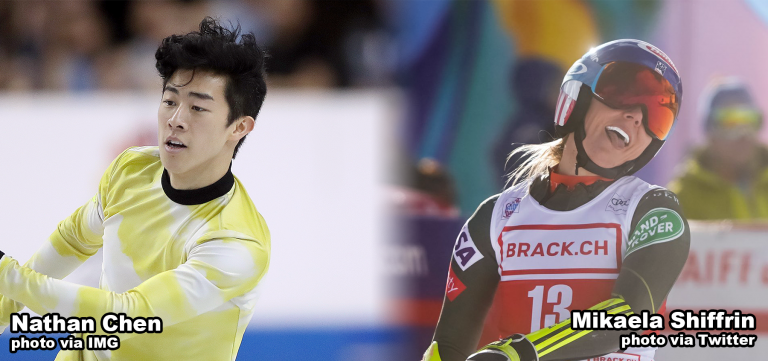
A pair of American winter sports superstars were named the United States Sports Academy’s male and female Athletes of the Month for January. Figure skater Nathan Chen and alpine skier Mikaela Shiffrin took home the Academy’s top honors after stellar performances in the month.

The Academy’s reigning 2019 Male Athlete of the Year, Chen won his fourth consecutive U.S. Figure Skating Championship after totaling 330.17 points and landing six quadruple jumps between two programs in Greensboro, N.C., on 26 January 2020. Chen is the first man to win four consecutive U.S. titles since Brian Boitano in 1988.

Shiffrin recorded four World Cup podium finishes – two gold medals and two bronze medals – in January, winning the super-G and downhill races in Bulgaria and taking third place in slalom and giant slalom events in Italy and Austria.

The second place finisher on the men’s side was American football player Joe Burrow and third place went to Greek basketball player Giannis Antetokounmpo.

Burrow was named the MVP of the 2020 College Football Playoff National Championship Game after passing for 463 yards and accounting for six total touchdowns as his Louisiana State University (LSU) Tigers defeated Clemson 42-25 in New Orleans on 13 January 2020.

Antetokounmpo was named NBA Eastern Conference Player of the Month after averaging 29.2 points, 13.4 rebounds and 5.7 assists in January for the Milwaukee Bucks. He has won three consecutive NBA Player of the Month awards this season.

The second place finisher on the women’s side was Estonian freestyle skier Kelly Sildaru and third place went to American cyclist Jennifer Valente.  

The Academy’s reigning 2019 Female Athlete of the Year, Sildaru won the women’s ski slopestyle gold medal for the fourth time at the Winter X Games in Aspen on 26 January 2020. Sildaru also captured gold in the women’s ski super pipe event in Aspen and won slopestyle gold at the Winter Youth Olympic Games in Lausanne earlier in the month.

Valente won gold in the omnium (track cycling) event and was part of the women’s pursuit team gold medal at the World Cup in Ontario in January. She also clinched the World Cup series overall omnium title with the win. The omnium is one of cycling’s toughest tests, with riders competing in four racing events in the same day. 

Each month, the public is invited to participate in the Academy’s worldwide Athlete of the Month program by nominating athletes and then voting online during the first week of every month. The online votes are used to guide the Academy selection committee in choosing the male and female monthly winners, who then become eligible for selection to the prestigious Athlete of the Year ballot. A worldwide public vote on the annual ballot is used to guide the committee in making the final selection.

The Athlete of the Year Award is part of the United States Sports Academy’s Awards of Sport program, which each year serves as “A Tribute to the Artist and the Athlete.”  The Academy presents the awards to pay tribute to those who have made significant contributions to sport, in categories as diverse as the artist and the athlete in several different arenas of sport.

The awards honor exemplary achievement in coaching, all-around athletic performance, courage, humanitarian activity, fitness and media, among others. The Academy’s American Sport Art Museum and Archives (ASAMA) annually recognizes these men and women through its Sport Artist of the Year, Honorary Doctorates, Medallion Series, Distinguished Service Awards, Outstanding Athletes, and Alumni of the Year awards. This is the 36th year of the Academy’s Awards of Sport program.

The United States Sports Academy is an independent, non-profit, accredited, special mission sports university created to serve the nation and world with programs in instruction, research and service. The role of the Academy is to prepare men and women for careers in the profession of sports.

Founded in 1984, ASAMA is dedicated to the preservation of sports art, history, and literature. The ASAMA collection is composed of more than 1,800 works of sport art across a variety of media, including paintings, sculptures, assemblages, prints and photographs. The museum is open free to the public from 9 a.m. to 4 p.m. weekdays. For more information, go to www.asama.org.

The Academy is based in Daphne, Ala.  For more information, call (251) 626-3303 or visit www.ussa.edu.

Silver Says U.S. Could Play Pre-Tokyo 2020 Games in China

0
Silver Says U.S. Could Play Pre-Tokyo 2020 Games in China
National Basketball Association (NBA) commissioner Adam Silver has suggested the United States could play a pre-Tokyo 2020 exhibition match in China as the league attempts to improve relations with the country. Photo: Associated Press

By Michael Pavitt |

National Basketball Association (NBA) commissioner Adam Silver has suggested the United States could play a pre-Tokyo 2020 exhibition match in China as the league attempts to improve relations with the country.

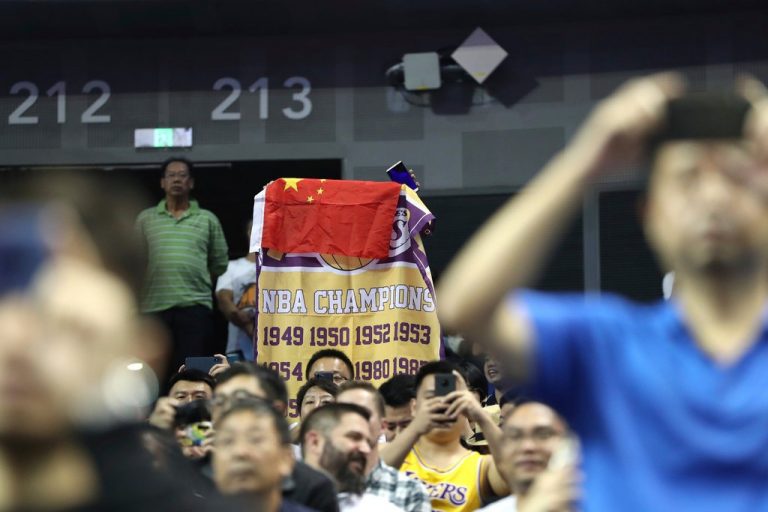
China’s relationship with the NBA suffered a major blow last year, after Houston Rockets official Daryl Morey tweeted in support of pro-democracy protesters in Hong Kong.

Morey’s tweet caused a backlash in China, with the country’s state broadcaster China Central Television (CCTV) refusing to show NBA matches on television.

The Chinese Basketball Association, major broadcasters and sponsors halted their involvement with the Houston Rockets, with NBA also been impacted.

The NBA had said Morey’s post had “deeply offended many of our friends and fans in China, which is regrettable”.

The response was criticised by several politicians in the US, who accused the NBA of prioritising revenue over human rights.

Speaking at an NBA All-Star Weekend press conference in Chicago, Silver suggested the league had lost hundreds of millions of dollars due to China’s reaction to the tweet but estimated the cost was less than $400 million.

Silver claimed the relationship could improve in the coming months, adding that discussions had been held over the possibility that the US national team may play matches in the country before the Tokyo 2020 Olympic Games.

The team are expected to travel to Shanghai before travelling to the Japanese capital, with a possible match against France mooted.

NBA preseason matches could also return to China in October.

“We are not pressing them,” Silver said, according to ESPN.

“It’s a decision that’s outside of certainly our control, and I will say I’m often not even sure exactly where that decision lies.

“I think that our view as the league is we should continue doing the things that we’ve done in the past.

“I know that, from the data we look at, there continues to be enormous interest for the NBA in China, and my sense is that there will be a return to normalcy fairly soon, but I can’t say exactly when, when it comes to CCTV.”

USA Basketball announced a provisional squad of 44 players for their men’s Olympic team earlier this month.

LeBron James and Steph Curry were among the star names included on the list, which will be reduced to 12 players at a later date.

The possibility of arranging matches in China has been further complicated by the coronavirus outbreak, which has led to the postponement or cancellation of numerous sporting events in the country.

Republished with permission from insidethegames.biz.

Armour: European Soccer Gives MLB a Lesson in How to Punish Cheaters

0
Armour: European Soccer Gives MLB a Lesson in How to Punish Cheaters
Photo: Sky Sports

By Nancy Armour |

Take note, Major League Baseball. This is how you punish cheaters.

European soccer authorities kicked Manchester City, one of England’s biggest and most successful soccer clubs, out of its marquee tournament for the next two years on Friday. Fined them the equivalent of $32.5 million, too.

Man City’s offense? “Serious breaches” of the financial rules that are designed to maintain a level of parity in European soccer. Or at least prevent a couple of teams with ridiculously wealthy owners from spending into oblivion in pursuit of a title.

Under the Union of European Football Association’s financial fair play rules, teams are barred from spending more on players than they generate from TV contracts, tickets and sponsorships. Think of it as a salary cap unique to each team. If a team can line up several massive sponsorship deals, it can sign the likes of a Messi or a Ronaldo. If it doesn’t, well, then it can’t.

Man City is owned by the ruler of the United Arab Emirates’ brother, and he’s spent big in the past decade to transform the team, which used to be kind of awful. The problem is that UEFA found the source of his cash was actually a UAE-backed investment company, which funneled the money through companies with ties to the state, including Etihad, the national airline.

UEFA has insisted it was serious about keeping the billionaire boys’ clubs in check. That it actually did so was as stunning as the punishment itself.

Man City has won four of the last eight English Premier League titles, including the last two, and its participation in the Champions League, a tournament featuring the top clubs from throughout Europe, had become a given. Imagine the NFL kicking the New England Patriots out of the playoffs for the next two seasons for Deflategate, and you get the idea.

But UEFA understood what MLB clearly did not with the Houston Astros. When a team cheats, it damages the entire game.

Yes, deep-pocketed teams such as Liverpool, Man City, Barcelona, Juventus, Bayern Munich and PSG are always going to have an advantage. But UEFA’s rules ensure that small teams like Leipzig or Porto will at least have a fighting chance.

Had Man City not been held accountable, fans of teams like Brugge, Leipzig and Benfica would wonder why they even bother. They’d look at Man City’s run to the Champions League semifinals four years ago, or its semifinal finishes the past two years, and theorize that it wouldn’t have happened without the deception.

All of UEFA would have been tarnished by Man City’s fraudulence, and its Champions League tournament would always be a little lesser because of it.

Which brings us back to MLB and the Astros.

Astros owner Jim Crane can insist all he wants that the team’s sign-stealing scheme had no impact on its record and definitely not on Houston’s World Series title in 2017. But aside from begging reality – of course a hitter is going to be more successful when he knows what pitch is coming – there’s no way to prove what Crane claims.

In the absence of that, and with everyone else in baseball still seething, everything the Astros did and will do going forward is open to suspicion. Their World Series title, their AL pennant last year, their players’ individual awards – none of it will ever be viewed with anything but skepticism.

And when one team isn’t trusted, all of baseball will be suspect.

Barring the Astros from the playoffs for a season or two, or stripping them of their World Series title, won’t change what they did in 2017 or 2018. It won’t make right the damage they did to opposing pitchers.

But it would at least be a measure of accountability, a means of holding them responsible and warning other teams not to get similar ideas in the future. It also would show the game’s fans that integrity means something, that you can trust the product MLB is putting out there.

Man City has already said it plans to appeal UEFA’s decision. But even if the entire punishment is overturned, UEFA at least showed it was willing to fight for the integrity of its game. 

If only MLB cared as much. 

This article was republished with permission from the original author and 2015 Ronald Reagan Media Award recipient, Nancy Armour, and the original publisher, USA Today. Follow columnist Nancy Armour on Twitter @nrarmour.

Anna Korakaki and the History of Women Carrying the Olympic Flame

0
Anna Korakaki and the History of Women Carrying the Olympic Flame
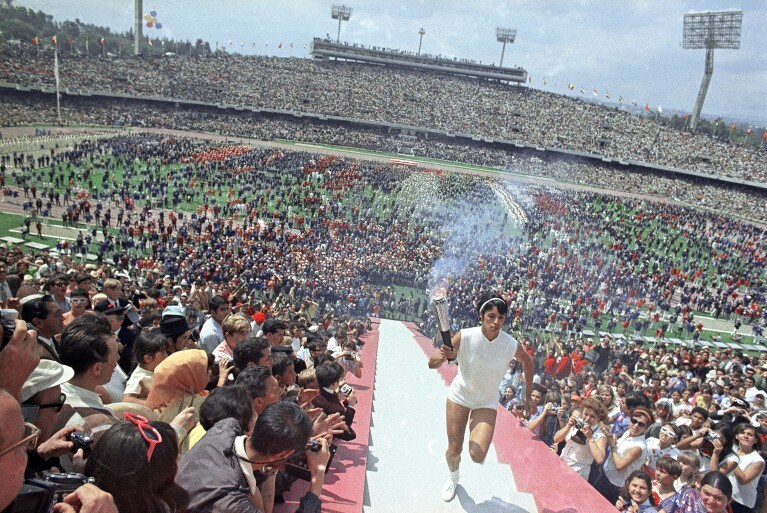
Enriqueta Basilio carries the Olympic torch during the Opening Ceremonies of the 1968 Games in Mexico City. Photo: AP

By Philip Barker |

In less than a month, the Olympic Flame will be on its way to Tokyo. Rio 2016 pistol shooting gold medallist Anna Korakaki will be the first Torchbearer. When she receives the first Flame, it will represent the latest Olympic milestone for women.

Never before has a woman carried the torch in the precincts of the stadium in Ancient Olympia.

Women were not permitted to participate in the Olympic Games of antiquity, although there were separate athletic contests for women.

It was this which apparently informed the convention that the first runner in the modern Torch Relay would always be male, even though women competed in the stadium when the Athens 2004 shot put competitions were held there.

Baron Pierre de Coubertin, the French aristocrat who called for the revival of the Olympics in 1894, was no big fan of women’s sport.

“Can young women acquire a moral sense through sports? I do not believe so. Add a female element and the event becomes monstrous,” he wrote.

“At the Olympic Games, their role should be above all to crown the victors as was the case at the ancient tournaments.”

Yet when Korakaki carries the Flame next month, she will first head for a tree-lined  grove to pay silent homage at a monument to Coubertin himself. She will of course be the first female to do this.

A few moments later, she will pass the Flame to another woman – 2004 marathon champion Mizuki Noguchi, the first Japanese participant in the relay for 2020.

“I will pass on the Flame with my great memory from Athens 2004,” Noguchi has said. 

“Greece is a special place for me.”

Their exchange of the Flame will be a symbol of how the Torch Relay has been transformed in recent years.

When it first took place for the Berlin Olympics of 1936, a group of young women dancers were ‘priestesses’ at the lighting ritual.

Yet once the relay began, the Torchbearers were exclusively male.

This remained the case until the Helsinki Games of 1952.

“On Finland’s roads men and women, boys and girls, bear the Torch along, escorted by dense crowds,” said the official report.

When it arrived at the Olympic village, “women gymnasts formed a guard of honour.”

Shortly after the Cauldron was lit in the stadium, there was an “unexpected intermezzo” when a German peace activist called Barbara Rotraut Pleyer attempted to read a speech. She was ushered away.

In 1956, a Flame was lit for the Winter Olympics in Cortina and also for the Olympic Games in Melbourne.

That June, a Flame was also kindled for the separate equestrian competitions in Stockholm.

Denmark’s 1952 dressage silver medallist Lis Hartel rode through the streets of Copenhagen with the Flame and when it reached Sweden, Britta Eriksson – head of the Malmö Auxiliary Women’s Autocorps – received it. Throughout its journey to Stockholm, her organisation provided support, the first time women had played such an extensive role in transporting the Flame.

On the day of the grand opening at the historic Stockholm Olympic Stadium, Wera Collett carried it to the gate.

She handed to Hans Wikne, who lit the Olympic Cauldron. Then gymnast Karin Lindberg was one of two runners to take Torches to the far end of the stadium. Many believe she was the first woman to light a Cauldron at an Olympic stadium.

At the 1960 Winter Games in Squaw Valley, Olympic champion Andrea Mead Lawrence had a prominent role as the penultimate Torchbearer. She skied down the mountain from Little Papoose Peak to the stadium but then handed over to Olympic speed skating champion Ken Henry who actually lit the Cauldron.

Finally, in 1968, a woman was chosen to light the main Cauldron. The arrival of 400 metres runner Enriqueta Basilio, who lit the flame at the Opening Ceremony in Mexico City, was a moment hailed as groundbreaking.

More women have taken centre stage alongside the Flame since.

Christl Haas, an Olympic champion in Alpine skiing in 1964, lit one of two Cauldrons at the 1976 Innsbruck Winter Olympics and a few months later, teenager Sandra Henderson ignited the Cauldron at the Montreal Olympic Stadium alongside Stéphane Préfontaine.

It was the first time a boy and a girl had lit the Flame together and they had been chosen to represent the English and French linguistic communities of Canada.

Skater Sandra Dubravčić ran up the steps to light a Cauldron for Sarajevo in 1984. In 1988, 12-year-old schoolgirl Robyn Perry ignited the Flame for Calgary’s Winter Games. At the time, she was the youngest to do so.

The Seoul Organising Committee that summer was also well aware of the need for gender equality.

Middle-distance runner Im Chun-ae was then 19 years old and received the Flame in the stadium from legendary Korean marathoner Sohn Kee-chung. She ran through crowds of athletes before handing it to a trio of lighters representing heaven, earth and humanity.

The lighters included Son Mi-jung, a student of traditional dance from Seoul Arts School. She was described as “a cheerful girl from a respected family’’ by Seoul 1988 chief Park Seh-jik.

In 1996, the Torch Relay had a special handover celebration in Athens to mark the 100th anniversary of the Games.

Greek high jumper Niko Bakoyianni was chosen alongside windsurfer Nikos Kaklamanakis to light the celebratory Cauldron as part of the ceremony before Atlanta’s delegation received the Flame.

At the opening in Atlanta, swimmer Janet Evans was the penultimate Torchbearer. She handed the Flame to Muhammad Ali and later admitted it “was the defining moment in my career and a memory I will treasure forever, as much as any of the medals I won.”

By 2000, there was a further innovation in Olympia at the very start of the journey. Although the first Torchbearer was still Greek and male, the second runner could now be a representative of the host city.

For Sydney, 11-year-old Sophie Gosper was chosen. Her father was an International Olympic Committee vice-president and the invitation caused some controversy, not least because 15-year-old Yianna Souleles, a Greek-Australian, had been flown over to Greece specifically for the role and was dropped at the last moment. Happily, Souleles was asked to carry the Flame in a later leg of the relay.

When the Flame arrived on Australian soil, it was taken to the ancient rock formation Uluru. Nova Peris, a member of the gold medal-winning 1996 Australian women’s hockey team, took the Flame in a moment of dual symbolism as both a woman and representative of the indigenous community.

It arrived in Sydney four months later for the grand opening. Tina Arena performed The Flame, a song specially written for the occasion.

Then came the final Torchbearers as the stadium announcement told spectators they were “celebrating 100 years of women’s participation in the Olympic Games.”

To a tumult of cheers, Raelene Boyle and Betty Cuthbert, Dawn Fraser, Shirley Strickland, Shane Gould and Debbie Flintoff all carried the Flame before the Cauldron’s lighter emerged.

It was Cathy Freeman, who stepped through a waterfall to light the Flame as the six other Torchbearers watched intently.

Republished with permission from insidethegames.biz.

World Health Organization Says ‘No Case’ for Canceling Tokyo 2020 Olympics

0
World Health Organization Says ‘No Case’ for Canceling Tokyo 2020 Olympics
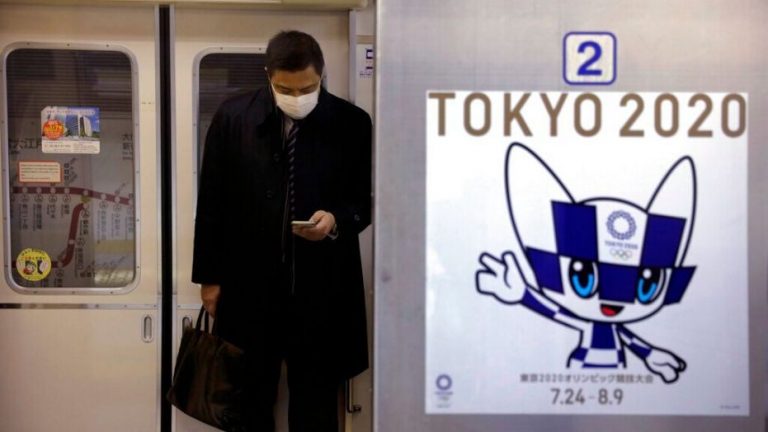
A poster promoting the Tokyo 2020 Olympics is posted next to a train door as a commuter wearing a mask looks at his phone on a train in Tokyo. Photo: Photo/Jae C. Hong

By Liam Morgan |

International Olympic Committee (IOC) Coordination Commission chairman John Coates has claimed the World Health Organization (WHO) has told the body there is “no case” for cancelling or postponing Tokyo 2020 because of the coronavirus outbreak.

Coates claimed the IOC was confident “we’ll be able to ensure that the Games go ahead in a way that’s safe for the athletes and spectators” because of cooperation between the Tokyo 2020 virus task force and other authorities involved.

The senior IOC member also insisted most Chinese athletes have been preparing for the Olympics and Paralympic Games overseas, and would therefore not need to be quarantined when they arrive in Japan.

Concerns over the impact of the coronavirus, given the official name of COVID-19 by the WHO, on the Games in the Japanese capital have grown in recent weeks.

The death toll has risen to 1,380, according to Chinese authorities, while there are nearly 64,000 infections in the country.

Japan yesterday reported its first death from the virus, which originated in Wuhan, and there are over 251 cases in the Olympic and Paralympic host nation.

A total of 218 of these are linked to a cruise liner quarantined in a Japanese port.

Japanese officials today vowed to step up testing and efforts to contain the spread of the virus, which has infected around 450 people in 24 other countries and territories.

A host of events in numerous sports, including qualifiers for Tokyo 2020, the Formula One Grand Prix in Shanghai and the World Indoor Athletics Championships in Nanjing, have been cancelled, postponed or moved outside of China because of the outbreak.

“We received the report on the task force implemented by Tokyo 2020, its coordination with the task forces implemented by the National Government and the Tokyo Municipal Government and their relationship with the Japan health authorities,” Coates said following the conclusion of a two-day project review of Tokyo 2020. 

“And pleasingly, there has been very, very good coordination between the two, sharing of information, which is so critical.

“Certainly the advice we’re received externally from the WHO is that there’s no case for any contingency plans or cancelling the Games or moving the Games.”

Tokyo 2020 President Yoshirō Mori, who reiterated Coates’ comments today, criticised suggestions the Games could be cancelled because of the coronavirus outbreak as “irresponsible rumours” after the first day of the project review.

Japanese Prime Minister Shinzō Abe promised earlier this month that the country would “respond appropriately” and work closely with the WHO to ensure preparations for Tokyo 2020 are not affected by the virus.

Tokyo 2020 chief executive Toshirō Mutō, however, admitted last week that he was “seriously worried that the spread of the infectious disease could throw cold water on the momentum toward the Games.”

Republished with permission from insidethegames.biz.
Get Moving for February’s American Heart Month

0
Get Moving for February’s American Heart Month
Courtesy photo

By Robert L. Herron and Marjorie Sanders |

With heart disease as the #1 cause of death in America for all adults, February’s American Heart Month offers a prime opportunity to learn more about the steps one can take to improve heart and overall wellness. While there are a number of lifestyle changes that can help to improve heart health, physical activity is key.  The current Physical Activity Guidelines for Americans recommends that each adult should aim to accumulate at least 150 minutes per week of moderate-intensity, aerobic-type physical activity.  By just meeting the minimum recommendations, one can reduce their risk of heart-disease mortality by 40%!  

In this application, physical activity encompasses all types of movement and does not have to take place in a gym.  Any physical activity is better than none, and generally more activity is better than less.  Additionally, the weekly recommendations encourage adults to work on their flexibility most days of the week, and to complete two resistance training activities, for each major body part. 

An easy way to gauge intensity is by taking the Talk Test, which can help to identify the intensity of an activity by assessing how well one is able carry on a conversation while doing the activity.  For example, moderate-intensity activity would allow a person to continue a comfortable conversation, while those participating in vigorous activity would have difficulty maintaining the traditional-rhythm of a casual conversation.

For those just getting started with exercise, the good news is that even 5- or 10-minute bouts of activity can provide health benefits for beginners.  Then, as one continues to build stamina and designate more time in their schedule for physical activity, more activity can be added until one reaches the 150-minute goal (i.e., 5 days per week for 30 minutes each session).  Not surprisingly, additional-health benefits can be attained for those able to accumulate up to 300 minutes of physical activity per week (and perhaps more) with diminishing returns.  Furthermore, as one progresses, high-intensity physical activity can help one meet the recommendations in less time (i.e., jogging, wheelchair basketball, etc.).  At vigorous intensity the recommended range of activity shifts to include a minimum of 75 minutes and a reasonable, upper-limit of 150 minutes per week.    

American Heart Month aims to increase people’s awareness of heart disease and to urge people to improve their heart health.  From a physical-activity perspective, it does not take much to improve your heart health.  Find somewhere in your community where you can be active, try a new sport, and start small; whatever you choose, just get moving.

Robert L. Herron is a faculty member at the United States Sports Academy.  Robert is a Certified Strength and Conditioning Specialist® with distinction from the National Strength and Conditioning Association (NSCA-CSCS*D®) and a Clinical Exercise Physiologist through the American College of Sports Medicine (ACSM-CEP®). [email protected]

Marjorie Sanders serves in the Student Services department at the United States Sports Academy. Marjorie is currently a graduate student at The University of Alabama, studying higher education administration and policy. [email protected].

Salt Lake City Begins Preparations for Another Winter Olympics Bid

0
Salt Lake City Begins Preparations for Another Winter Olympics Bid
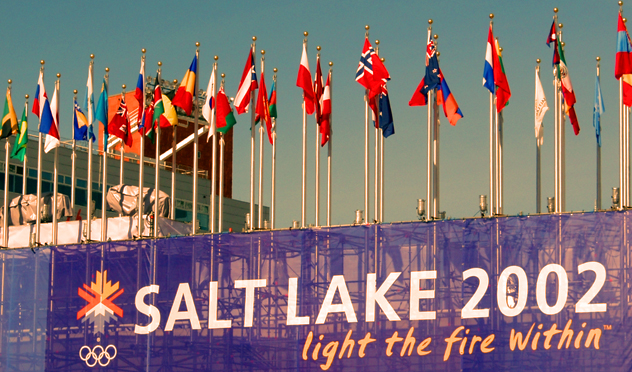
Salt Lake City, Utah, previously hosted the Winter Olympics in 2002. Photo: http://blog.octanner.com

By Neil Shefferd |

Salt Lake City and Utah have set up a joint committee with a view to preparing a bid to host another Olympic or Paralympic Games. 

The Salt Lake City-Utah Committee for the Games will provide the city and state in the United States with expertise and leadership in preparation for a campaign to bring the event back to the region for the first time since 2002. 

It was revealed last month that Salt Lake City is one of three cities to have expressed an interest in bidding for the 2030 Winter Olympics, along with Barcelona and Sapporo.

Sapporo, the Japanese city which hosted the 1972 Winter Olympic, appears to be the clear favorite but Salt Lake City could be in pole position for the 2034 edition of the Games. 

The formation of the Committee comes after the United States Olympic & Paralympic Committee (USOPC) named Salt Lake City as America’s Choice for a future bid, following a national selection process in December 2018.

“This Committee is an important next step for Utah, as the state of sport, to show that we continue to be ready, willing and able to play host to a future Olympic and Paralympic Winter Games,” Gary R. Herbert, the Governor of Utah, said.

The new Committee will be chaired by Cindy Crane, retired President and chief executive of Rocky Mountain Power. 

Jeff Robbins, President and chief executive of the Utah Sports Commission, and Colin Hilton, President and chief executive of the Utah Olympic Legacy Foundation, will serve as vice-chairs.

Fraser Bullock, managing director of Sorenson Capital, a capital market company, will act as President and chief executive.

Bullock was the chief operating officer of Salt Lake City 2002, the last time they hosted the Olympic and Paralympic Games. 

A broader group of sport, business, Olympic and civic leaders will comprise the overall Committee featuring 10 Olympic and Paralympic athletes, who together boast 34 medals between them.

“In 2002 Salt Lake City took great pride in welcoming the world,” said Erin Mendenhall, the recently appointed Mayor of Salt Lake City.

“We are ready to welcome the world again as a returning host of a future Olympic and Paralympic Winter Games.

“Our beautiful city has so much to offer our worldwide guests, including the added benefit of our existing Olympic facilities and infrastructure.

“I feel very strongly about our bid potential.”

Beijing is due to host the 2022 Winter Olympic and Paralympic Games. 

Milano and Cortina d’Ampezzo, in Italy, won the rights to the 2026 Winter Games last summer.

Los Angeles has already been named as the host of the 2028 Summer Olympic and Paralympics.

A future bid will also be guided by a host of stakeholders including the Utah Sports Commission, Utah Olympic Legacy Foundation, the USOPC, the winter sport national governing bodies and Utah public officials.

Republished with permission from insidethegames.biz.
Armour: Allow Gymnasts, Like Football Players, to Cash in on Name, Image, Likeness

0
Armour: Allow Gymnasts, Like Football Players, to Cash in on Name, Image, Likeness
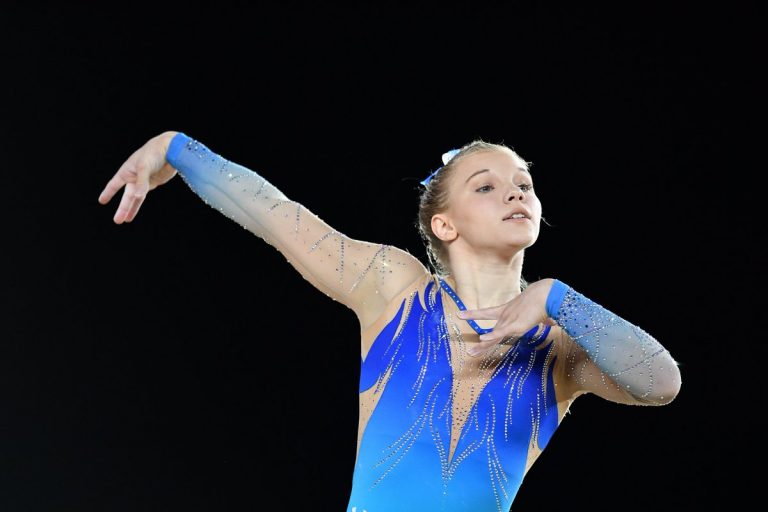
“We’ve worked really hard, so I feel like it would be fair that we would be allowed to” profit from pre-college success, said Jade Carey, who helped the U.S. women win a gold medal at last year’s world championships and is committed to Oregon State. Photo: USA Gymnastics

By Nancy Armour |

That “free” education NCAA athletes get has never really been free, and the costs are greater for some athletes than others.

As the possibility of athletes being able to profit off their “name, image and likeness” becomes more likely, and there’s a Senate committee hearing Tuesday to delve into this very issue, much of the focus has been on the impact for football and basketball players. But female gymnasts stand to benefit as much as anyone.

Elite gymnastics remains, for the most part, a young woman’s sport. The best American gymnasts compete internationally in their teens, maybe into their early 20s. While there are commercial opportunities for household names such as Simone Biles or Shawn Johnson, they are rarities. Most athletes instead retain their eligibility, going to college when their elite careers are done.

But when their NCAA eligibility is done, so are they. There is no professional league, and no woman has made a world or Olympic team after completing her eligibility since Athens silver medalist Mohini Bhardwaj.

“You either get to go pro or you get to go to NCAA,” said Morgan Hurd, who has retained her eligibility despite winning the world all-around title in 2017. “There’s no in-between, you get one or the other. But football players, they get to go to NCAA and then they get to go pro, too, and get paid.”

What makes the plight of female gymnasts unique is that most have built up followings during their elite careers, and that fame is an added benefit to their school.

A benefit for which they get nothing.

When Madison Kocian won gold at the Rio Olympics as part of the Final Five, UCLA’s press release on it touted her as “UCLA incoming freshman Madison Kocian.” When she and Kyla Ross, a gold medalist at the London Olympics, made their debuts at the 2017 season opener, it was the lead note in the meet preview and the release featured a photo of Kocian from Rio.

“We’ve worked really hard, so I feel like it would be fair that we would be allowed to” profit from pre-college success, said Jade Carey, who helped the U.S. women win a gold medal at last year’s world championships and is committed to Oregon State.

It’s not unlike the added spotlight a Zion Williamson brought to Duke. Or a LeBron James would have brought to a school, had he gone to college. The difference is they at least knew they’d be cashing in once they got to the NBA.

The gymnasts are not looking to become millionaires or for six-figure contracts. But if they’ve built up a following before they even get to school, or develop one while they’re there, they, like so many other athletes, believe they should be able to reap the benefits.

Katelyn Ohashi was featured on talk shows and news programs after one of her floor routines went viral in January 2019. Politicians tweeted about her. She was featured in Rolling Stone’s “Women Shaping the Future” issue, and asked to do op-eds.

She didn’t get a dime from any of it.

MyKayla Skinner, who won a team gold and a bronze on vault at the 2014 world championships and was an alternate for the 2016 Olympics, is arguably the most successful gymnast in Utah history. That’s made her something of a celebrity in both Salt Lake City and her hometown of Gilbert, Ariz., and she easily could have gotten in-kind deals, if not outright cash, from, say, make-up artists, hair dressers, caterers or florists when she got married last fall.

Instead, companies that posted photos from Skinner’s wedding were told to take them down.

“Because it’s promoting their business because I’m in it,” she said, rolling her eyes.

And don’t even start on the deals Skinner could have with leotard companies.

“It does get frustrating at times,” she said. “It would be nice to get rewarded for working so hard, especially when you don’t get to have the chance to go pro or anything.”

Colleges and conferences are making millions off of their “student-athletes.” It’s only fair they be allowed to make some money off themselves, too. 

This article was republished with permission from the original author and 2015 Ronald Reagan Media Award recipient, Nancy Armour, and the original publisher, USA Today. Follow columnist Nancy Armour on Twitter @nrarmour.

WBSC President Fraccari: Baseball5 Can Help Strengthen Olympic Movement, Take Sport to New Places

0
WBSC President Fraccari: Baseball5 Can Help Strengthen Olympic Movement, Take Sport to New Places
Baseball5’s inclusion in the Dakar 2022 Youth Olympic Games program will be the first time baseball or softball features at a Youth Olympic Games and it will also be the first Olympic team sport to feature mixed-gender teams. Photo: WBSC

By Riccardo Fraccari |

World Baseball Softball Confederation (WBSC) President Riccardo Fraccari reflects on the WBSC’s hottest property – Baseball5 – and the benefits it offers all countries around the world, as well as its incredible journey, culminating with its recent inclusion in the Sports Program of the Dakar 2022 Youth Olympic Games. Fraccari is the United States Sports Academy’s 2019 Eagle Award recipient. He will visit the Academy campus in Daphne, Ala., for the institution’s 2020 Graduation program on Thursday, 11 June 2020.

When I received confirmation that Baseball5 had been accepted as a medal sport at the Dakar 2022 Youth Olympic Games last month, I felt an overwhelming sense of pride and joy for what we had achieved.

The decision, confirmed by the IOC’s Executive Board in Lausanne last month, brings young Baseball5 players all around the world a step closer to living every athlete’s dream of representing their country on the Olympic stage. On behalf of all of them, and the global baseball-softball community, I would like to express our deepest gratitude for the trust placed in us by the Dakar 2022 Organising Committee and the IOC Executive Board.

Having officially launched Baseball5 as a discipline in March 2018, it was difficult to imagine at the time, all that we would go on to accomplish over the following 20 months. Since then, Baseball5 has exploded everywhere in popularity, enhancing WBSC’s ability to do good around the world. We are now able to introduce the skills and the values of baseball-softball to young people in new communities we couldn’t reach before.

The fast-pace, low-cost and accessibility of the discipline is its greatest strength. All you need is a ball and a hard-surface. No dedicated sports equipment or venues are required to play, making Baseball5 a perfect fit for the IOC’s and President Bach’s innovative Agenda 2020 vision.

But our ambition is not just to participate at Olympic events; our ambition is to make a sustained and substantial contribution to the long-term health of the Olympic Movement.

That contribution begins at the youth level where our sport offers a safe, accessible route for young people – and girls in particular – to play and stay in sport. Furthermore, at Dakar 2022, Baseball5 will become the first Olympic team sport to feature mixed-gender teams, building on the IOC’s commitment to promoting gender equality across all of its events.

And at the senior level, we are reinforcing the Olympic Movement’s connection to some of the most loyal fan bases and sports markets on the planet.

The media coverage, buzz and excitement generated from the Premier12, our flagship event and Tokyo 2020 baseball qualifier, was unprecedented, particularly in Asia and the Americas. A great indication of the electric atmosphere and packed stadia we can expect when we make our spectacular Olympic comeback at Tokyo 2020 later this year.

Our National Federations and followers around the world should feel empowered by our recent Olympic success. Our presence on the Olympic Programme has opened up new opportunities for them to grow and develop the sport in their countries, further fueling the expansion of our sport around the world, and helping us achieve our vision of a billion-strong global baseball-softball community by the end of the decade.