Home Blog Page 168

US Wins Dramatic Shootout for First Olympic Women’s Hockey Gold in 20 Years

0
US Wins Dramatic Shootout for First Olympic Women’s Hockey Gold in 20 Years
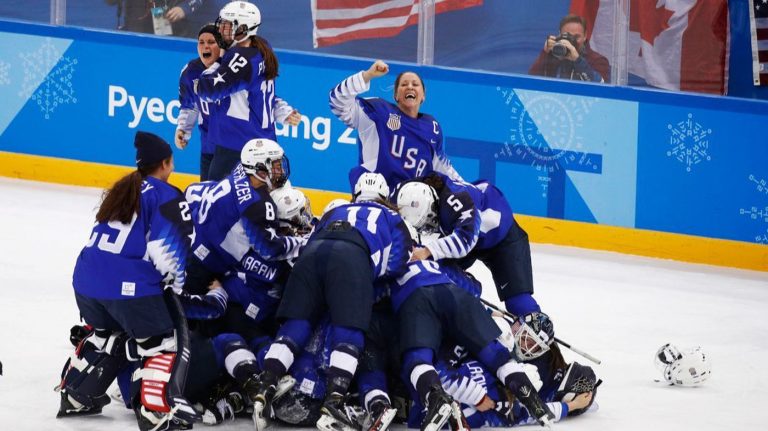
United States celebrates winning the women's gold medal hockey game against Canada at the 2018 Winter Olympics on Thursday. Photo: Jae C. Hong / Associated Press

The United States ended a 20-year wait for the women’s ice hockey gold medal at the Winter Olympic Games as they beat arch-rivals Canada in a dramatic shootout to deny their North American counterparts a fifth successive title at Pyeongchang 2018.

Maddie Rooney’s save from Meghan Agosta handed the US a 3-2 shootout success as they ended Canada’s dominance of the event after a tense final had finished all-square at the conclusion of the overtime period at the Gangneung Hockey Center.

The result gave the US a first gold since they won the inaugural women’s tournament at the 1998 Games in Nagano.

Their triumph also avenged the defeats they suffered to Canada in the final of the last two competitions in Sochi and Vancouver.

“Before Meghan came down, I just looked over at the bench and saw my teammates pointing at me, just one more, and to have their support made it a whole lot easier,” said Rooney.

“I just reacted to her and then everything kind of went into a blur.

“When she cut across like that, a lot of people tend to go five hole so I kind of anticipated it.”

Hilary Knight scored the game’s opening goal to put the US in front in the dying stages of the first period.

Quick-fire strikes from Haley Irwin and Marie-Philip Poulin then swung the contest in the favor of the Canadian team in the second stanza.

The US went in search of a late equalizer in a thrilling encounter between the two sides and it came thanks to Monique Lamoureux-Morando in the 54th minute.

After neither team was able to find a winner, the match went into a 20-minute sudden death overtime period.

The two sides could still not be separated following the additional time, leaving a shoot-out as the only remaining method to decide the Olympic champions.

It is the first time a women’s ice hockey final had gone to a shoot-out.

The teams remained deadlocked after five rounds until Lamoureux-Morando gave the US the upper hand.

Agosta needed to find the net to keep Canadian hopes alive but was thwarted by the considerable presence of Rooney in the American goal, sparking wild celebrations from the US team.

Finland claimed bronze yesterday with a 3-2 win over the Olympic Athletes from Russia.

“It’s an indescribable feeling,” added Rooney.

“This group of women are just amazing to do it with.

“We had great role models in 1998 and to do it with this group, this was the group to do it.”

By Liam Morgan

Republished with permission from insidethegames.biz

Louisville Men’s Basketball Ordered to Vacate Wins and Pay Fine

0
Louisville Men’s Basketball Ordered to Vacate Wins and Pay Fine
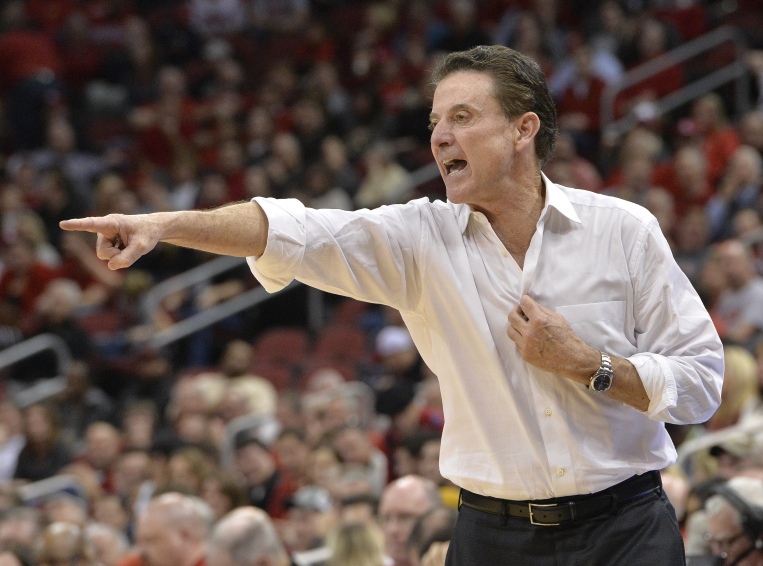
Former Louisville coach Rick Pitino shouts instructions to his team during the second half of an NCAA college basketball game against Pittsburgh, Wednesday, Jan. 11, 2017, in Louisville, Ky. Louisville won 85-80. Photo: AP Photo/Timothy D. Easley

Louisville must vacate men’s basketball records in which student-athletes competed while ineligible during the 2011-12 through 2014-15 academic years according to a decision issued by the NCAA Division I Infractions Appeals Committee. The appeals committee also upheld the NCAA Division I Committee on Infractions penalty that requires the university to return to the NCAA money received through conference revenue sharing for its appearances in the 2012, 2013, 2014 and 2015 NCAA Division I Men’s Basketball Championships.

In the Committee on Infractions’ decision, the panel found that a former Louisville director of basketball operations acted unethically when he committed serious violations by arranging striptease dances and sex acts for prospects, student-athletes and others, and did not cooperate with the investigation. The violations in the case resulted in some men’s basketball student-athletes competing while ineligible.

In its appeal, the university argued the vacation of records and financial penalty should be set aside because they are excessive. The university contended that the penalties were based on participation of student-athletes who were not culpable in the violations, received negligible benefits as a result, and for whom reinstatement would likely have been granted.

The Committee on Infractions responded to the appeal by stating the penalties were appropriate due to the serious, intentional and numerous violations orchestrated by a university staff member for nearly four years. It further argued that student-athletes do not have to be culpable for the vacation penalty to be appropriate, and because the serious nature of the violations resulted in the participation of ineligible student-athletes, the vacation of records penalty was appropriate.

In its review of the case, the appeals committee found that because of the serious and intentional violations with direct involvement of a university staff member, the Committee on Infractions panel was within its legislated authority to prescribe the vacation of records and financial penalty. The appeals committee stated when student-athletes participate while ineligible, these types of penalties are appropriate. It also did not find the university’s argument about what could have happened during the reinstatement process compelling, stating there is no guarantee regarding the reinstatement process.

The members of the Infractions Appeals Committee who heard this case were Jack Friedenthal, professor emeritus at George Washington; W. Anthony Jenkins, attorney in private practice; Patti Ohlendorf, vice president for legal affairs at Texas; and David Williams, committee chair and vice chancellor for athletics and university affairs and athletics director at Vanderbilt.

NCAA Press Release

Armour: Nigerian Bobsled Team at Winter Olympics is a First for Africa

0
Armour: Nigerian Bobsled Team at Winter Olympics is a First for Africa
Members of the Nigeria Bobsled and Skeleton team Ngozi Onwumere, left, Seun Adigun, Akuoma Omeogahave and Simidele Adeagbo, have fun answering questions from the media after the official welcoming ceremony at the Plaza Zone at the PyeongChang Olympic Athletes Village complex. Photo: ERIC SEALS, USA TODAY SPORTS

The beauty of the Olympics is the possibilities they offer.

For some, it’s medals and records. For others, it’s the experience and the memories that will last a lifetime.

And then there are those who want nothing more than to inspire. To plant the seed of an idea, and provide the motivation necessary to make it grow.

Seun Adigun and Akuoma Omeoga knew they wouldn’t challenge for a medal in women’s bobsled at the Pyeongchang Olympics. Indeed, the Nigerians were dead last after the first two heats Tuesday night, and the 3.50-second gap between them and the leaders might as well be a chasm in a sport decided by tenths and hundredths of a second.

But there is a greater purpose in their presence here. As the first bobsled team from an African country, they will forever be an example of what happens when you dare to chase a dream.

“You can do whatever you want,” Omeoga said. “If you see our faces and we inspire you to do something, then that’s absolutely all we ask for.”

Adigun and Omeoga are Americans, with family ties to Nigeria. You might have heard of Adigun’s second cousin, in fact, the NBA Hall of Famer Hakeem Olajuwon.

Both ran track in college, Adigun at Houston and Omeoga at Minnesota, and Adigun represented Nigeria at the 2012 Summer Olympics in London. Two years later, as Adigun watched Aja Evans and some other track friends make the transition to bobsled, she decided to give it a try, too.

She initially trained with the U.S. team, starting as a brakeman. When she heard that Nigeria didn’t have a bobsled program, however, something clicked. She recruited Omeoga and Ngozi Onwumere, and together they formed the Bobsled and Skeleton Federation of Nigeria.

To say it was a barebones operation is an understatement. They started a crowdfunding campaign to pay for training – they raised $75,000 – and built a wooden sled so Omeoga and Onwumere could learn how to push.

Which begs the question of how, exactly, one builds a bobsled. Even a crude replica of one.

“You just kind of walk through a hardware store and think that this works and that works and this wood is long enough and that one is and let’s hammer it all together,” Adigun said.

Simple, but it worked well enough that within three months of teaming up in October 2016, the Nigerian team was on ice for the first time at a race in Park City, Utah.

The Nigerians haven’t raced on the World Cup circuit, securing their spot in Pyeongchang through a lower-tiered circuit, instead.

Still, to go from zero to the Olympics in less than 18 months is no small feat.

“You have these outlandish kind of ideas, and then all of the sudden you see them slowly but surely manifest themselves into reality,” Adigun said. “Every milestone that comes, everyone that gets involved, you start to see it come together.”

The Nigerians are competing 30 years after Jamaica’s “Cool Runnings” sled shattered the myth that you have to have winter to be a Winter Olympian, and they welcome the comparisons between the teams. Just as the Jamaicans opened a whole new world of possibilities for their island nation, the Nigerians hope they can do the same for the African continent.

Already, Adigun and Omeoga said, the Nigerian Olympic Committee is hearing from others who want to join them on their crazy journey.

“I don’t think it’s hit us how impactful this whole process is actually going to be in the long run,” Adigun said. “We’re so honored and humbled to be in the position that we are, to be able to show people that impossible is nothing. And that you don’t have to quantify things by just a result, a first place, second place or any time.”

Every Olympian is fueled by a dream. The confirmation that it’s achievable is a prize in and of itself.

By Nancy Armour

This article was republished with permission from the original author and 2015 Ronald Reagan Media Award recipient, Nancy Armour, and the original publisher, USA Today. Follow columnist Nancy Armour on Twitter @nrarmour.

Goggia First Italian to Win Olympic Downhill as Vonn Finishes Third

0
Goggia First Italian to Win Olympic Downhill as Vonn Finishes Third
Sofia Goggia became the first Italian to win the Olympic women’s downhill event. Photo: Michael Probst / AP

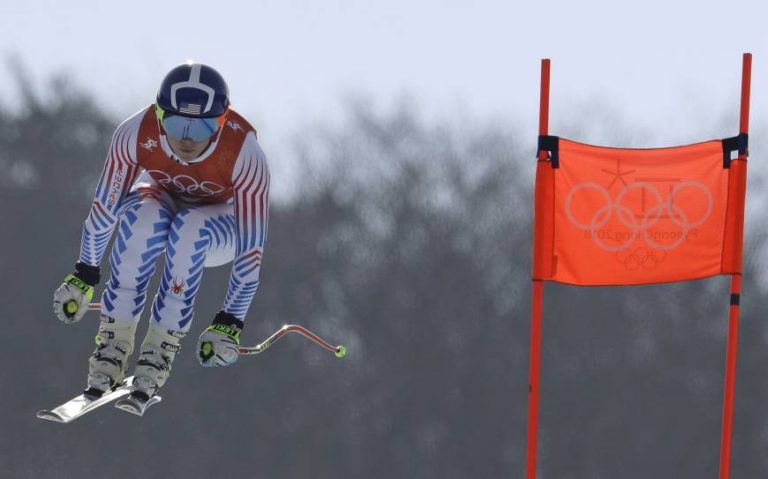
Sofia Goggia became the first Italian to win the Olympic women’s downhill event after beating Norway’s Ragnhild Mowinckel and the United States’ Lindsey Vonn to victory at Pyeongchang 2018.

Goggia, leader in World Cup standings ahead of Vonn, clocked what proved to be an unrivaled time of 1:39.22 at the Jeongseon Alpine Center.

Vonn’s hopes of becoming a double Olympic downhill champion were ended when she crossed the line 0.47 seconds behind Goggia,

Mowinckel then relegated the American down into the bronze medal position after finishing just 0.09 seconds off the pace.

Goggia becomes the first Italian woman to win an Alpine skiing event at the Winter Olympics since Daniela Ceccarelli claimed super-G gold at Salt Lake City 2002.

“I still haven’t quite realized yet,” she said on her victory.

“I think I’ll realize when I’m on the podium.

“I’m very proud.

“I feel so focused on the day that I haven’t realized yet what I’ve done.

“It’s about me and my skiing and not the others.”

In what she said would “most likely” be her final Olympic downhill race, Vonn set off fast before losing speed in the middle of the run.

The 33-year-old had been looking to repeat her downhill triumph from Vancouver 2010.

Injury had denied her the opportunity to defend her title at Sochi 2014.

Vonn has broken the record for oldest female medalist in Alpine skiing at the Winter Olympics, previously held by Austria’s Michaela Dorfmeister, winner of he Turin 2006 super-G aged 32 years and 332 days.

“It was tough to contemplate this being my last Olympic downhill,” she said.

“I struggled to try to keep the emotions together, but I left it all on the mountain like I said I would.

“I skied really well, but I think Sofia is untouchable today.”

Mowinckel’s runners-up finish sees her add another silver medal to the one she won in the giant slalom last Thursday (February 15).

She is the first Norwegian woman to win multiple medals in Alpine skiing at the Winter Olympics.

“I’m so surprised, but I’m super happy,” Mowinckel said.

“I just tried to bring the best I could do and it was by far my best downhill race ever.

“To do it in the Olympics is amazing.

“Right now, I’m baffled and surprised and can’t really understand it, though I know I’ve done well.

“I really need some time to understand this – I’m so happy.”

Alpine skiing action at Pyeongchang 2018 is due to continue tomorrow when the men’s slalom and women’s Alpine combined slalom events are due to be held.

By Daniel Etchells

Republished with permission from insidethegames.biz

US Wins Historic Gold in Women’s Cross-Country Skiing Team Sprint

0
US Wins Historic Gold in Women’s Cross-Country Skiing Team Sprint
United States' Jessie Diggins, left, and Kikkan Randall celebrate after winning the gold medal in the women's team sprint freestyle cross-country skiing final at the 2018 Winter Olympics in Pyeongchang, South Korea, Wednesday, Feb. 21, 2018. Photo: AP Photo/Matthias Schrader

Kikkan Randall and Jessie Diggins claimed the United States’ first-ever Olympic gold medal in cross-country skiing after winning a thrilling women’s team sprint freestyle event at Pyeongchang 2018.

The duo combined to complete the 1,176 meter track in a time of 15:56.47 at the Alpensia Cross-Country Center.

Nearest challengers Charlotte Kalla and Stina Nilsson of Sweden finished 0.19 seconds behind.

Norway’s Marit Bjørgen and Maiken Caspersen Falla were 2.97 seconds off the pace in third.

It meant Bjørgen became the most decorated Winter Olympian of all time with her 14th medal.

Diggins sealed America’s victory after holding off the challenge of Nilsson, the individual sprint gold medalist, in a frantic race for the line.

“In the final stretch I was just thinking, ‘go, go, go – I’m giving it everything I had and I’ve got someone who I really love and care about waiting for me at the finishing line and I just want to make her proud’,” Diggins said.

“Just believing that we had what it took the entire day.”

Randall, 35, competing at her fifth Olympics, added: “Hearing it out loud, it still doesn’t feel real.

“It’s what I’ve been working on for 20 years and with this team for the last five years.

“Wow, it’s just so fun to put it together tonight, finally.”

Diggins and Randall won the gold medal in this event at the 2013 World Championships, becoming the first Americans to do so.

The only other Olympic cross-country medal won by the US came at the Innsbruck 1976 Games, where Bill Koch claimed silver in the men’s 30 kilometer event.

Bjørgen’s third-place finish broke a tie with Norwegian biathlete Ole Einar Bjørndalen for the most Winter Olympic medals.

“It’s hard to understand, actually,” Bjørgen, a medalist in all four events she has contested at Pyeongchang 2018, said.

“When you’re still an athlete you just have focus on other races.

“I think I’ll need to have time to myself and look behind me and look how I’ve been able to do this.

“It’s still hard to understand it when I’m standing here.”

Falla claimed it was her childhood dream to race in the same team as Bjørgen.

“I watched her on TV as a young girl and I wanted to ski as fast as her,” she added.

“Now I finally got to ski on the same team as her in the Olympics as she is becoming the most-successful Winter Olympian.

“It’s very big for me to be in the same team as this fabulous woman.”

In the equivalent men’s event, Norway’s Martin Johnsrud Sundby and Johannes Høsflot Klæbo came out on top in 15:56.26.

Olympic Athlete from Russia’s Denis Spitsov and Alexander Bolshunov finished second in 15:57.97.

Rounding out the podium were France’s Maurice Manificat and Richard Jouve in 15:58.28.

Norway’s victory secured a third gold medal of Pyeongchang 2018 for Klaebo, who also tasted victory in the sprint classic and 4x10km relay.

“It is an incredible feeling to finish first here,” Klæbo said.

“Both of us have been very nervous today and I did not sleep good today also.”

Sundby, part of Norway’s 4x10km relay team and was the silver medallist in the 15km + 15km skiathlon here, claimed his team-mate inspired him.

“He has come in last season and in this season, he is maybe showing us how modern cross-country skiing should be,” he added.

“He is a talent everybody looks up to at moment, but he is only 21-years-old, so I hope I have one piece of advice or two to give him in the next few years.

“But for sure he has taken cross-country skiing to another level.”

Cross-country skiing medal action at Pyeongchang 2018 is due to resume on Saturday (February 24), when the men’s 50km mass start classic event is scheduled.

By Daniel Etchells

Republished with permission from insidethegames.biz

Nightengale: Speculation on Bryce Harper’s Future Begins Now

0
Nightengale: Speculation on Bryce Harper’s Future Begins Now
Washington's Bryce Harper hits during a game against the Baltimore Orioles in 2015. Harper was the leading vote-getter for the 2017 MLB All-Star Game. Photo: Keith Allison via Wikimedia Commons

It’s the hot topic that will burn all season in baseball’s consciousness, but since we live in such an impatient society, no one wants to wait for the drama to unfold before knowing the ending.

We want to know where Bryce Harper will be playing next year. We want to know how many zeroes will be in his paycheck. We want to know whether he’ll be wearing Dodger or Cubbie Blue, Yankee pinstripes, or stay in his Washington Nationals’ uniform.

Bryce Harper ended the fun Monday before it could get ever started.

He announced that he is not talking about free agency.

Not now.

Not for the rest of the season.

Not until he signs his next contract.

“I will not be discussing anything relative to 2019 at all,’’ Harper told a room packed full of reporters at the Nationals’ spring-training complex. “If you guys have any questions about 2019, or anything past 2018, you can call (agent) Scott (Boras) and he’ll answer you guys.

“If you guys do ask anything, I’ll be walking right out the door.’’

So no one asked.

Harper began his press conference reading prepared remarks off his cell phone, sat there for 17 minutes, telling everyone that he’s fully healthy, the team is talented as ever, new manager Davey Martinez will be a perfect fit, he was shocked to see the Miami Marlins trade Giancarlo Stanton, Marcell Ozuna and Christian Yelich, and he can’t believe the players still available in this bizarre free-agent market.

He talked about everything related to baseball, except his own future.

“Honestly, that’s the best way to handle it,’’ Nats teammate Max Scherzer, who received a record seven-year, $210 million free-agent contract two years ago, told USA TODAY Sports. “You’ve got to do that because it’s very easy to mentally veer off and get into a downward spiral mentally. It really exposes your character and your motivations when you have these types of decisions and you’re staring down this type of thing. It’s very easy to get sideways.

“That’s why you’ve got to check yourself every single day. You can only be focused on winning here for this team, for this year. When you focus on winning, you do whatever it takes to help your ballclub win games and get to the postseason. That’s when you play your best.

“The rest will take care of itself.’’

Harper, who could become baseball’s first $400 million man, or even $500 million, says he’ll try to stay on script the entire season. He’s not going to talk about his dad’s love for the New York Yankees, wondering if they would dare trade Stanton in a year to make room for him, and possibly third baseman Manny Machado, too. Las Vegas homeboy Kris Bryant may be one of his best friends, but he won’t talk about sharing deep-dish pizza with him as teammates in Chicago. He lives a few hours along the highway from Los Angeles, but won’t start reminiscing about the days of Vin Scully and Tommy Lasorda. And the Phillies may be sitting on a mountain of cash, but it doesn’t mean he’ll be calling Mike Trout to get Philadelphia Eagles season tickets.

Public silence.

The Nationals, who have exclusive negotiating rights for the next eight months with Harper, say they’ll keep their talks private too, but will do everything but give the Washington Monument to keep him.

The Nationals had exploratory talks with Boras a year ago, which stalled when the Nats’ ownership believed he wanted at least a 13-year deal exceeding $500 million. They talked again early this winter, Nats GM Mike Rizzo said, but it was nothing more than preliminary negotiations.

“I look forward,’’ Rizzo said, “to many, many more years with him. He’s dear to my heart.’’

Rizzo says the Nats will continue attempts to sign Harper all year, insisting there’s no deadline, and plan to talk even after the start of the regular season.

“I never understood the logic in having a deadline like that,’’ Rizzo said. “We’ll keep talking. Hey, we did the same with (Stephen) Strasburg, and signed him in May.’’

Indeed, Strasburg signed a seven-year, $175 million contract in May, 2016, five months before he was eligible for free agency.

The Marlins may have a better chance of winning the World Series than Harper re-signing with the Nats before he tests the free agent market, but then again, with this strange market, who can possibly project what owners may do next winter?

“If I’m the organization,’’ Harper said, “I want the best players on my team. My fans deserve that. The players deserve that.’’

Harper can’t believe there’s still a Who’s Who of unemployed players remaining on the free-agent market, including 14 who are represented by his agent, Boras.

“There’s a guy like (2015 Cy Young winner) Jake Arrieta right now,’’ Harper said, “I’d put him on my staff any day of the week. I mean he’s one of the best pitchers in the game, one of the best playoff pitchers in the game.

“I’m not sure what people are thinking, but if I’m a fan base or a team, and you’re trying to lose ballgames to get the No. 1 pick, I’ll take freaking Jayson Werth over a first-round pick any day of the week.’’

Something will be dreadfully wrong next winter if a 25-year-old, five-time All-Star doesn’t have every team in baseball interested in his services, with at least a handful willing to write a check for at least $300 million, and perhaps a couple who’ll top $400 million.

“He deserves every penny he gets,’’ said Nats starter Gio Gonzalez, who’s also eligible for free agency. “He’s a superstar. Correction, make that a rock star.

“Him and Trout are phenomenal for baseball. Those guys are why kids now want to play baseball, and why baseball needs these guys, and why baseball needs to take care of these guys.

“I guarantee that whatever teams gets him, will be really happy for a long, long time.’’

The bidding will start in eight months. Baseball’s annual winter meetings, which happen to be in Harper’s hometown of Las Vegas, are in 10 months. In the meantime, we can start the speculation now, with or without Harper’s help.

But no matter how long the rumors rage, or the questioning every time he plays in a visiting city, the last guy bothered by all the drama will be Harper himself.

“He loves it, he absolutely lives for this,’’ Nats center fielder Adam Eaton says. “You know he does. He’s had pressure his whole life, and he flourishes under pressure.

“Some people can say it. Other people can live it. Well, he lives it and he’s all in.

“This won’t affect him one bit.’’

Really, it will be business as usual. The Nationals will once again win the NL East. Harper again will be an All-Star, with the game played in Washington D.C. And the Nats again will try to avoid a flop in the playoffs.

The only uncertainty question will be Harper’s future.

Your heart tells you he’ll be a Dodger, your mind tells you he may be staying in Washington, but for now, Harper is the only one who has any idea where he’s even leaning.

And he’s not talking about it.

That’s a good thing.

By Bob Nightengale

This article was republished with permission from the original publisher, USA Today. Follow Bob Nightengale on Twitter and Facebook.
Morgan: Pyeongchang 2018 Legacy Concerns Continue

0
Morgan: Pyeongchang 2018 Legacy Concerns Continue
AP Photo/Lee Jin-man

The Olympic circus will depart Pyeongchang 2018 this time next week with questions still lingering over what happens next.

It is a representation of the lack of progress organizers have made in cementing legacy plans that we are still discussing the issue past the halfway point of the Winter Olympic Games here.

Senior International Olympic Committee (IOC) official Christophe Dubi confirmed a piece of information at a press briefing this week that the majority of us knew already; that there was still no established legacy for three venues which are being used for the Games.

To put that into perspective, that is around 25 percent of Pyeongchang 2018’s competition facilities.

This figure rises to 40 per cent when you consider two are located in the coastal cluster – the Gangneung Oval and the Gangneung Hockey Centre – which is home to five of the 12 venues.

In the most basic sense, the Organizing Committee approved the construction of almost a quarter of venues without knowing what their use would be in the future.

This at a time when apathy towards hosting the Olympic Games is at its highest, where more cities turn down the chance to stage the event than proceed to a vote.

It is little wonder the IOC have been forced to rethink the entire process.

For the IOC, this is nothing new as they have been raising continued concerns in Coordination Commission meetings, project reviews and other visits since Pyeongchang was awarded the 2018 Games.

In an opening address during an inspection in 2016, Coordination Commission chair Gunilla Lindberg alarmed organizers with her contriteness when she told them in an opening address that decisions on legacy plans had been “delayed for too long.”

In this Feb. 6, 2018 photo, The Gangneung Ice Arena is illuminated at night prior to the 2018 Winter Olympics in Gangneung, South Korea. With the looming close of the games this weekend there’s worry here that the Olympics will instead saddle the region with a legacy of massive debt and the perpetual maintenance of a handful of hugely expensive venues that no one knows what to do with. Photo: AP Photo, Felipe Dana

“Absence of clear legacy plans also reflects badly on the image of these Games for which legacy were already committed at bid time but never confirmed,” she added.

Two years on and that remains the case for the three venues, the aforementioned two in Gangneung and the Jeongseon Alpine Centre.

The question, then, is how have the Organizing Committee been getting away with it for so long?

Before a stone was curled in earnest, Pyeongchang 2018 were already at greater risk of earning the dreaded white elephant tag than other previous Olympic host cities.

The location of the region, a remote county 170 kilometers from the capital, is not exactly conducive to high levels of visitors, raising concerns over whether they will come after the dust settles on the Games.

The absence of any real discernible atmosphere in the Alpensia area during the Games itself suggests probably not.

It is also well known that venues for the Winter Games, with their technical complexities and narrower target market, are more difficult to maintain and are therefore more expensive.

An absence of winter sports heritage in South Korea only compounds the issue as they have effectively built venues for disciplines not regularly practiced in the host nation, aside from speed skating and now possibly skeleton after Yung Sun-bin won the men’s Olympic title last week.

As part of the bid, Pyeongchang 2018 outlined their aim and hope that hosting the Winter Olympics would ensure the area became a winter sports hub for the entire region to enjoy.

Yet just over an hour’s drive from here is the Alps Ski Resort, which one local official described to Agence France Presse as being abandoned and “completely in ruins.” The resort, which closed suddenly in 2006 and features dilapidated buildings and flailing chairlifts, is a perfect example of how it should not be done.

Those working with the bid and subsequent Organizing Committee would have known this from the start. They would have seen the warning signs.

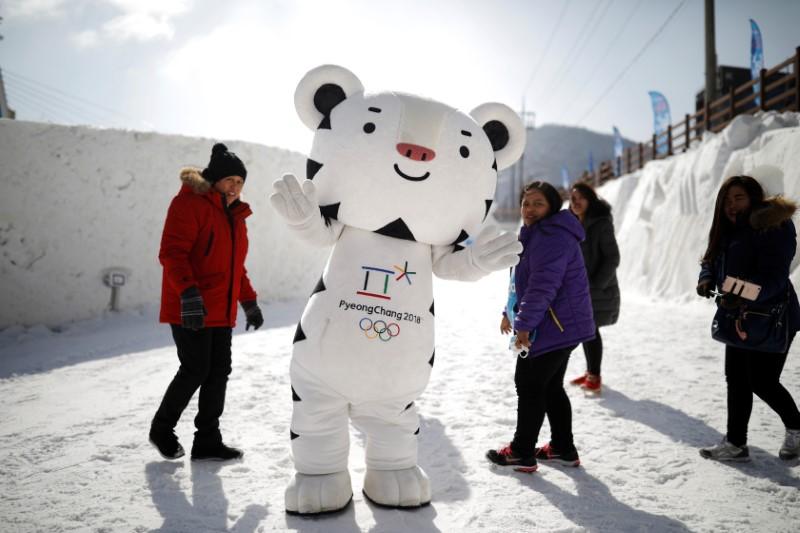
The mascot for the 2018 PyeongChang Winter Olympics Soohorang is seen during the Pyeongchang Winter Festival, near the venue for the opening and closing ceremony of the PyeongChang 2018 Winter Olympic Games in Pyeongchang, South Korea, February 10, 2017. Photo: REUTERS/Kim Hong-Ji

So why did they not address this much earlier?

It is a question the IOC have not been able to answer – at least properly – so far, although Lindberg claimed the remaining legacy plans would be in place within a few weeks as discussions continue with the Local and Provincial Governments.

“We had hoped it would be earlier,” Lindberg told insidethegames at Sweden Arena.

“We are expecting them to fulfill the promise and we want to see the legacy plans.”

Such is the apparent desperation to rectify the lack of plans that organizers were reportedly considering converting the Gangneung Oval into a refrigerated warehouse for seafood. Not exactly sporting legacy at its finest.

Local officials insisted this was never likely to materialize but it suggests they were certainly thinking it might be better than nothing.

Even those venues where some degree of legacy has been established are falling wide of the mark, particularly the Pyeongchang Olympic Stadium.

The 35,000-capacity venue, situated in a part of the world inhabited by only 40,000, will only be used four times before it is dramatically “reconfigured.”

Only the Opening Ceremonies of both the Olympics and Paralympics will have been held there before it is scaled down to a museum and a park, equating to a cost of around $25 million per ceremony. Make of that what you will.

Not only does the current situation prompt valid questions on the strategy of Pyeongchang 2018 and the IOC’s inability to sufficiently pressure organizers to do something about it, but it should also spark a re-think from future host cities.

For a start, it is my personal view that they should have legacy plans in place before a brick is laid or ground is broken on any venue. That way you can ensure hosting the event will be more than a vanity project.

That being said, there are very few examples of a nation being transformed from a sporting point of view after staging the Olympics, but it is more about leaving a legacy for the people who call the host city home, especially as it is often their money which funds it.

In fairness to Pyeongchang 2018, the venues themselves are excellent and the Games have largely been successful from an organisational standpoint.

Yes, there have been complaints of long waiting times for transport and the event has not lived up to its billing as one of the most technologically advanced Olympics in history but these are largely moot points. It is, and should be, about the athletes and the sport.

As Dubi, the executive director for the Olympic Games, pointed out, benefits are being seen elsewhere. Improvements in the transport infrastructure, best highlighted by the high-speed train which connects Pyeongchang and Gangneung with South Korea’s capital Seoul, are there for all to see while the number of visitors to the coast has also risen.

“They’ve done the right things in fundamentally developing the infrastructures that will help this region to be more successful and to bring the numbers, especially from Seoul,” said Dubi.

“The train and the highways is giving a boost to the region. We’ve seen that, in terms of tourism numbers. Gangneung is really, really getting a huge boost.”

But that potential success in those areas will soon be forgotten unless organizers get their act together and ensure these Games are not just for the here and now.

By Liam Morgan

Republished with permission from insidethegames.biz

Armour: Shiffrin Showdown on Hold, it’s all Vonn in Winter Olympics Downhill

0
Armour: Shiffrin Showdown on Hold, it’s all Vonn in Winter Olympics Downhill
Lindsey Vonn goes through a training run in preparation for the women's downhill at the Pyeongchang Olympics. Photo: AP

Lindsey Vonn has the spotlight all to herself.

Rather than a showdown with young American teammate Mikaela Shiffrin, the women’s downhill is now all about the Speed Queen and her pursuit of another gold in her signature event. The spotlight will be squarely on Vonn on Wednesday, regardless of where she finishes.

“I’ve tried not to think about it as being my last Olympic downhill and just focus on the moment, the right here and the right now,” Vonn said Monday.

It’s that here and now that had made the prospect of Vonn and Shiffrin in the downhill so intriguing.

Vonn is, of course, the greatest female ski racer of all time, and it won’t be long before the modifier becomes irrelevant. With 81 World Cup victories, she needs only six more to surpass Ingemar Stenmark’s record.

And Shiffrin might one day pass them both.

A month shy of her 23rd birthday, Shiffrin already has 41 World Cup wins. But most of those have been in the tech events, meaning she and Vonn rarely crossed paths on the World Cup circuit. That changed this season, as Shiffrin began adding speed events to her schedule.

She got her first career downhill win this season – at Lake Louise, of all places, which has been dubbed “Lake Lindsey” for all Vonn’s success there – and last month shared a podium with Vonn in Cortina, Italy.

With Shiffrin hoping to do all five events in Pyeongchang, the idea of seeing her and Vonn, 33, go head-to-head with Olympic gold on the line was one of the most tantalizing storylines of the Games. But the fireworks keep fizzling.

First was Saturday’s Super-G, which Shiffrin dropped after racing the giant slalom and slalom the two previous days. (And taking gold in the GS, for those keeping track.) Now it’s the downhill, which Shiffrin is skipping to focus on the Alpine combined that was moved from Friday to Thursday.

There’s still the combined, where both are expected to be in the medals hunt. But that’s not quite the same as the downhill, the premier race at the Olympics. What could be better than seeing a torch passed at 90 mph?

Then again, it feels right that Vonn gets the spotlight to herself in the race that’s defined her.

For all that she’s achieved, Vonn’s luck at the Olympics has been stunningly bad. She was eighth in the downhill in Turin, two days after she had to be airlifted to a hospital following a scary crash in training. She missed Sochi after reinjuring her knee about six weeks before the Games.

Even in Vancouver, where she won gold in the downhill and bronze in the Super-G, she was skiing with a badly bruised shin.

With one last chance to have the Olympics she wants, Vonn has poured every bit of herself into these Games. The death of her beloved grandfather, Don Kildow, on Nov. 1 only hardened her resolve.

“This time I have a more important mission; win for my late Grandpa,” Vonn said in an Instagram post the night before the Super-G. “He will be watching from the best seat in the house, hopefully looking out for me and guiding me down the mountain.”

Vonn didn’t win the Super-G, tying for sixth after making a mistake in the last turn. But she was upbeat afterward, knowing her best race was still in front of her.

“In general, this season, I feel like I’ve been much better in downhill than Super-G,” Vonn said Saturday. “And this hill, it suits me really well for downhill.”

She’s backed that up so far. She had the fastest time in Sunday’s training run. Despite backing off a bit Monday, she still finished third, .35 seconds behind Austria’s Stephanie Venier.

“I’m not looking to do anything special here in the training runs,” Vonn said Monday. “I just want to get a feeling for the line. I’m trying some different skis every day to seeing what’s running. But, in general, I’m really happy.”

It is only a matter of days before Vonn’s Olympic career is over, and she can see the finish line ahead. But as she’s done for the better part of two decades now, she will not let up until she’s crossed it, pushing hard until the very end.

“You can’t get too sentimental right now because I still have to race, I still have to be focused,” she said. “Afterwards I’ll do some reflecting.”

And savor that one last race that belonged all to her.

By Nancy Armour

This article was republished with permission from the original author and 2015 Ronald Reagan Media Award recipient, Nancy Armour, and the original publisher, USA Today. Follow columnist Nancy Armour on Twitter @nrarmour.

Elizabeth Swaney and the Olympic Spirit

1
Elizabeth Swaney and the Olympic Spirit
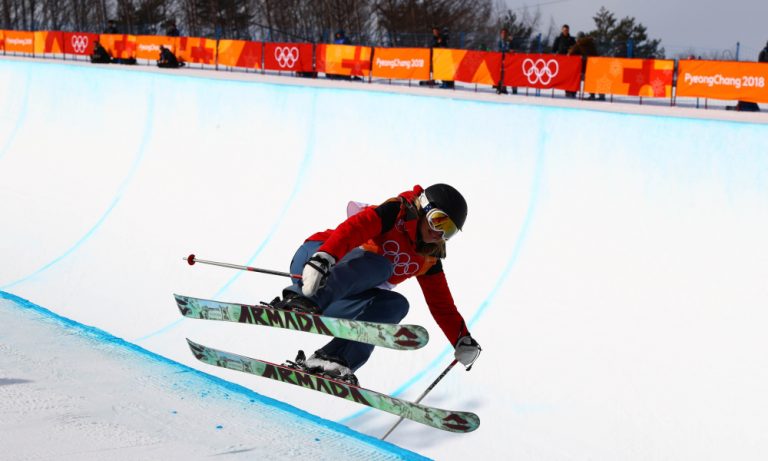
Elizabeth Swaney competes at the Pyeongchang 2018 Winter Olympics in South Korea. Photo: USA Today Sports Images

In case you happened to be watching an Olympic event called Halfpipe Skiing you might have witnessed the run of Hungarian athlete Elizabeth Swaney. I didn’t but I read about it later and watched her run on video. The article I read, by Chris Chase of Olympic Wire, was more than a little derisive of Swaney and ended with the line of, “So much for the Olympic Spirit.” I have a different take.

The story is quite interesting. Swaney, a United States citizen, found a sport in which there are not many competitors. She learned enough to be able to navigate the halfpipe on her skis and while she cannot do much of any tricks she does manage to stay on her feet. She travels the world entering various events and generally finishing near the bottom although often defeating opponents who crash. She found a country that doesn’t have many, if any, competitors in the event and was allowed to represent it. By competing in all these tournaments, she accumulates points and eventually earned enough to qualify for the Olympics.

Chase believes Swaney made a mockery of the Olympics. I would suggest she made a mockery of what the Olympics has become but is a shining example of what they should be. When envisioned, the Modern Olympics was meant to be a showcase for amateur athletes and place where politics could be set aside and people could enjoy competition for the sake of playing the game. The Olympic Creed says it all: The most important thing in the Olympic Games is not to win but to take part, just as the most important thing in life is not the triumph, but the struggle.

I need not expound on the idea the Olympics has become entirely commercial. It generates enormous sums of money for corrupt members of the Olympic Committees, equally compromised politicians, and contractors in the countries they are held. This money largely comes from taxpayers. The athletes are virtually all professionals. Their training, coaching, equipment, and travel expenses are paid by national Olympic Committees and corporate and private sponsors. Many participate in organized schemes to increase athletic performance using various substances.

When you watch Shaun White and his amazing feats you must be aware of the enormous amounts of money and effort required to achieve such things. No mere amateur, taking time off from a non-athletic profession, paying for their own equipment, travel, and entry fees; can possibly hope to finish anywhere near the top of even the least of the Olympic Competitions. Frankly, it’s almost a miracle Swaney was able to compete at all. I argue she is the only true amateur at the games.

The change for all this came when the Eastern European countries under the Soviet Bloc became state-sponsored, full-time amateur athletes. If the other nations hoped to compete with this national juggernaut they had to copy it in form and function. That’s fine. I’m not complaining. I love professional sports. The Olympics and the various World Championships are now nothing more or less than those.

Still, for me at least, watching Swaney make her way slowly and unspectacularly down the halfpipe was about the only thing at these games that brought the Olympic Creed to mind.

By Tom Liberman

Tom Liberman is a regular fellow from St. Louis, Mo., who enjoys spending time with his wonderful family and great friends. He writes Sword and Sorcery fantasy novels in his spare time.

Virtue and Moir Win Olympic Ice Dance Title at Pyeongchang 2018

0
Virtue and Moir Win Olympic Ice Dance Title at Pyeongchang 2018
Tessa Virtue and Scott Moir of Canada re-gained their Olympic ice dance title at Pyeongchang 2018 to become the most decorated figure skaters in Games history. Photo: Paul Chiasson/CP

Canada’s Tessa Virtue and Scott Moir re-gained their Olympic ice dance title at Pyeongchang 2018 to become the most decorated figure skaters in Games history.

The Vancouver 2010 gold medalists finished with a world record total score of 206.07 points after managing 122.40 in the free dance at the Gangneung Ice Arena.

In what is likely to be their final competitive performance before retiring, they beat France’s Gabriella Papadakis and Guillaume Cizeron, their training partners in Montreal, by a margin of 0.79 points.

Papadakis and Cizeron skated in the free dance before Virtue and Moir, registering a world record score of 123.35 points

It gave them a two-dance total of 205.28 points, which was also a world record before Virtue and Moir broke it again shortly after.

“Amazing,” Virtue, a silver medalist with Moir at Sochi 2014, said on winning gold.

“It was a special moment to come out last.

“It was a strong last group.

“There was a lot of pressure, but I’m so happy with how we performed.”

As well as their three ice dancing medals, Virtue and Moir have also won team gold here at Pyeongchang 2018 and silver at Sochi 2014.

The total haul of five breaks a tie with Russia’s Evgeni Plushenko and Sweden’s Gillis Grafstrom for the most Olympic medals in figure skating.

Virtue and Moir have also equaled the record for Olympic gold medals shared by Grafstrom, Sonja Henie of Norway and Irina Rodnina, who represented the Soviet Union.

American siblings Maia and Alex Shibutani were the bronze medalists with 192.59 points.

“It feels like gold – it’s unbelievable,” Alex Shibutani said.

“I am so proud of the way we fought through this week and the season.

“We are so emotional.”

Virtue and Moir held a 1.74-point lead over Papadakis and Cizeron after the short dance segment, which saw them set a world record of 83.67.

The United States’ Madison Hubbell and Zachary Donohue ranked third, 5.92 points behind, but finished fourth overall with 187.69.

Figure skating medal action at Pyeongchang 2018 is due to conclude on Friday (February 23), when the free skating element of the women’s singles event is scheduled.

By Daniel Etchells

Republished with permission from insidethegames.biz