Home Blog Page 167

United States Climbs to Summit of WBSC Men’s Baseball Rankings

0
United States Climbs to Summit of WBSC Men’s Baseball Rankings
U.S. pitcher Marcus Stroman holds up with his MVP trophy after the United States defeated Puerto Rico 8-0 in the final of the World Baseball Classic in Los Angeles, Wednesday, March 22, 2017. Photo: AP / Jae C. Hong

The United States has knocked Japan off the top spot to become the new world number one in men’s baseball.

The Americans had been at number two on the World Baseball Softball Confederation (WBSC) list for three years.

A superb 2017 has seen them climb to the summit, with professional and age-group WBSC events all counting towards ranking points.

The US won the World Baseball Classic last year as well as World Cups for Under-18s and Under-12s.

It helped them amass a record-high 2,127 annual ranking points for the year with their total now reading 5,025.

Japan have slipped to second on 4,609 with points won during 2014 now chalked off.

South Korea remain third on 4,158 with Cuba climbing from fifth to fourth on 3,152.

Mexico have also moved up a place to fifth and have 2,613, with Chinese Taipei dropping two places to sixth on 2,520.

The top 12 teams at the end of this year will qualify for the 2019 WBSC Premier12, which will offer qualification spots for the Tokyo 2020 Olympic Games.

“This is a very exciting and critical time leading up to the WBSC Premier12 2019 and Tokyo 2020 Games,” said WBSC President Riccardo Fraccari.

“These next years will be among the most important for baseball/softball to continue emerging as a major global sport.”

The biggest ranking events in 2018 are the Under-15 World Cup in Panama in August and the Under-23 World Cup in Nicaragua in October.

Belarus were the biggest climbers in the new rankings, rising seven spots to 39th.

By Dan Palmer

Republished with permission from insidethegames.biz

USA’s Randall, Finland’s Terho Elected to IOC Athlete’s Commission

0
USA’s Randall, Finland’s Terho Elected to IOC Athlete’s Commission
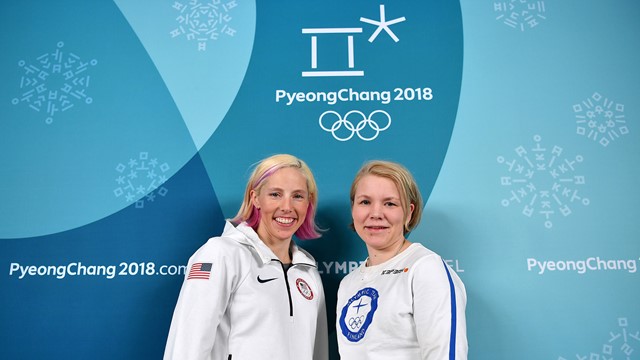
USA's Kikkan Randall, left, and Finland's Ema Terho, right, were elected to IOC athletes' commission. Photo: IOC

With a record 83.86 percent of athletes at the PyeongChang 2018 Olympics voting, Ema Terho from Finland (ice hockey) and Kikkan Randall from the United States (cross country skiing) were elected members of the IOC Athlete’s Commission. Following approval by the IOC Session, to take place on the last day of the Games, Terho and Randall will become Commission and IOC Members for an eight-year term, representing their fellow Olympians on the IOC Athletes’ Commission, which serves as a link between the athletes and the IOC. They will replace current IOC Athletes’ Commission Chair Angela Ruggiero and Adam Pengilly, who were elected at the 2010 Winter Olympic in Vancouver.

Terho represented Finland at five Olympic Winter Games, winning bronze at Nagano 1998 and Vancouver 2010. Randall is currently competing in her fifth Winter Games in PyeongChang. Earlier this week, she won the USA’s first-ever Olympic gold medal in cross-country skiing, after topping the podium in the team sprint event alongside Jessica Diggins. Terho was elected with 1,045 votes, followed by Randall with 831 votes. All 2,930 athletes competing in PyeongChang were eligible to vote and had six candidates to choose from representing three continents and five different sports. They were asked to cast votes for two different athletes from two different sports.

This story first appeared in the blog, The Sport Intern. The editor is Karl-Heinz Huba of Lorsch, Germany. He can be reached at [email protected]. The article is reprinted here with permission of Huba.

Nightengale: Stanton won’t Hide from Expectations or Fanfare as a Yankee

0
Nightengale: Stanton won’t Hide from Expectations or Fanfare as a Yankee
New York Yankee Giancarlo Stanton. Photo: KIM KLEMENT / USA TODAY SPORTS

Giancarlo Stanton hurriedly walks to his corner locker in the New York Yankees clubhouse. He stops. Starts. Looks for his bat. Asks if you remember seeing him carrying a bat.

There’s no panic in his face, but anxiety in his voice, four days into his new workplace.

He tells you he’s still getting adjusted to a new organization, getting to know new teammates (all but three he had never met), trying to find out where he’s supposed to be, what time, and learn the names and faces of strangers he’s never seen.

He still doesn’t have a place to live yet in New York, trying to negotiate with former teammate A.J. Ramos the perfect spot in between Yankee Stadium in the Bronx and Citi Field in Queens. He hasn’t had even had time to unpack everything in his recently completed three-story penthouse in downtown Miami, which now will be only a winter home, let alone his rental in Tampa.

And, oh yeah, he only has a month to get rather creative before the Yankees head north.

It may seem like a ridiculous notion, but what the heck, he’s going to see if he can somehow go incognito in the streets of New York.

He may be 6-foot-6 and a chiseled 245 pounds, Madison Avenue looks, a face plastered on billboards around town, with regular appearances on the back and front pages of the New York tabloids, but, hey, he’s going to give it a shot.

 “I’m going to have to fool around with some disguises and what not,’’ Stanton says. “Get some long hair. Maybe bring my mullet back.

“I have to play round with it to see if I can get away with it.’’

The odds of Stanton not recognized the moment he leaves his New York apartment?

“Zero,’’ Yankees closer David Robertson said. “He’s 6-6, his back is as wide as a door, and everyone knows his face.’’

Says Yankees veteran pitcher CC Sabathia: “He’s got no chance. Those days are over. He better get used to it, he’s going to have to deal with it.’’

Stanton, 28, who is almost an introvert beyond a circle of trust consisting mostly of buddies from high school, understands his life will forever be different.

Stanton, who would rather stand in the shadows of a batter’s box facing Clayton Kershaw than face cameras and notepads every day, can no longer duck the media after games. He can homer four times, or strike out four times, and reporters will be waiting. It’s a spotlight that even has his former Marlins teammates privately wondering whether he can handle it.

“I’m pretty well-aware how it is,’’ Stanton says. “I played enough in New York, so I paid attention. You see how the papers are, good and bad. You see how the media is, good and bad.

“There will be a point where there will be negativity. There will be magnified negativity, magnified positive things. You got to live through it and understand that. I expect it.

“I’m not going to run from it. If you run from it, you’re just going to be worrying about it every day. “Oh, here they come.’ I’m just going to be myself, and not to change to be someone I’m not.

“I just want to be truthful.’’

Stanton got a subtle reminder of life in New York last May when he was peppered with questions about Yankee rookie Aaron Judge’s sensational start. Stanton said he preferred not to talk about him since he wasn’t a teammate. The next thing he knew, his comments blew up, as if he was feuding with Judge.

“I know the media stirred up what I said in the beginning of the year,’’ Stanton says. “I was in New York, we were playing terrible, and this guy says, “Hey, I think this guy (Judge) has more power than you. Do you think he has more power than you? Hey, did you see his home run?’

“I was like, ‘Hey, that doesn’t matter to me. I don’t care about miles per hour off the bat. I don’t care if he has more, or I have less. It doesn’t matter.’

“That got all stirred up, so I remember when I met (Judge) at the All-Star Game, I said, “Look man, they’re trying to stir things up. We got to be cool. We got to be friends. We got to understand that we can help each other.’’

Here they are, now teammates, where Stanton will wear a Yankee uniform Friday for the first time in a game when the Yankees host the Detroit Tigers at George M. Steinbrenner Field.

In many ways, Stanton says, it will feel as if it’s his major-league debut.

It will be the first chapter of the rest of his career.

He already has the accolades, all of the money he’ll ever need for generations of his family, but finally, he has a chance to actually win, with actual fans showing up for games.

There have been more fans watching batting practice this week at Steinbrenner Field, hooting and hollering just at the sight of him and Judge, than would show up for weekday games at Marlins Park.

And, yes, after years of losing, fan disillusionment and organizational chaos, he will be winning, going to a team that not only expects to win the World Series every year, but has not had a losing season in a quarter-century.

“That’s the part that I can’t wait,’’ Stanton says, “winning.

“I’ve never had that before. That’s what I always wanted. That’s what everybody wants in their career. And what my previous years haven’t been.

“You’re not going to be in your prime forever. You’re not going to be in the game forever. I wish every player can experience what I’m about to experience.’’

This simply is why Stanton wanted out of Miami, the only organization he has ever known, failing to ever make the postseason, let alone produce a winning season during his eight-year sentence.

They finished 80-82 in his rookie season, and that was as close as Stanton came to breaking even in Miami.

Still, he was prepared to stay. Really, it was his preference, falling in love with the city. It’s why he signed a 13-year, $325 million contract with the Marlins, with a complete no-trade clause, promised that the Marlins’ fire sale days were over.

It all changed the morning of Sept. 25, 2016, Stanton believes, when ace Jose Fernandez was killed in a boating accident. Still, even without Fernandez, Stanton believes if the Marlins would have added just two more starting pitchers, they could at least have been competitive in the NL East, baseball’s weakest division. He tried to convey that message to owner Derek Jeter in their lone face-to-face meeting.

Jeter wouldn’t budge.

“Jeter instead told him he had 24 hours to accept a trade to the Giants or the Cardinals,’’ said Joel Wolfe, his long-time agent, “or he would be in Miami the rest of his career.’’

Stanton called the Marlins’ bluff.

“I didn’t want to be part of a rebuild,’’ Stanton softly says, “I just didn’t. But I wasn’t going to put a deadline on it, either. I never experienced something like this before. I was not going to abide by a deadline.

“My deadline was spring training. I wanted to see what could happen, see what happened after the winter meetings. So to give me a deadline before all of that, no way.’’

Stanton says he never said “no,’’ simply, “not yet,’’ when the Marlins asked him if he would accept a trade to the Cardinals or Giants. He likely would have ultimately accepted a deal to the Giants, who promised him they would do everything possible to return to the World Series. The Giants offered to pay $265 million of Stanton’s remaining $295 million, and packaged outfielder Denard Span and two prospects in their proposal to the Marlins.

It was appealing, but Stanton’s first preference was playing for the Yankees, Los Angeles Dodgers, Houston Astros or Chicago Cubs.

Yes, who just happen to be the four playoff finalists in 2017, with Stanton watching virtually every inning of the World Series.

“You prefer not to be on the couch,’’ Stanton said, “but you don’t want to sit around and hope. I learn by watching, and I wanted to be the most prepared when I do get there.’’

The Yankees swooped in, made almost an identical offer to the Giants’ deal, substituting Starlin Castro instead of Span, and voila, now have the NL MVP in Stanton and the runner-up AL MVP in Judge – Thunder and Lightning in the same lineup.

Also, after there, of course, lies the rub.

It’s called expectations.

The Yankees finished one victory shy of the World Series, stoking the belief that this is the year they win it.

Stanton, who led baseball with 59 home runs last year, now is expected to top 60 as he moves into Yanke eStadium.

“If I hit two home runs all year,’’ Stanton says, “I don’t care, as long as we win the World Series.’’

Maybe there will be a time, too, that Stanton will even embrace the world’s biggest media giant, and not dread the constant microscope.

“I’m hopeful, but it’s going to take time,’’ Wolfe says, “because he was conditioned to avoid the media. He doesn’t like the media attention and doesn’t enjoy interviews.

“It’s just that when he was with the Marlins, the questions were never just about baseball or the game. There was always drama. He got so sick of all the bull.

“It’s just going to take some time for him to learn how to trust again.’’

Yet, no matter the attention, no matter how many media requests, Yankees GM Brian Cashman and his new teammates believe that Stanton will thrive. He’s in an environment full of stars, with the only narrative being the goal of a World Series championship.

“I work so hard, man, and it sucks not to be able to win,’’ Stanton says. “That’s why I’m so happy and so excited about this. There’s a true expectation and a chance to do something special here.

“I waited my whole life for this.’’

By Bob Nightengale

This article was republished with permission from the original publisher, USA Today. Follow Bob Nightengale on Twitter and Facebook.

Are Congress and Sports Organizations Failing to Protect Young Athletes?

0
Are Congress and Sports Organizations Failing to Protect Young Athletes?
Rick Butler, a nationally renowned club coach from Chicago, watches a scrimmage and instructs players from the sidelines during the first day of volleyball camp at Abbott Sports Complex on Monday, August 4, 2014. Photo: Stacie Scott/Lincoln Journal Star

Rick Butler has joined Larry Nassar in the “how did they get away with it for so long and nobody said a word” category. USA Volleyball banned the longtime coach from the organization in January after a newspaper, the Chicago Sun Times reported in November, 2017, that Butler was accused of highly inappropriate sexual behavior.

The ban is forever just like the USA Volleyball ban placed on Butler in 1995 after three women came forward and accused Butler of sexually abusing them as teenagers while they competed on his teams. Butler never faced criminal charges and was reinstated to USA Volleyball in 2000. The Amateur Athletic Union has banned Butler as well.

Sports are sold as legitimate entertainment and people buying the product have to assume that the organizations which present sports are truly on the up and up in every aspect of the business. That means people from the President of the National Collegiate Athletic Association to the members of the United States Olympic Committee to the people in charge of USA Gymnastics to USA Volleyball to the AAU. But there seems to be a lack of oversight from those organizations. Jerry Sandusky in Pennsylvania in his child molestation cases and Nassar in his sexual abuse cases were not investigated.

Is there too much money involved that various sports organizations will not look into whispers of inappropriate behavior until it appears in the Indianapolis Star or in the Chicago Sun Times? Sports organizations as one time Los Angeles 1984 Olympics chairman and Major League Baseball Commissioner Peter Ueberroth once pointed out go to extreme lengths to protect the logo. The logo means money and a dented in the logo could cost millions of dollars annually.

Congress needs to invest what is going on at the United States Olympic Committee. Congress established the USOC in 1978 to protect athletes. The USOC seems to be failing at that.

By Evan Weiner For The Politics Of Sports Business

This article was republished with permission from the original publisher, Evan Weiner.

Fuller: What is There to Consider, Mr. Bach?

0
Fuller: What is There to Consider, Mr. Bach?
Russian athletes were made to compete under the Olympic flag as Olympic Athletes from Russia. Photo: AP, Michael Sohn

I have to admit I am really into the Winter Olympics.

It is a bit strange that in light of growing up in Australia, the driest continent on earth, surrounded by ocean and beautiful beaches, and blessed with pretty good weather and lots of sunshine, the Winter Olympics have, in a weird way, always been front of mind every four years.

It is evidently similar for the likes of American skater, Nathan Chen, with his record-breaking six quad jumps. He’s from sunny California and says he likes to relax by lying on the beach.

Of course, what has captured me these Winter Olympics is the sideshow between the International Olympic Committee (IOC) and Russia. Probably not so much a sideshow as the main game, and the spectacle of the extremely toothless sanctions applied by the IOC on Russia due to the doping scandal.

The IOC’s pretend sanctions-when-you’re-not-having-sanctions were hilarious enough and yet another example where the IOC is prepared to bastardize the concept and purity of sport in favour of a powerful nation like Russia.

These came despite incontrovertible evidence of a state-sanctioned doping regime affecting the last Winter Olympics in Sochi as well as almost every other sport (are you listening Mr Infantino?)

Even now, with only “clean” Russian athletes – wearing laughable “neutral” gear with the word Russia emblazoned on it – supposedly at these Games, the questions and suspicion do not go away. By the way, there is a precedent for neutral athletes participating under the IOC flag however I am sure this is a first where they get to retain the name of their country in their title – OAR, the Olympic Athletes from Russia.

As if to oblige our suspicions, up pops a Russian curler, Aleksandr Krushelnitckii, who won a bronze medal and tested positive for meldonium. It is a little prescribed pharmaceutical drug that is used to treat coronary artery disease in Russia, other parts of Eastern Europe and the Baltic states.

It is the same substance for which tennis player Maria Sharapova was banned but she and Krushelnitckii are not the only ones. There are other Russian sports stars – in speed skating, judo, gymnastics, wrestling, handball – who have also been banned. Evidently, many of their sports stars have coronary artery disease.

So against this background – a massive betrayal of sport by Russia, pretend sanctions by the IOC, and then yet another athlete found to be using a banned substance – what is the IOC doing?

They are actually considering whether they will let Russia march in the Closing Ceremony on Sunday (February 25) as Russia. Under a Russian flag, wearing proper Russian uniforms.

Why does this need any consideration at all?

It should be a no-brainer to Thomas Bach and the rest of his Executive Board, but apparently not.

So here’s the thing.

Sport needs an independent worldwide anti-corruption agency, which includes anti-doping functions. Not a World Anti-Doping Agency-like creature which is 50 per cent owned by the IOC. Not a Court of Arbitration for Sport-type creature that is wholly overseen and run by the IOC.

But truly, totally, independent. And with money to make it work.

I and my colleagues have been banging on about it for some time now. It is such an obvious thing that needs to happen, the issue is how to make it happen.

Mind you, the sports themselves could help fund it – as long as they were prepared not to meddle in its operations.

With the huge money available to the IOC, and other big sporting organisations such as FIFA, a small proportion of their broadcast money could help fund a global anti-corruption body.

That would truly be a gift to sportsmen and women who deserve to be competing with the best, knowing that their fellow athletes are totally clean. It would be a great gift from the big sports to the world.

But I am dreaming – so we keep searching for solutions.

In the meantime, if Bach and his cronies let the Russians march as Russians on Sunday, we will get yet another example of how much the IOC could not care less about the integrity of sport.

Their sporting values are not worth a crumpet, and diminish us all.

By Jaimie Fuller

Republished with permission from insidethegames.biz

Second Russian Tests Positive for Banned Drugs at Pyeongchang 2018

0
Second Russian Tests Positive for Banned Drugs at Pyeongchang 2018
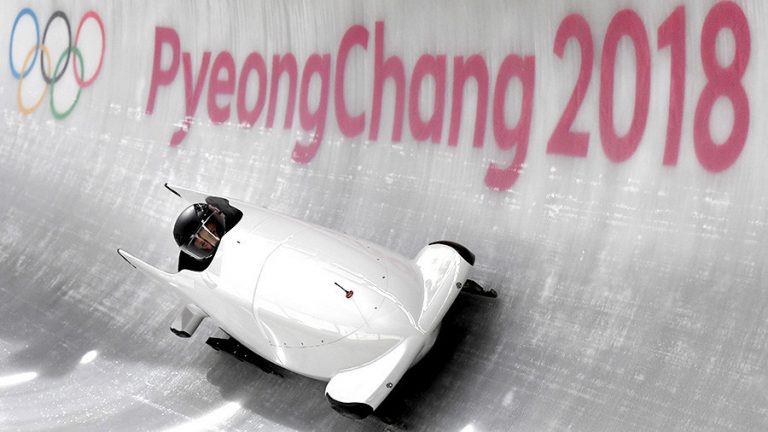
Russia's team leader and driver Nadezhda Sergeeva takes a turn in the first women's unofficial bobsleigh training session during the Pyeongchang 2018 Winter Olympic Games. Photo: Mark Ralston / Reuters

A second athlete representing the Olympic Athletes from Russia (OAR) has tested positive for a banned substance at Pyeongchang 2018.

She has been identified as Nadezhda Sergeeva, who finished 12th in the two-woman bob where she had been the pilot with partner Anastasia Kocherzhova.

The disclosure of another positive drugs test follows curler Aleksandr Krushelnitckii being stripped of the Olympic mixed doubles bronze medal.

It comes less than 24 hours before the International Olympic Committee (IOC) Executive Board is due to meet to discuss the situation regarding Russia.

It is widely expected that this latest case will end any hope the Russian Olympic Committee has of its suspension, imposed in December following allegations of “systematic manipulation” of doping samples at Sochi 2014, being lifted or the team being allowed to march under their own country’s flag at the Closing Ceremony on Sunday (February 25).

Until this latest incident, there had been widespread optimism from Russian officials here that they would be allowed to take part in the Closing Ceremony, despite the positive case involving Krushelnitckii.

Alexander Zubkov, President of the Russian Bobsleigh Federation (RBF), confirmed Sergeeva’s positive test.

Later, the IOC announced they had been told by OAR they had been informed of a “an adverse analytical finding involving one of their athletes.”

Sergeeva tested positive for trimetazidine, a stimulant usually used to treat patients suffering from angina, which is believed to offer many of the same benefits as meldonium, the drug Krushelnitckii tested positive for.

Stanislav Pozdnyakov, head of the OAR delegation here in Pyeongchang, has criticised the athlete for “negligence.”

An RBF spokesperson told Sport Express that Sargeeva submitted a sample with a low level of the drug on Sunday (February 18).

She had reportedly submitted a negative test five days earlier.

Sergeeva was among several Russians who tested positive for meldonium in 2016 but was cleared after the World Anti-Doping Agency (WADA) adopted an amnesty for athletes who had a low dose of the then newly-added substance to its banned list in their samples.

Trimetazidine is the same drug that China’s three-time Olympic swimming champion Sun Yang tested positive for in 2014 and for which he served a secret three-month ban.

WADA added the drug to its banned list in 2014 for in-competition testing.

The following year they re-classified it as a metabolic modulator, making it banned in and out-of-competition.

Scientists claim trimetazidine improves athletes’ ability to transport oxygen around their bodies.

Trimetazidine was among the banned substances identified in the McLaren Report as being used by Russian athletes before Sochi 2014 but not being properly reported as positive by Moscow Laboratory director Grigory Rodchenkov.

Richard McLaren, the Canadian lawyer who carried out the report, found at least eight cases that had been covered up by Rodchenkov.

Sergeeva is a former international athlete who won a bronze medal in the heptathlon at the 2009 Under-23 European Championships in Kaunas in Lithuania.

She took up bobsleigh the following year.

Sergeeva’s best international performance was finishing second in the European Championships in Winterberg earlier this year with Kocherzhova.

She had also competed at Sochi 2014, partnering Nadezhda Paleeva and finishing 14th.

Sergeeva was not among athletes implicated in the “systematic manipulation” of doping samples at those Olympics and was among 169 Russian athletes cleared by a special IOC panel to take part at Pyeongchang 2018.

The news of her positive test overshadowed OAR’s best day at Pyeongchang 2018.

The scandal broke during the men’s ice hockey semi-final against the Czech Republic, which OAR won 3-0.

Earlier, 15-year-old Alina Zagitova had won the team’s first gold medal of these Winter Olympics, beating team-mate Evgenia Medvedeva in the women’s singles skating, with a flawless performance.

By Duncan Mackay

Republished with permission from insidethegames.biz

Armour: Diggins will Carry U.S. Flag in 2018 Winter Olympics Closing Ceremony

0
Armour: Diggins will Carry U.S. Flag in 2018 Winter Olympics Closing Ceremony
United States' Jessie Diggins, left, and Kikkan Randall celebrate after winning the gold medal in the women's team sprint freestyle cross-country skiing final at the 2018 Winter Olympics in Pyeongchang, South Korea, Wednesday, Feb. 21, 2018. Photo: AP Photo/Matthias Schrader

Jessie Diggins will be out in front once again.

Diggins, who teamed with Kikkan Randall to give the United States its first-ever gold medal in cross country, was chosen by her fellow Olympians to carry the flag in Sunday’s closing ceremony. She is the first cross-country skier to be chosen as the U.S. flag bearer for the closing ceremony.

“I actually thought there maybe had been a mistake. I was like, `What? I can’t believe this,’” Diggins said Friday on the TODAY Show, which first announced the honor. “It is so humbling, and I feel so honored to have been picked.”

Diggins skied the final leg in Wednesday’s team sprint. In third place at the peak of the final hill, she quickly caught Maiken Caspersen Falla of Norway, and then made a furious charge to reel in Stina Nilsson. She was inches in front of the Swede as they approached the finish line, and Diggins thrust one ski forward to clinch the gold.

She and Randall won by .19 seconds.

“In my wildest dreams, I don’t think I could have imagined all of this for sure,” Diggins said. “It’s been so much to process in the last 48 hours. It’s been overwhelming in the very best way.

“Getting to carry the flag is the absolute icing on the cake.”

By Nancy Armour

This article was republished with permission from the original author and 2015 Ronald Reagan Media Award recipient, Nancy Armour, and the original publisher, USA Today. Follow columnist Nancy Armour on Twitter @nrarmour.

Zagitova Wins First Gold for Olympic Athletes from Russia in Pyeongchang

0
Zagitova Wins First Gold for Olympic Athletes from Russia in Pyeongchang
Teenage sensation Alina Zagitova, 15, ended the Olympic Athletes from Russia's (OAR) wait for a gold medal at Pyeongchang 2018 as she upstaged compatriot Evgenia Medvedeva to clinch the women's singles figure skating title with a dazzling display. Photo: REUTERS/ DAMIR SAGOL

Teenage sensation Alina Zagitova ended the Olympic Athletes from Russia’s (OAR) wait for a gold medal at Pyeongchang 2018 as she upstaged compatriot Evgenia Medvedeva to clinch the women’s singles figure skating title with a dazzling display.

The 15-year-old from Izhevsk and Medvedeva both scored 156.65 points in the free skating program but Zagitova had the edge from the short program and it proved crucial as she finished with an overall 239.57.

Medvedeva, the two-time world champion, ended narrowly behind her teammate on a total of 238.26.

Canada’s Kaetlyn Osmond also impressed with a superb free skating routine and took the bronze medal on 231.02 points.

The triumph for Zagitova, the reigning European champion after she beat Medvedeva to the singles crown in Moscow last month, handed the OAR team their first gold medal of the Games.

“There was a lot of pressure on me and Evgenia,” said Zagitova.

“All fans were waiting for us athletes from Russia to be on top.”

At 15 years and 281 days old, Zagitova is the second-youngest Olympic ladies gold medalist, after Tara Lipinski from the United States.

She was 15 years and 255 days old when she won at Nagano 1998.

The formidable pairing, set to dominate the sport for years to come, are the most recognizable names on the list of the 168 Russian athletes cleared to compete here by the International Olympic Committee (IOC).

Zagitova’s victory marked a rare moment of celebration for the country at these Olympics after they were forced to participate as neutrals as part of an IOC sanction for the nation’s “systematic manipulation” of the anti-doping system at Sochi 2014.

She received her gold medal at a ceremony tonight where Russian flags and the national anthem were both absent.

IOC member Tsunekazu Takeda of Japan presented the medals.

Zagitova and Medvedeva could yet march under their country’s flag at the Closing Ceremony as the IOC are due to decide whether the suspension on Russia will be lifted tomorrow.

The Russian duo, who train together and share the same coach, were clear favorites for the top two positions on the podium and it seemed to be merely a question of who would finish where.

Zagitova was the first of the Russian skaters to take to the ice and she made full use of the scoring system, packing all of her jumps into the second half to earn a 10 per cent bonus.

Skating to Don Quixote by composer Leon Minkus, she produced a flawless, effortless and mesmeric routine to surge to the summit of the standings with just two skaters left to perform.

After Osmond was unable to leapfrog Zagitova, the first OAR gold medal was confirmed as Medvedeva was the last to compete.

The 18-year-old, long been considered the overwhelming favorite before an injury hampered her preparations late last year, knew what she had to do to snatch the title from her compatriot.

Medvedeva, who traveled to Lausanne to plead Russia’s case to the IOC Executive Board in December, recovered from the slightest of errors early to complete another enchanting routine but she knew it would not be enough as she left the ice in floods of tears.

The confirmation then came from the judges as her score flashed up on screen, leaving her to settle for the silver medal in the latest installment of what promises to be a fascinating rivalry between the Russian stars.

“As I said many times, no matter what the circumstances are, people know where we are from and the spectators proved that,” said Medvedeva.

By Liam Morgan

Republished with permission from insidethegames.biz

American Wise Retains Olympic Men’s Ski Halfpipe Gold at Pyeongchang 2018

0
American Wise Retains Olympic Men’s Ski Halfpipe Gold at Pyeongchang 2018
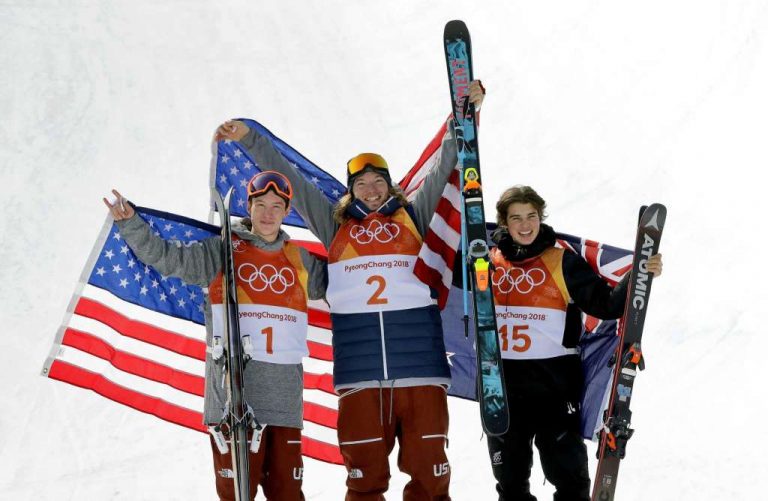
From left; Silver medal winner Alex Ferreira, of the United States, gold medal winner David Wise, of the United States, and bronze medal winner Nico Porteous, of New Zealand, celebrate after the men's halfpipe final at Phoenix Snow Park at the 2018 Winter Olympics in Pyeongchang, South Korea, Thursday, Feb. 22, 2018. Photo: Lee Jin-man, AP

The United States’ David Wise produced a stunning final run to successfully defend his Olympic halfpipe title at Pyeongchang 2018.

The 27-year-old failed to land jumps in his first two runs, registering point scores of 17.00 and 6.40, but he posted 97.20 for his last attempt to beat compatriot Alex Ferreira to the gold medal at Phoenix Park.

Ferreira’s third-run score of 96.40 points was not enough to overtake Wise, but it ensured him the silver medal in the 11-man event.

Wise becomes only the second athlete to win two gold medals in freestyle skiing, following in the footsteps of Canada’s Alexandre Bilodeau who triumphed in men’s moguls at Vancouver 2010 and Sochi 2014.

“Today was just an amazing day of halfpipe skiing,” he said.

“Seeing Alex land his runs, all three runs, and the qualification that he did, just inspired me.

“I really wanted to land a run.

“I walked out of a ski twice.

“For both runs I walked out of a ski.

“Not really a mistake I made, but it was just unfortunate, so I had to put it all down on the third run, and I pulled it off.”

New Zealand’s Nico Porteous registered 94.80 points in his second run to take the bronze.

It gave his country its second medal in the space of two hours, after Zoi Sadowski Synnott took bronze in the women’s big air snowboard event.

New Zealand had previously won only one Winter Olympic medal through Alpine skier Annelise Coberger, who claimed silver in the women’s slalom at Albertville 1992.

At 16 years old, Porteous becomes the youngest medalist in freestyle skiing at the Winter Olympics.

Switzerland’s Mathilde Gremaud had been the youngest when she won silver here in the women’s slopestyle, aged 18 years and nine days.

“I’m pretty confused about what’s going on,” Porteous said.

“I just can’t believe it.

“I was just so proud of my skiing today, and that’s why in the third run I just didn’t have anything left in the bag.”

Porteous’ compatriot Byron Wells was ruled out of the final after suffering a leg injury in practice.

Freestyle skiing medal action at Pyeongchang 2018 is due to conclude tomorrow, when the women’s ski cross event is scheduled.

By Daniel Etchells

Republished with permission from insidethegames.biz

Gisin Tops Shiffrin to Win Women’s Alpine Combined Gold at Pyeongchang 2018

0
Gisin Tops Shiffrin to Win Women’s Alpine Combined Gold at Pyeongchang 2018
Switzerland's Michelle Gisin (center) the women's combined gold medalist, poses with runner-up Mikaela Shiffrin, of the United States, and third-place finisher Wendy Holdner, of Switzerland, after the event on Thursday. Photo: AP

Switzerland’s Michelle Gisin held off the challenge of pre-event favorite Mikaela Shiffrin to win the women’s Alpine combined gold medal at Pyeongchang 2018.

The 24-year-old clocked a combined time of 2:20.90 to beat her American rival by 0.97 seconds and claim her first Olympic medal.

She ranked third in the downhill in 1:40.14 and fourth in the slalom in 40.76.

Gisin joins her sister Dominique as the only women from Switzerland to win a gold medal in an Alpine skiing event in the past 24 years.

Dominique Gisin won the women’s downhill at Sochi 2014.

The last woman before the Gisin sisters to claim gold for Switzerland in Alpine skiing was Vreni Schneider,winner of the women’s slalom at Lillehammer 1994.

Switzerland’s Wendy Holdener was the bronze medalist, producing the fastest slalom run with 40.23 for an overall time of 2:22.34

“It’s amazing to be on the podium with two such amazing skiers,” Gisin said.

“I knew I would have to show the slalom of my life to have a chance to get that medal and to get that gold medal.

“I’m just so excited that I found my run.

“I’ve been looking for that run the whole season and it came at just the perfect moment.”

Gisin’s victory was confirmed when the United States’ Lindsey Vonn, the leader after the downhill segment, failed to finish her slalom run.

Shiffrin becomes the third athlete from America to win a medal in at least three different Winter Olympic Alpine skiing events, following in the footsteps of Julia Mancuso and Bode Miller.

She previously won the gold medal in the slalom at Sochi 2014 and the giant slalom here at Pyeongchang 2018.

“It feels good,” Shiffrin said.

“It’s a nice way to end the Olympics.

“”I started off with a bang and ending with a medal on the podium is really cool.

“I came into these Olympics knowing I could be a medal threat in multiple disciplines.

“I didn’t even know how many I would ski.

“After the gold in the giant slalom, I was really hopeful and positive.”

Norway’s Ragnhild Mowinckel, who ranked second in the downhill, finished fourth overall.

Alpine skiing medal action at Pyeongchang 2018 is due to conclude on Saturday (February 24) with the new team event.

By Daniel Etchells

Republished with permission from insidethegames.biz