Home Blog Page 166

Black History Month and Sports

0
Black History Month and Sports
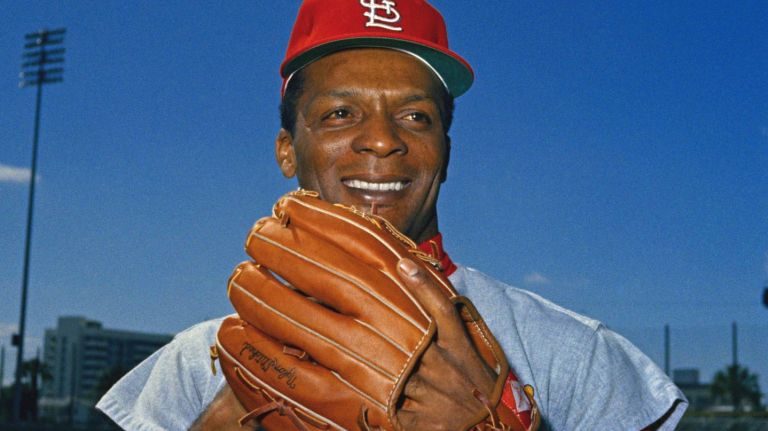
St. Louis Cardinals centerfielder Curt Flood in March 1968. He was a three-time All-Star and hit .300 or better six times in his 12 full seasons. Photo: AP

February is Black History Month and there are some sports people starting with Muhammad Ali who should be remembered. Ali, the members of the 1965 American Football League All-Star team that refused to play in New Orleans following the 1964 season because of Jim Crow and Curt Flood should make the list.

Ali’s refusal to join the armed forces in 1967 was the second great statement by African-American athletes in the 1960s. It came about two years after 22 African-American football players who were denied services in New Orleans in the lead up to an all-star game. The players voted to boycott and the game was moved to Houston. New Orleans ceased being in the running for either an AFL or an NFL team.

On April 28, 1967, after refusing to join the army because he was against the Vietnam War, Ali faced a felony charge and jail. That was enough to get the New York State Athletic Commission to suspend his boxing license and the World Boxing Association to strip him of his title.  Eventually Ali would get his case heard by the Supreme Court and would win. The Supreme Court decision came after the March 1971 Ali-Frazier fight. In 1970 a judge ruled the New York State Athletic Commission was wrong to strip him of his boxing license and Ali went back to fighting.

During his exile from the ring, Ali gave anti-Vietnam War speeches. Sports columnists, politicians through their state boxing commissions and others stuck it to Ali.  

After the 1969 season, Curt Flood began his battle with baseball over the reserve clause after being traded by St. Louis to Philadelphia. John Carlos and Thommie Smith protested poverty and financial inequality during a medal ceremony at the 1968 Mexico City Olympics. The Smith-Carlos protest didn’t change anything. Those problems continue.  All of those athletes put their careers on the line for causes.

By Evan Weiner For The Politics Of Sports Business

This article was republished with permission from the original publisher, Evan Weiner.

Medalists and Military Veterans Boost US Paralympic Team for Pyeongchang 2018

0
Medalists and Military Veterans Boost US Paralympic Team for Pyeongchang 2018
AP Photo/Lee Jin-man

The United States has confirmed a 74-strong team for next month’s Pyeongchang 2018 Paralympics that contains 41 returning Paralympians who have won a combined total of 29 medals.

The roster includes three Paralympians who have competed at every Winter Games since 2006 – Laurie Stephens, Tyler Walker and Steve Cash.

Stephens is the most decorated athlete on the team with six Paralympic medals in Alpine skiing – two gold, two silver and two bronze.

Team USA’s athletes will compete throughout the nine days of Paralympic competition in five sports – Alpine skiing, Nordic skiing, snowboarding, Para-ice hockey and wheelchair curling.

Eighteen athletes who will represent the Americans in Pyeongchang will have also represented the US as military veterans and active duty service members.

Eight athletes served in the Marine Corps, with seven in the Army, two in the Navy and one in the Air Force.

The ice hockey team has the most veteran members, with six athletes previously serving in the armed forces.

The US Paralympics representation for the Games, that run from March 9 to 18 in South Korea, includes six guides for visually impaired athletes and is comprised of 20 women and 54 men.

“It is an honor to announce the athletes who will represent Team USA at the Paralympic Winter Games,” said Julie Dussliere, the US Chef de Mission and vice president of US Paralympics.

“From returning Paralympic champions, to our younger generation of eight teenage athletes making their Paralympic debuts, we are excited to cheer on our team as they compete on the world’s largest stage.

“These athletes are not only going to make our country proud, but also inspire more people than ever before through increased television coverage provided in partnership with NBC and Toyota.”

The full American Paralympic squad can be found here.

By Mike Rowbottom

Republished with permission from insidethegames.biz

PyeongChang Olympics Cost Estimated $10 Million Per Hour

0
PyeongChang Olympics Cost Estimated $10 Million Per Hour
Photo: IOC/CHUNG SUNG-JUN

The PyeongChang 2018 Winter Olympics cost an average of $10 million per hour according to the Korea Times Daily, lamenting that the Games’ main stadium will be demolished after the Games.

“Hosting the Olympics could be seen as an opportunity to upgrade the country’s infrastructure or to bring in more tourists from all over the globe,” writes Kim Hyun-bin, adding: “However, the event comes with a hefty price tag.”

The article continues: “Korea has spent $13 billion dollars to host the 2018 PyeongChang Winter Olympics including $1.5 billion in erecting state-of-the-art stadia used for the 17-day sporting event… But after the Olympics many of the shiny new stadia will be left unused, becoming costly burdens to the host cities to maintain. Just the PyeongChang Olympic stadium alone cost $109 million to build.

“The 35,000 seat stadium will only be used four times during the event including the closing ceremony, slated for Feb. 25. But it is scheduled to be demolished after the Winter Games. PyeongChang, with a population of 40,000, will find it impossible to regularly fill and operate Olympic grade facilities, the reason why some of the stadia are scheduled to be decommissioned.”

To continue reading, click here.

This story first appeared in the blog, The Sport Intern. The editor is Karl-Heinz Huba of Lorsch, Germany. He can be reached at [email protected]. The article is reprinted here with permission of Huba.

Armour: Vonn’s Legacy not Measured in Records or Medals

0
Armour: Vonn’s Legacy not Measured in Records or Medals
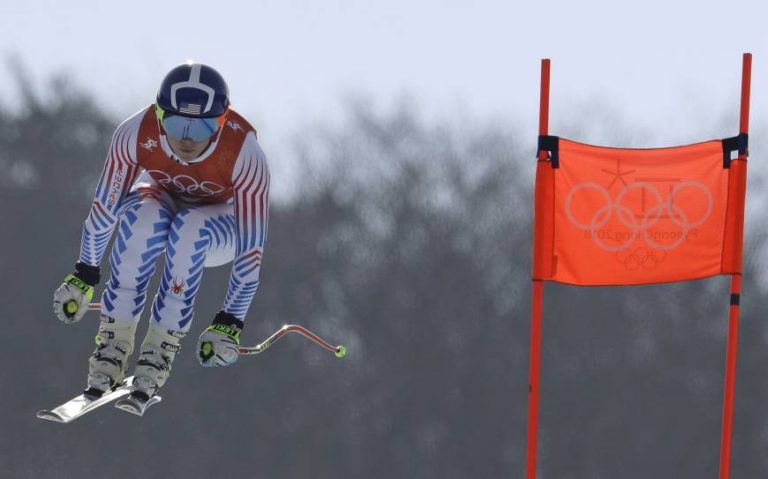
Lindsey Vonn goes through a training run in preparation for the women's downhill at the Pyeongchang Olympics. Photo: AP

Greatness needs no modifier.

Lindsey Vonn has been chasing Ingemar Stenmark’s record of career World Cup victories for three years now, and doesn’t plan to stop until she’s topped it. She wants it for herself, the competitor in her aspiring to do something that everyone said could not be done.

And she wants it for all those little girls and young women out there, a visible, tangible reminder that they need not be second to anyone.

“I would like to be able to say and encourage young women to be the best that they can be, that there’s no limitations just because you’re a woman,” Vonn said. “I want to be the greatest. I don’t want to be the best female.

“I just want to be the best.”

Vonn spoke Saturday as part of an appearance for Bounty, which is featuring her and her dog Lucy in a commercial.

Stenmark’s 81 victories has long been considered one of sports’ most untouchable marks. It has stood since 1989 and, Vonn aside, no one has gotten within 20 wins of him. Think about that. Hermann Maier, Alberto Tomba, Bode Miller – all have sized up skiing’s Holy Grail, and all have come up short.

Stenmark wasn’t in Vonn’s sights early in her career. Annemarie Moser-Proell, who had been second with 62, wasn’t either.

But when you are a skier as dominant as Vonn, whose physical strength and ferocious speed has changed the nature of the sport, victories pile up. From 2008-13, she averaged eight victories a season – a career’s worth for most skiers.

Despite the devastating knee injury that kept her out of the Sochi Olympics and cost her the better part of two seasons, she had passed Moser-Proell by January of 2015.

“After I broke that record, I got closer and closer and closer to Ingemar and I kept hearing `best female skier.’ I don’t like that,” Vonn said. “As amazing as it is, as great of an accomplishment that it is, I don’t like the connotation at the front. I want to just be the greatest.”

Using her achievements as a means to empower young women and encourage them to strive for something they wouldn’t have otherwise is a deeply personal cause to Vonn. She got her passion for skiing from her father and beloved grandfather, whose Nov. 1 death served as an inspiration for her at these Games.

But it was an encounter with Picabo Street when she was 9 that changed the course of her life. Street won gold in the Super-G at the Nagano Olympics in 1998, and was the most notable female American skier before Vonn.

“I looked up to Picabo,” Vonn said. “She’s the sole reason I wanted to be an Olympian, because of her.”

Street would become a mentor to Vonn and, later, good friend. In fact, it was Street who encouraged Vonn to find a passion beyond skiing, something that could provide an outlet when the expectations and the pressure became too great.

That became the impetus for Vonn’s foundation, which is dedicated to empowering and supporting young women.

And much as Street once was to her, Vonn has tried to be a resource and friend to the younger skiers on the tour.

Vonn is loathe to talk about her legacy or assess the impact she has made on the sport. But when she’s asked about the respect the younger skiers on tour have for her, she cannot hide her pride.

Pyeongchang gold medalist Sofia Goggia is one of those who grew up watching Vonn, and now relies on the American for advice and support. A day after the downhill, where Vonn won the bronze medal, Goggia was already trying to lobby her to keep skiing through Beijing.

“She’s really digging in hard,” Vonn said, laughing.

Turning serious, she said, “Having their respect and competing with girls that watched me when they were growing up and are there because they watched me and have been inspired by me is so humbling.

“That’s something that goes far beyond the color of the medals.”

Medals and records are nice. But it’s the meaning behind them that makes them so memorable.

By Nancy Armour

This article was republished with permission from the original author and 2015 Ronald Reagan Media Award recipient, Nancy Armour, and the original publisher, USA Today. Follow columnist Nancy Armour on Twitter @nrarmour.

Curling’s Olympic Celebration Tour Capitalizes on Pyeongchang 2018 Buzz

0
Curling’s Olympic Celebration Tour Capitalizes on Pyeongchang 2018 Buzz
The Olympic Celebration Tour cashed in on the Pyeongchang 2018 buzz. Photo: WCF

The World Curling Federation’s (WCF) Olympic Celebration Tour (OCT) made six stops in January and February to cash in on the excitement of Pyeongchang 2018.

Described as a “instructional, interactive curling tour” the initiative sees Olympic medalists travel to developing member associations and local curling clubs to help generate interest in the sport.

It is hoped the Tour will generate interest in curling with the Winter Olympics in Pyeongchang raising the profile of the sport and increasing its audience.

Dakota Curling Club in Lakeville, Minn., welcomed the Tour before the Games in South Korea began between January 25 and 28.

It then visited Lithuania’s capital Vilnius and Slovenia’s capital Ljubljana in February, before three more American stops.

These were at Peachtree Curling Club in Atlanta, Palmetto Curling Club in Greenville and Charlotte Curling Center in North Carolina.

Canadian Jamie Korab, an Olympic gold medalist at Turin 2006, visited Peachtree.

“Being in a southern city like Atlanta, Ga., we know we have a lot of work to do to grow the sport of curling with a population that has literally never walked on an ice rink so our goal is to generate traffic to our rink to show people how much fun curling is,” said Peachtree Curling Association President Bob Hogan.

“The OCT garnered media attention that we have not been able to generate on our own since Atlanta is not a winter sports town and the media knows nothing about curling.

“Two NBC Network Affiliates and three local newspapers covered the event.

“So over the three days of the WCF OCT we met a total of 500 kids and adult curlers personally, and tens of thousands over the local NBC TV stations.”

By Dan Palmer

Republished with permission from insidethegames.biz

Department of Education to Investigate Michigan State Following Nassar Scandal

0
Department of Education to Investigate Michigan State Following Nassar Scandal
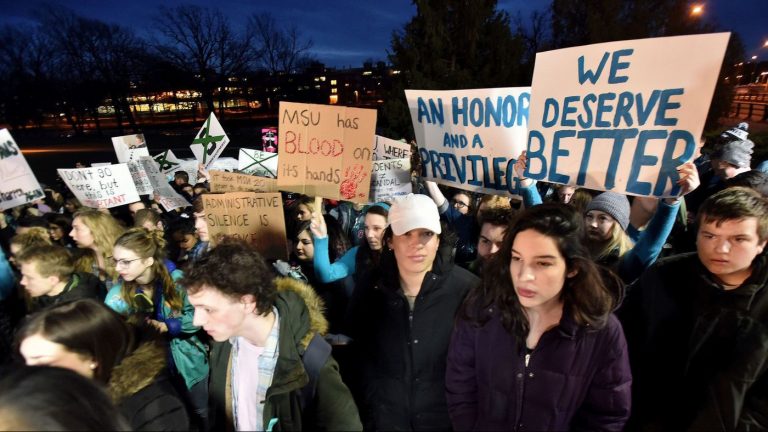
Demonstrators gather at Michigan State University's East Lansing, Mich., campus to support victims of disgraced former sports doctor Larry Nassar and call for more changes in leadership at the school. Photo: Dale G. Young / Associated Press

The United States Education Department is set to investigate Michigan State University over the way it handled reports of sexual abuse made by female athletes against disgraced former USA Gymnastics team doctor Larry Nassar.

In a statement, the Department of Education said that its probe would focus on whether the University met requirements under Title XI – a federal law which covers sexual discrimination in schools that receive federal funding.

Education Secretary Betsy DeVos, who is from Michigan, said: “Every student across every campus should know that I am committed to ensuring all students have access to a learning environment free from sexual misconduct and discrimination and that all institutions that fall short will be held accountable for violations of federal law.”

Michigan State University has also released a statement in response to the investigation, insisting that they will cooperate.

“As we have been, Michigan State University is cooperating fully with this and all investigations,” the statement read.

The University, whose President and athletic director were forced to resign in the wake of the Nassar scandal, is also reported to be facing probes from by the National Collegiate Athletics Association, the US Senate, the Michigan House of Representatives and the state’s attorney general.

Former USA Gymnastics doctor Larry Nassar. Photo: NBC News

It has also been announced that there has been a vast rewriting of Michigan laws in relation to sexual abuse, which is aimed to both stop the abuse and bring justice to survivors.

The 10-bill package includes a proposal to lengthen the time limit in which victims of sexual abuse can sue their abusers.

The current law states that survivors who were minors at the time of their assault must file a civil lawsuit in a state court by their 19th birthday, but the new law moves that deadline to a victim’s 48th birthday.

Nassar was sentenced to a maximum of 300 years in prison for sexual abuse at two separate hearings earlier this year.

The number of women who have accused him of abuse is at least 265, with the number including Olympic athletes.

Both USA Gymnastics and the United States Olympic Committee have also been criticized for their handling of the case with a Senate inquiry now underway.

By Thomas Giles

Republished with permission from insidethegames.biz

IOC Decision to Lift Russian Ban after Olympics Provokes Widespread Anger

0
IOC Decision to Lift Russian Ban after Olympics Provokes Widespread Anger
A fan walks through the stands during the third period of the men's gold medal hockey game between the Olympic athletes from Russia and Germany at the 2018 Winter Olympics, Sunday, Feb. 25, 2018, in Gangneung, South Korea. Photo: AP / Jae C. Hong

A group of National Anti-Doping Organizations (NADOs) have stepped up criticism of the International Olympic Committee (IOC) following the decision to lift Russia’s suspension if no fresh new doping cases among their athletes emerge from Pyeongchang 2018, claiming management of the crisis has “gone from bad to worse.”

In a statement, the Institute of National Anti-Doping Organizations (iNADO) accused the IOC of making the call for “pragmatic rather than principled reasons.”

The World Anti-Doping Agency (WADA) said it “acknowledged” the IOC’s decision but stopped short of supporting it.

It was confirmed yesterday that the Russian Olympic Committee (ROC) would be reinstated if there are no further positive tests from the delegation which competed as neutrals at Pyeongchang 2018.

This process is expected to be completed over the next 48 to 72 hours.

IOC President Thomas Bach admitted, however, that a new case would not definitely mean an extension of the ban.

Two members of the Olympic Athletes from Russia (OAR) team – curler Aleksandr Krushelnitckii and bobsledder Nadezhda Sergeeva – failed drug tests at the Winter Olympic Games here.

The IOC admitted the two failed tests were the key factor in the decision postpone lifting Russia’s suspension until the Closing Ceremony, meaning they were unable to march under their own flag.

“It has taken two positive tests on Russian athletes to force the IOC’s hand when its clear intention had been to readmit the ROC before the closing of the Pyeongchang Games,” the iNADO said in a statement.

“The disappointing fact that this is another short-lived, negotiated deal, to be lifted promptly within the next few days, indicates the IOC’s management of this issue has gone from bad to worse.

“Clean athletes who have had their Olympic moments stolen, whether it be by missing a medal or even failing to qualify as a result of false results achieved by Russian athletes, deserve a more principled and steadfast response.

“Successive decisions by the IOC in this matter have demonstrated that the interests of these clean athletes have no priority.”

The IOC decision, taken by the Executive Board and rubber-stamped by the Session yesterday, was also condemned by Jim Walden, the lawyer for former Moscow Laboratory director Grigory Rodchenkov.

“Thomas Bach was a drowning man, but finally cooler heads within the IOC threw him a life preserver,” Walden said.

“Yet, in the decision, the IOC had the gall to claim Russia ‘respected’ its decision on December 5th to institute the suspension.

“This, despite Russia’s continued retaliation against the IOC’s main witness, Dr. Rodchenkov, and Russia’s litany of further transgressions, including denial and obstruction toward the IOC and WADA.

“The acrimony caused by Bach’s mismanagement should be his undoing.”

Russian officials expect the ROC ban to be lifted sooner rather than later.

In a statement sent to Russia’s official state news agency TASS, the ROC said: “We hope and we very much expect that in the next few days the ROC’s membership in the IOC will be fully reinstated.”

Russian Sports Minister Pavel Kolobkov also claimed the issue would not overshadow the performance of the OAR team at the 2018 Games, where they won 17 medals.

This included two golds as Alina Zagitova won the women’s singles figure skating and the men’s ice hockey team beat Germany in the final to take the title.

“I’m confident our team’s victories won’t fade away on the background of the accreditation problem,” he told TASS.

By Liam Morgan

Republished with permission from insidethegames.biz

Corruption in Sport

1
Corruption in Sport
A player runs across the NCAA logo during practice in Pittsburgh before an NCAA tournament basketball game in 2012. Photo: Keith Srakocic / Associated Press

Over the last years a number of events have reminded us of the phenomenon of corruption in sports. This list is extensive: Performance enhancing drugs, illegal equipment, paying young athletes and their associates to attend particular colleges, bid rigging from the Olympics to FIFA to the NFL, payouts, graft, bribery, and on and on. What can be done?

I’m of the opinion that it is all but impossible to come up with a solution to an issue if you don’t understand the fundamental causes that created the problem.

Our first examination should be society itself. We live in an age where the highest political officials in the land engage with lobbyists and other financial entities for free largesse on a scale beyond anyone’s ability to fully comprehend. This corruption has increased with the capability of hiding enormous sums of money from prying eyes. It has never been easier to facilitate electronic money transfers using shell accounts, phony clients, made up corporations, and the like that exist solely to lubricate the corruption. Huge amounts of largely untraceable money. That is a temptation too great for most. Those who call out the behavior are fired and the consequences for violations are few and far between. Those who don’t take advantage of the situation might be ethically correct but they are pragmatically foolish. Why should I play by the rules when all my competitors are not?

As a more concrete example, let’s examine the loaning of money to the friends and family of high school athletes. While some people argue most athletic departments don’t make money the reality is far different. The bottom line of the athletic department is all the money going in and out, expenses and revenue. Department personnel, coaches, assistant coaches, athletic trainers, announcers, vendors, construction companies, and more all get paid. That payment has grown enormously over the last 20 years. The schools pay ever increasing salaries from the money generated by broadcast sales, ticket sales, merchandise sales, parking sales, food and beverage sales, and more. Teams that win generate more money which increases salaries of coaches. The coaches want the best players. They work with financial entities to provide benefits to the player’s associates in the form of loans, jobs, tickets, and any number of other things. These incentivize the young player to attend that institution. That generates wins, which in turn increases salaries. To compete, you must cheat.

This same general pattern is followed in all the other corruption scandals. FIFA officials are bribed by local politicians who in turn are bribed by contractors who will build the World Cup stadiums and sell products at the event, thus making huge sums of money. The tax payers pay for all this while the FIFA representatives, the politicians, and the contractors all sit in luxury boxes enjoying the games and don’t even pay the price of a ticket.

I think I’ve fairly generally enumerated the causes of all the corruption but the reason the United States Sports Academy called for people to write about this problem was not to tell you there is an issue or even why the corruption exists. They want solutions, so let’s tackle them.

When we create rules attempting to stop behavior that is desired by many people, we almost universally fail to stop the activities and create black markets where criminals reap benefits. My point being that more rules aren’t going to help. See Prohibition, the War on Drugs, etc.

It will be all but impossible to track financial transactions as those determined to hide them will generally be better financed, more sophisticated, and capable of bribing those tasked with enforcing such regulations. Certainly, we’ll occasionally get a glimpse into the dark, underbelly of sport as we have recently seen with college basketball. But for every shipment of cocaine seized there are thousands that pass right along unnoticed. That is the nature of rules designed to stop something people desperately desire to do.

The solution is to simply accept reality. Again, using college sports as example, what if we simply allowed financial incentives to athletes. Some people, Libertarians like myself, call it a free market. If one school wants to loan money to the father of an athlete as an incentive to attend the school, so be it.

If a young athlete, I cannot tell you how much I despise the legally inspired term “student-athlete” which was created solely to deprive the athlete of financial freedom, wants to let an agent pay them lots of money on the potential of a professional career while they are still in school, so be it.

If an assistant coach is willing to hire some entertainers of any ilk to provide services for athletes, so be it.

If FIFA officials solicit bribes in order to promote a particular nation for the World Cup, let it shine forth in the light of day in an open process. You want to play, you must pay. Those who don’t want to participate can go merrily along their way.

What I despise is the hypocrisy associated with most of these rules. Let’s again examine society as a whole for my conclusion.

The politicians are well aware they are being influenced by money. Their votes are up for sale. It’s an open secret. We know. They know. Everyone knows. Yes, they vote their conscience at times but they also vote in way to help those who give them and their associates financial help. Let’s stop pretending the corruption is an isolated incident instead of the norm. Let’s stop kidding ourselves. Let’s codify the corruption and let it happen in the light of day.

You might not like it. You probably don’t like. Got a better idea?

By Tom Liberman

Tom Liberman is a regular fellow from St. Louis, Mo., who enjoys spending time with his wonderful family and great friends. He writes Sword and Sorcery fantasy novels in his spare time.

Armour: IOC Decision on Russia Shows its Stance on Doping is a Farce

0
Armour: IOC Decision on Russia Shows its Stance on Doping is a Farce
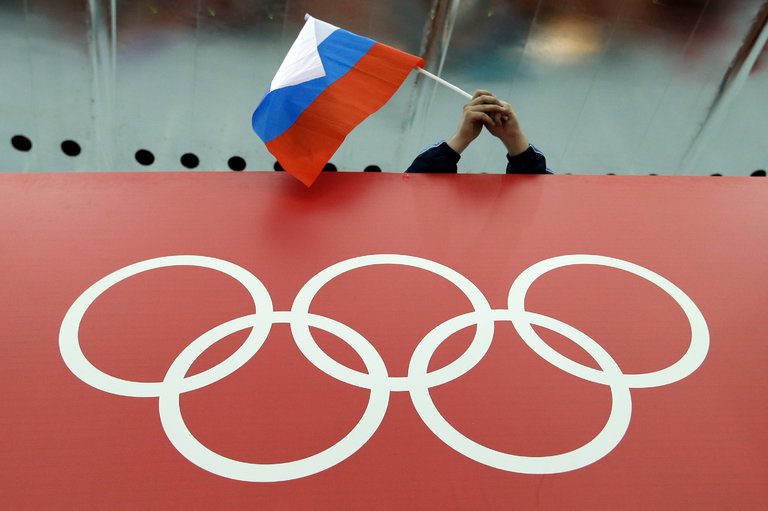
A fan holding the Russian flag at the 2014 Winter Olympics in Sochi, Russia. Photo: David J. Phillip/Associated Press

Unleash the chemists and stockpile the urine, because the International Olympic Committee really doesn’t give a damn about doping.

That’s the only way to see its decision Sunday to lift the Russian ban as soon as the party winds down at the Pyeongchang Olympics. Oh, the Russian athletes – sorry, the Olympic Athletes from Russia – still couldn’t have their flag at the closing ceremony, a hardship the world probably won’t even notice.

By the end of the week, however, Russia is likely to be back in the IOC’s good graces, and it’ll be as if the doping crisis that undermined the very foundation of the Olympic movement never even happened.

“What we have to do there is to make the net as tight as possible … and to see that the sanctions have a deterrent effect,” IOC President Thomas Bach said Sunday afternoon. “A positive test does not put the whole system of elite sport into question, but shows … the determination of different organizations to fight against doping, regardless of the country or the nationality.”

Whatever helps you sleep at night, Mr. President.

There have been four doping cases at the Pyeongchang Olympics so far, and two were by athletes on the supposedly squeaky clean OAR team. One resulted in Norway getting the bronze in mixed curling during the medals ceremony Saturday night, in what must be a record for medal reallocation. The other was by a bobsledder who earlier this month appeared in a video wearing a sweatshirt with “I don’t do doping” emblazoned on it.

A Russian official tried to distance the team from the violations, blaming them on a “lack of cultural education.” But if those positive tests weren’t a middle finger to the IOC and all the athletes out there who resist the temptation to cheat, I don’t know what is.

There are drug cheats in every country, as Bach pointed out Sunday, and there always will be. It’s a failing of human nature and, as Lance Armstrong, Floyd Landis and Marion Jones showed, the United States is hardly immune.

But there’s a huge difference between a few rogue athletes and a program imagined and implemented by the state.

Russia made a mockery of the Olympics with a sophisticated doping program that ensured it would win the medal count at its Sochi Games in 2014. Tainted samples disappeared through a mouse hole in the official anti-doping laboratory, handed off to state security agents who swapped them out for clean urine collected before the Games.

And the cheating wasn’t limited to Sochi.

Dating back to the 2008 Beijing Games, 39 Russian athletes have tested positive for banned substances, resulting in 32 medals being stripped.

Taking away Russia’s flag and anthem and making its athletes participate under a scarlet OAR was supposed to scare the Russians straight. Or at least shame them effectively enough so that they – and other countries – wouldn’t think of doing it ever again.

But the “punishment” was always a farce, and the quickness with which the IOC is willing to turn the page is proof. Russia is free to continue gaming the system, and the only one to pay the price are clean athletes.

Bach claims that lifting the suspension once all doping tests from the Games are completed is only fair. That it’s the same treatment given to athletes from Germany or Japan or the United States.

But Russia hasn’t earned the right to be treated like everyone else. Not yet, anyway. When two of its athletes test positive at a Games where their every move is being watched, it’s a sign Russia has neither learned its lesson nor cares to.

“They’re clearly still willing to push the limits and break the rules and cheat,” American biathlete Lowell Bailey said after the second Russian tested positive. “That’s not part of the Olympics and that’s not part of international sport. That’s not part of the WADA code which every athlete signs, which every international federation is supposed to abide by, and until that changes, we’re going to be seeing the same thing.

“If we don’t have meaningful deterrence that makes sure that national Olympic committees are dissuaded from cheating, from doping, if we don’t install those deterrents, we’re going to be seeing this in the next Olympics and the next Olympics because there’s just not enough of a reason for Russia to not cheat,” Bailey said. “So they’re going to continue to cheat until something comes down that’s strong enough punishment that’s, like, ‘OK, enough is enough.’”

To emphasize the point, American and Czech biathletes have already said they will boycott next month’s World Cup in Tyumen, Russia. Canadian and Swedish athletes also have expressed their concerns.

The Olympics are supposed to be about the athletes, and they are begging for clean sport. If only the IOC cared half as much.

If only the IOC cared at all.

By Nancy Armour

This article was republished with permission from the original author and 2015 Ronald Reagan Media Award recipient, Nancy Armour, and the original publisher, USA Today. Follow columnist Nancy Armour on Twitter @nrarmour.

Bach Hails Pyeongchang 2018 for Showing ‘New Horizons’ as Games Close

0
Bach Hails Pyeongchang 2018 for Showing ‘New Horizons’ as Games Close
Athletes carry flags of their respective countries at the Pyeongchang 2018 Closing Ceremony. Photo: Reuters

International Olympic Committee (IOC) President Thomas Bach officially declared closed Pyeongchang 2018 Sunday evening as attention turned to the next edition of the Winter Olympics in Beijing in 2022.

Bach expressed his thanks to South Korean President Moon Jae-in for what he described as his “personal commitment and determination to make these Games so successful in every way.”

He also congratulated Pyeongchang 2018 for showing the world “new horizons” before inviting athletes from the five continents of the world and future host countries of the Olympic Games to join in showing their gratitude.

French biathlete Martin Fourcade was joined by the likes of Japanese speed skater Nao Kodaira, Nigerian track and field athlete Seun Adigun and South Korean skeleton racer Yun Sungbin.

Also present were North Korean figure skater Ryom Tae-ok, American Alpine skier Lindsey Vonn, Chinese snowboarder Liu Jiayu and Tongan athlete Pita Taufatofua, who paraded shirtless and oiled up in the same way he did at the Rio 2016 and Pyeongchang 2018 Opening Ceremonies.

“Together we would like to express our gratitude, with the typical Korean gesture of a heart, which we have appreciated so much during these Games,” Bach said.

“And now it is my obligation to declare the Olympic Winter Games Pyeongchang 2018 closed.

“In accordance with tradition, I call upon the youth of the world to assemble four years from now in Beijing, People’s Republic of China, to celebrate with all of us, the 24th Olympic Winter Games.”

Bach also hailed the significance of North and South Korea, still technically at war, marching together under the unification flag at the Opening Ceremony and, for the first time in Olympic history, competing together as part of a unified Korean women’s ice hockey team.

“With your joint march, you have shared your faith in a peaceful future with all of us,” he said.

“You have shown how sport brings people together in our fragile world; you have shown how sport builds bridges.

“The IOC will continue this Olympic dialogue, even after we extinguish the Olympic flame.

“In this, we are driven by our faith in the future.”

South Korea has agreed to pay the $2.64 million bill for North Korea’s participation at the Winter Olympics from its Ministry of Unification budget.

The bill is said to include entry fees, accommodation and transport for musicians, cheerleaders and media as well as taekwondo performers.

A delegation of 400 North Koreans was present at Pyeongchang 2018.

North Korea were represented by Kim Yong Chol, Vice-Chairman of the Party Central Committee, at the Closing Ceremony.

Pyeongchang 2018 President Lee Hee-beom preceded Bach in making a speech, saying the athletes from North and South Korea “built friendship”.

“It showcased much bigger possibilities beyond sport,” he added.

“When marching together, and even competing together as a unified Korean team, it constituted a strong identity of one single nation.

“The world paid its high tribute of admiration for the athletes of South and North Korea who marched and competed together during the Games.

“And the spectators in the stands shouted, ‘we are one’.

“The seed of peace you have planted here in Pyeongchang will grow as a big tree in the not-distant future.

“The hope and aspirations of South and North Korean athletes together with cheerleaders will definitely serve as a cornerstone of the unification of the Korean Peninsula.”

Russian athletes were not allowed to march under their own flag at the Closing Ceremony but, in return, the country’s National Olympic Committee is set to have its suspension lifted soon.

The Russian Olympic Committee will have its suspension lifted as soon as it is confirmed that no additional positive cases are incurred by Olympic Athletes from Russia (OAR) at Pyeongchang 2018.

During the Ceremony, Bach presented medals to two OAR cross-country skiers that reached the podium in yesterday’s men’s 50 kilometer mass start classic event – runner-up Aleksandr Bolshunov and third-place finisher Andrey Larkov.

Later in the evening, Sim Jae-guk, the Mayor of Pyeongchang, passed the Olympic flag to Bach, who then passed it to Chen Jining, the Mayor of Beijing.

It was followed by a Beijing 2022 presentation as 24 luminescent screens, each representing a previous edition of the Winter Olympics, appeared on the stage.

Two teams of 12 skiers then left trails on the stage, forming the shape of the Beijing 2022 emblem.

Among those present at the Ceremony was Ivanka Trump, daughter of the United States President Donald.

She arrived on Friday (February 23), having been confirmed as the leader of the US delegation at the Closing Ceremony, and attended several events to support American athletes.

The Olympic flame was extinguished after the concluding segment of the Ceremony, which saw 400 performers enter the venue holding LED balls in their hands before standing in the formation of a snowflake.

The formation was inspired by the Pyeongchang Olympic emblem “ㅊ”.

By Daniel Etchells

Republished with permission from insidethegames.biz