Home Blog Page 5

America Needs Sports Now More Than Ever
America Needs Sports Now More Than Ever
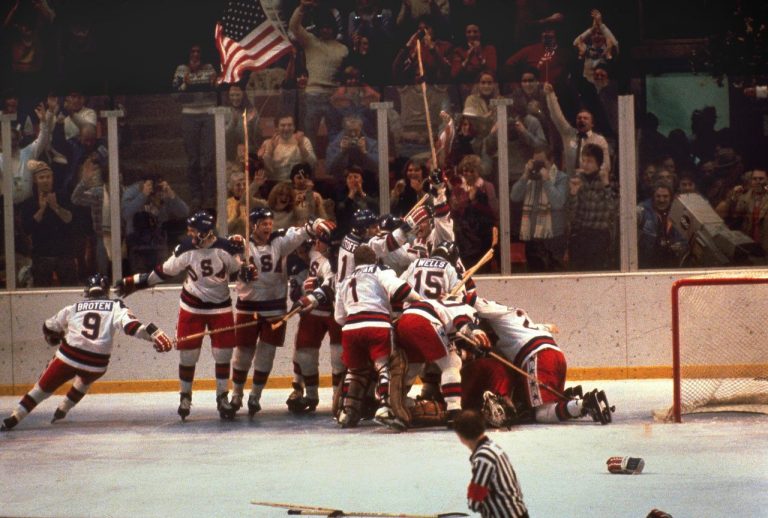
In this Feb. 22, 1980 file photo, the U.S. hockey team pounces on goalie Jim Craig after a 4-3 victory against the Soviets in the 1980 Olympics, as a flag waves from the partisan Lake Placid, N.Y. crowd. AP Photo

By Dr. Matthew Williams |

America is facing very hard economic times right now with inflation at a record high, gas prices at an all-time high, and to add to this, a slipping sense of American pride. It is like we are turning back the clock to the 1980s when America was facing some of the same issues.  During that period, Americans focused on the 1980 United States Men’s Hockey team. This hockey team was made up of a bunch of college boys who were not predicted to play much of a spoiler in the 1980 Olympic Games.  But they did, and they went on to beat Russia’s hockey team, and win the Gold Medal. This event helped some Americans find pride once again when the team won the Gold Medal and ultimately turned their focus away from the difficult times they were faced with. 

The American fan has always had a love for sports that brings a connection while gathering with family, old friends, and new friends that create long-lasting relationships. The American fan can help people in need at sporting events. The help can consist of donations, raffles, poker runs, auction items, clothing sales, donations, and so on.  A great example of this is a group known as DEGA Nation that travels from Louisiana to Talladega, Alabama twice a year to attend the NASCAR Talladega Races. DEGA Nation travels 600 miles round trip and spends seven hours setting up their multiple spot sites. But before DEGA Nation even leaves for Talladega they spend many weeks of preparation before they even get to the race. DEGA Nation has been doing this for the past thirty years. They are located in the infield on Eastaboga Blvd. The DEGA Nation group raises funds through clothing sales, poker runs silent auction items and donations. All the funds raised are then given back to those who are less fortunate in their community.

When asked why they do it, the DEGA Nation’s response is because they are passionate about helping people in need or less fortunate while enjoying seeing others having fun at their site and donating money for their causes. Especially in the difficult economic times, we are currently in.

During the pandemic, NASCAR races were an event that many fans could enjoy bringing them pride and a sense of normalcy. Just as we have seen in the past, American fans can attend sporting events to help them reduce the focus on the rough economic times. In addition, to helping out people who are in need. Just like DEGA Nation does twice a year.  

Dr. Matthew Williams is an Associate Professor of Sport Management at The University of Virginia’s College at Wise and is an avid NASCAR fan.


Profile: Academy Alumnus Dr. Raymond Tucker

By Fred Cromartie, Ed.D. |

The United States Sports Academy continues to strive to meet its mission of making contributions to the field of sport by preparing men and women for the profession of sport. The spotlight will shine on the Academy and its alumnus Dr. Raymond Tucker.

Dr. Raymond Tucker

Dr. Raymond Tucker was hired to start the kinesiology program at the University of Houston-Victoria in 2015, and at the time of his hiring he was the only assistant professor for the program. After starting, working and building the program from the ground up Dr. Tucker was promoted to program coordinator in 2016 and on to associate professor with tenure in 2020. He was elected to serve as department chair in the college of education and health professions for kinesiology, health studies, counseling, and nursing in 2021.

Dr. Cromartie is the Director of Doctoral Studies at the United States Sports Academy.

Athletes Often Struggle with Chronic Pain

Athletes Often Struggle with Chronic Pain
Photo: Haiti NOC

By Dr. Tomi Wahlstrom |

Sports are usually good for health when done in moderation. However, as with everything in life, when done in excess, sports can be risky. Professional athletes often sacrifice their health in pursuit of their careers. They face risks of accidents and long-term wear and tear on their bodies. In some instances, athletes face a lifetime of pain after they retire from their athletic careers. Chronic pain can be debilitating and devastating. It can lead to other problems such as addiction to painkillers and mental health issues.

Painkillers such as Oxycodone and Hydrocodone may seem innocent at first. However, they are very addictive even after a short time of use. As a side effect, they provide a sense of relaxation and wellbeing that can be psychologically addicting especially with individuals who have genetic a disposition to addictions or existing mental health issues. Furthermore, this effect can be multiplied with those who are already heavy substance abusers. Opioid use among athletes is well known and documented. Regardless, it is not well understood and openly discussed. Opioids are given by physicians very easily and without many precautions. Coaches may even encourage their use in order to get athletes back in the game. Many athletes are reluctant and embarrassed to admit their chronic pain in fear of damaging their careers or because of the culture of toughness that often surrounds sports. Admitting to pain is seen as weakness. Furthermore, mental health issues such as depression and anxiety are not well understood by athletic trainers and even sports psychologists. They are often ignored almost intentionally. Here again, the culture of toughness is harmful. In the end, some of the strongest are the weakest as chronic pain will gradually break down even the toughest of us. Those who are brave enough to be vulnerable and admit their pain, and ask for help, will have an advantage. They are more likely to survive their pain and learn how to cope with it.

Chronic pain can be very difficult mentally. It can cause a person to start feeling depressed due to the way it impacts daily life. Eventually, a person may even want to give up and start contemplating a suicide. After all, living with pain can be excruciating and very challenging. It is understandable that a person would start feeling some hopelessness. Chronic pain can make even the most basic daily activities difficult to perform. Driving a car or even taking a shower may become a challenge. The nagging pain may cause aggravation and lead to anger outburst. Therefore, living with a person who suffers from chronic pain can be difficult. Sometimes athletes sacrifice their social lives to practice their sports. This may lead them to have a limited support system. Yet, a good support system is essential for someone suffering from intense pain. Depression often leads to substance abuse which in term causes additional challenges. It is a cycle that can become almost impossible to escape.

Very often a person suffering from chronic pain appears to be physically fine. Their pain is hard to see by others. Therefore, people may have a hard time believing and understanding the amount of pain a person is experiencing. Neuropathic pain is the most difficult type of pain that athletes can experience. It is invisible and hard to diagnose. This type of pain originates from spinal cord injuries. The pain can radiate to different parts of the body in addition to the injured area. Knee, neck, shoulder, and rib cage injuries are also very common among athletes. If left untreated, these injuries can be life-threatening and cause paralysis. They are serious and should be diagnosed and treated early, before permanent damage occurs.

Dr. Tomi Wahlstrom is the Provost at the United States Sports Academy.

Emmert to End Reign as NCAA President by June 2023

0
Emmert to End Reign as NCAA President by June 2023
FootballScoop.com

By Geoff Berkeley |

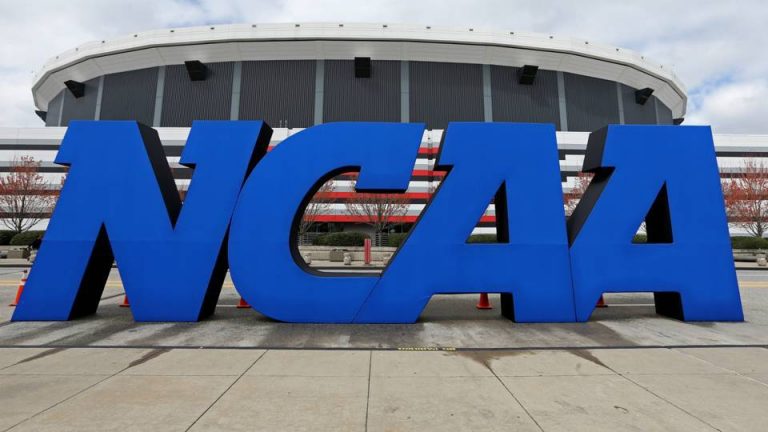
The National Collegiate Athletic Association (NCAA) has announced that Mark Emmert will end his long reign as head of the organisation.

Emmert has led the governing body for North American college sport since 2010 but NCAA has confirmed that he will step down following a “mutual agreement” between the President and its Board of Governors.

The 69-year-old is expected to remain in position until June next year unless a new President is announced prior to that date.

John J DeGioia, chair of the NCAA Board of Directors, claimed the move allowed the organisation to elect Emmert’s successor “without disruption”.

The announcement of Emmert’s departure comes just 12 months after his contract was extended until 2025.

“Throughout my tenure I’ve emphasised the need to focus on the experience and priorities of student-athletes,” said Emmert.  

“I am extremely proud of the work of the association over the last 12 years and especially pleased with the hard work and dedication of the national office staff here in Indianapolis.”

The NCAA said it was in the process of “transforming the structure and mission to meet future needs” after announcing a new constitution in January.

“With the significant transitions underway within college sports, the timing of this decision provides the association with consistent leadership during the coming months plus the opportunity to consider what will be the future role of the President,” said DeGioia.

“It also allows for the selection and recruitment of the next President without disruption.”

Constitution changes follow a United States Supreme Court ruling in June last year, which backed athletes’ compensation rights, and several states passing legislation which allowed college athletes to make money from their name, image and likeness.

Student-athletes were previously unable to profit from their own likeness, with the NCAA stressing the need for them to be amateurs, but the state legislation led to the NCAA relaxing its rules.

The revised constitution still prohibits pay-for-play, the NCAA insists, but embraces providing additional educational and other benefits, including those for name, image and likeness

The NCAA Board of Directors approved the revised constitution in December, with the Convention rubber-stamping the changes in January and is set to come into effect from August 1.

Republished with permission from insidethegames.biz

Celebrate Women’s Sports in a Space Dedicated to Women’s Sports

0
Celebrate Women’s Sports in a Space Dedicated to Women’s Sports
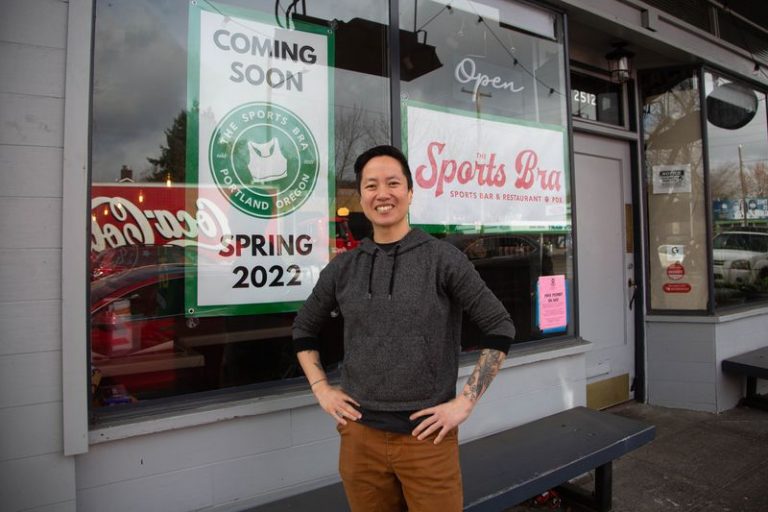
Jenny Nguyen, owner of The Sports Bra, a bar and restaurant dedicated to women’s sports, poses for a photo on Monday, Feb. 22, 2022. Photo: Vickie Connor / The Oregonian

By Dr. Vandy Pacetti-Donelson |

When was the last time that you went to a sports bar and found women’s sport on the TV? When people walk into any sports bar in America, they expect 24/7 sports coverage and often they receive just that, as there really is 24/7 coverage of sports, but that coverage is MEN’s sports. If there is not a live men’s game on, there are replays and behind-the-scenes commentary shows to fill the gaps in live coverage. As of right now, that just does not exist for WOMEN’s sports. 96% of all sports media coverage on TV is of men’s sports. That means just 4% of all sports on TV is of women. If you were interested in viewing a women’s sport at a local sports bar, you are likely going to ask for one of the forty or more televisions in any sports bar to be turned to what coverage may be available of a women’s sport. Now, there is one place where women’s sports will not only be featured but celebrated through exclusive coverage in a sports bar.

Featured on Good Morning America this week, “The Sports Bra” is a woman-owned sports bar in Portland, Oregon owned by Jenny Nguyen. From their use of women-owned suppliers, an environment filled with women’s sports memorabilia, and a menu and environment featuring women’s sport, their mission is to make great food and drinks, and provide a space that supports, empowers, and promotes girls and women in sports and in the community.  

Nguyen began her journey to small business ownership through the traditional methods, seeking small business funding from multiple banks and financial institutions and from which she was denied.  As a first-time business owner, she was able to get this business running through bootstrapping, which meant exhausting her personal savings, receiving generous loans from friends and family, and through completing a Kickstarter project for support.  As of March 16, 2022, 635 backers pledged $105,135 to bring Nguyen’s idea to life.

One of the main goals of The Sports Bra is to give the community a place to celebrate women’s and girls’ sports together. I hope the next time I am in Portland that I will be able to visit The Sports Bra and have a meal while enjoying access to quality televised women’s sporting events. If we are going to see women’s sport prosper, we must make available experiences that demonstrate the value of women’s sport as entertainment.

#thesportsbrapdx #womenssports

Dr. Vandy Pacetti-Donelson is an Assistant Professor and Director of the Library and Instructional Design at the United States Sports Academy in Daphne, Ala.

Is This Baseball Or T-ball?

0
Is This Baseball Or T-ball?
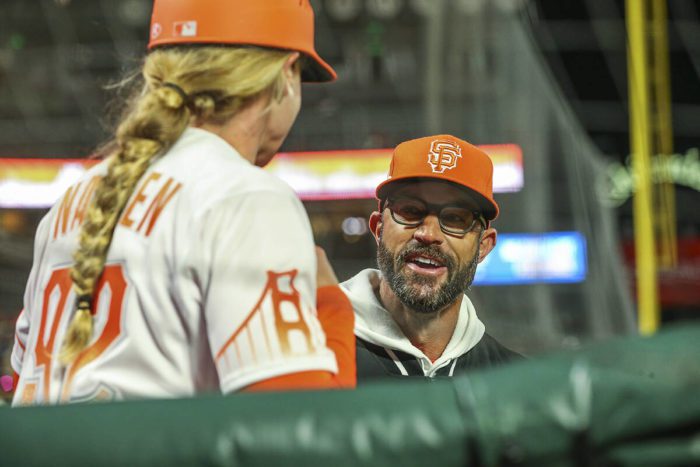
Giants manager Gabe Kapler chats with assistant coach Alyssa Nakken during the game against the San Diego Padres at Oracle Park on Tuesday. Kapler and the Giants are re-writing some of baseball’s unwritten rules to win games. (Christopher Victorio/Special to The Examiner)

By Linda Kay Hardie |

I’ve been an active fan of the San Francisco Giants since 2013, and a passive fan (following, but not watching games) for about 30 years more than that.

Lately there’s been talk of “the unwritten rules.” As a fan, I’m tired of it. I came here to watch a good game of baseball. At what point do these rules kick in? When the Giants get seven runs in the second, as they did recently with the Nats? Are they then required, by these “unwritten rules” to play half-assed? For how long? One inning? Two? When were the Nats supposed to have had their chance to catch up? But the G-men were ahead, 7-1. Do they throw the game and let the Nats catch up and surpass them, for an unwritten rule?

Or does it kick in when the Giant are 13 runs ahead, as earlier with the Padres? Since it’s unwritten, who decides when it’s “not fair” for the Giants to keep playing their best? And what about the players who are there with the threat of being sent down? Are they supposed to not steal a base, not catch a fly ball, because it might embarrass some other player who thinks he’s better? “Oh, excuse me, but my stats don’t matter compared to your tender feelings”?

As a long-time Giants fan, I don’t remember teams backing off and letting the Giants get runs when they were behind. I don’t remember the Dodgers or Padres or anyone  playing a half-assed game so that the Giants’ “widdle feewings” wouldn’t be hurt.

The game decides who’s best, not some list of best players or set of stats. You’re only as good as your last hit or run or catch.

I thought this was professional baseball, not T-ball, where uneven abilities can occur in young, inexperienced players. There’s a “mercy rule” in T-ball that calls a game when one team gets 15 runs ahead. The Giants were recently criticized for continuing to play hard when they were six runs ahead (of the Nats) and 11 runs ahead (of the Padres). If you want it, write it down so the losing team can “throw in the towel” as they can do in boxing Does an MLB team want to just do it? Admit defeat?

Look at the T-ball rule. It’s 15 runs before a game is halted and called. Yet the Nats whined at the Giants for being six runs ahead. The Padres got upset when the Giants were 11 ahead. If you manage to fill the bases, one good swing of the bat can be responsible for four runs. The Nats could have caught up with the Giants, because they’ve got the players to do just that. Instead, some of the seasoned players got upset at young players who were trying to solidify their spots on a major league roster by playing well.

What are we playing? Major League Baseball? Or T-ball? I’m here to watch baseball.

Linda Kay Hardie is a college instructor and writer and a former a newspaper reporter in Fresno, working for a weekly portion of the Fresno Bee. She wrote approximately 2,500 articles in the three years with the Bee.

Experiential Learning at the NCAA Men’s Final Four

0
Experiential Learning at the NCAA Men’s Final Four
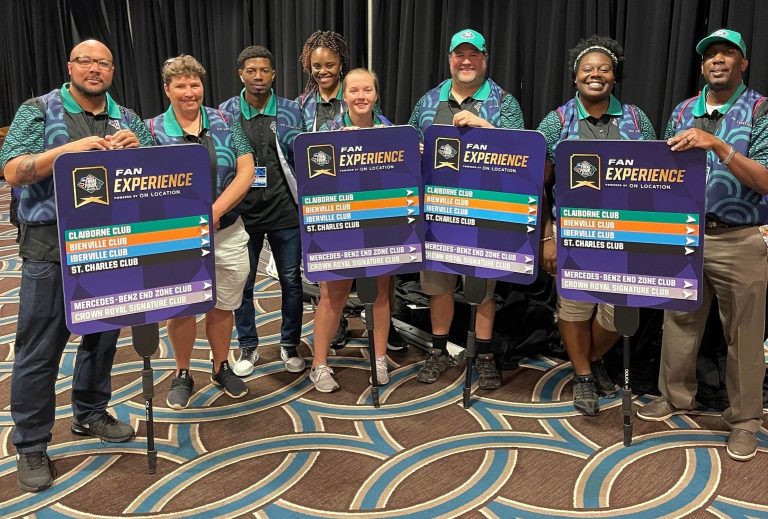
United States Sports Academy students, faculty, and staff volunteered at the NCAA Men's Final Four in New Orleans.

By Robert L. Herron and Taylor Rogers |

The “Big Easy” is no stranger to hosting entertaining weekends. From adventures on Bourbon St. to stadium-filling concerts, New Orleans is always a good time. However, last week, the city also played host the NCAA Men’s Final Four, which featured a highly-anticipated matchup between the Duke and the University of North Carolina on one side of the bracket and Villanova and Kansas – the eventual tournament champion – on the other side. For Duke’s Coach Krzyzewski (recipient of The Academy’s Amos Alonzo Stagg Coaching Award Winner in 2008 & 1991), the loss to UNC was last game of his coaching career at Duke – now retiring after a long tenure at the university that started in 1980.

For a group of students from the United States Sports Academy (USSA), the city of New Orleans became a classroom of sorts as it offered a first-class, experiential learning experience for those interested in working in sports.

USSA students worked as part of the Greater New Orleans Sports Foundation’s Host Committee team, which provided support for a number of events over the course of the weekend. Students of the Academy were actively engaged with operational logistics during the pre-game concert series sponsored on Saturday evening by Coca-Cola, provided support for the On Location Final Four premium fan experience in the Caesar’s Superdome, and organize the NCAA Men’s Final Four Dribble parade in downtown New Orleans.

The Academy provides comprehensive-content knowledge to students through each course offering, but being part of the Men’s NCAA Final Four afforded our USSA learners a chance to experience large-scale event operations in a pressure-filled, practical fashion.

Avery Collins, an education professional and Sport Management doctoral student at the Academy, made the trip all the way from Phoenix, Ariz. Collins appreciated the opportunity to network with other sport professionals, “The best part of the trip was talking to other doctoral students about their experiences, expertise, and career paths.” 

Sports coaching bachelor’s degree student Vicki Mengel, of Joppa, Md., is the head softball coach at Cecil College.

“It was an exhilarating experience,” Mengel said. “I am appreciative of meeting Academy faculty, staff, and fellow students. This was a great networking opportunity.”

Experiential learning, which took place over the course of the weekend, serves as an important supplement to the learning which takes places in the online classroom. For our students, fundamental concepts were tested in real-world settings thus providing an opportunity to develop further knowledge, skills, and experience that will benefit them in their careers. Additionally, the experience served as a valuable, professional-networking opportunity.  We encourage students to seek and get involved in similar opportunities.

Robert L. Herron is a faculty member at the United States Sports Academy.  Robert is a Certified Strength and Conditioning Specialist® with distinction from the National Strength and Conditioning Association (NSCA-CSCS*D®) and a Clinical Exercise Physiologist through the American College of Sports Medicine (ACSM-CEP®). [email protected]

Taylor Rogers is the Academic Affairs Coordinator at the United States Sports Academy. Taylor is currently a graduate student at the United States Sports Academy where she is completing her master’s in Sports Management.

Baseball’s Arc of History

0
Baseball’s Arc of History
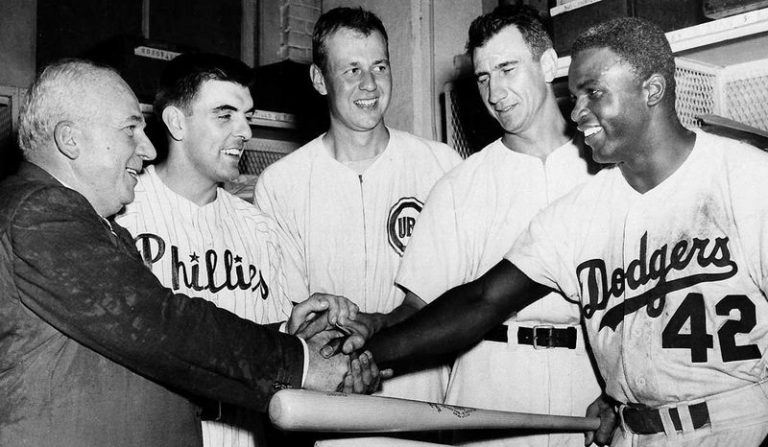
NL president Warren Giles congratulates players Curt Simmons (left), Bob Rush, Hank Sauer and Jackie Robinson after their rain-shortened victory in the 1952 All-Star Game. (ASSOCIATED PRESS)

By Eve Simmons |

My father-in-law, Curt Simmons, is a lefty. Not the card-carrying liberal type, but the 20-year-veteran-of major-league-baseball type. If you follow baseball history, you’ll recognize him as one of the Whiz Kids phenoms from the Philadelphia Phillies days of old. And boy, could Dad pitch back in the day. MLB Hall of Fame hitters Hank Aaron and Stan Musial each separately named Simmons as the toughest pitcher they’d had to face in their careers. Roy Campanella, Brooklyn’s great catcher, said of Curt, “He was the fastest pitcher I’ve ever caught.”  The stories Curt has regaled our family with are priceless windows into the history of the game, offering a peek into the evolving soul of our society. Here is a taste of baseball’s learning curve on racism in the late 1940’s.

It was September of 1947 when 18-year-old rookie southpaw pitcher Curt Simmons first sat in the dugout for the Philadelphia Phillies. Simmons recalls his manager, Ben Chapman, blinded by racism, ordering his players to harass one of the opposing team’s rookies, none other than Brooklyn Dodgers’ Jackie Robinson. Chapman threatened that any Phillies player not loudly taunting Robinson from the bench, would face a $100 fine, and so it began. “If the name calling bothered Jackie, you’d never have known it,” mused Curt. It seemed Robinson’s composure and success at the plate, despite that verbal barrage, infuriated Chapman even more. Curt recalled, “The next time we played against Robinson, Chapman reversed himself and ordered us not to say a word.” Referring to Jackie Robinson, Chapman told his players, “Let him sleep. Anybody gets on him, I’m gonna fine you.”

Remaining outwardly unfazed, Robinson and his family would face racial torment, even death threats in those early days. Yet Jackie Robinson not only broke baseball’s color barrier that season, he was named Rookie of the Year. Fans and teammates grew to admire not only Jackie’s talent as a ballplayer, but his remarkable ability to repeatedly rise above the relentless mistreatment that was heaped upon him. As a result, public sentiment finally began to shift towards more inclusive team rosters.

Phillies manager Ben Chapman’s abusive and racist behavior caught up with him. He was fired by the team in mid-season of 1948, becoming known as the most bigoted man in baseball.

Jackie Robinson’s legacy prevailed. By 1957 the Philadelphia Phillies integrated their team, being one of the last ballclubs in major league baseball to do so. Nearly seventy years after Robinson’s rookie year, the “City of Brotherly Love” finally lived up to its motto. On March 31, 2016, the Philadelphia City Council unanimously passed a resolution officially apologizing for the “unconscionable abuse” that Jackie Robinson suffered when he played baseball in their city during that infamous 1947 season.

These days you’ll find a symbol of this monumental shift in thinking inside the posh, private dining room of the Phillies’ stadium at Citizens’ Bank Park in Philadelphia. Proudly displayed, is a larger-than-life photo mural of Jackie Robinson with Curt Simmons, Bob Rush, and Hank Sauer, from the 1952 All-Star Game held at the old Shibe Park in Philadelphia.

Thanks to Jackie, for opening our eyes, for elevating our national perspective, and for bringing us together. Robinson’s courage and absolute grace under tremendous pressure, his ability to persevere, to become a role model, indeed an icon, inspiring millions, proved beyond a doubt, that he was and still is, in a league all his own.

Eve Simmons lives in Cardiff by the Sea, CA with her husband Tom, who gratefully grew up in his father’s shadow and remains a diehard Phillies fan. Follow Eve on Instagram here.

Carolina Coach Hubert Davis Impresses in Final 4

0
Carolina Coach Hubert Davis Impresses in Final 4
North Carolina basketball coach Hubert Davis. Photo: USA Today Sports

By Fred Cromartie, Ed.D. |

Famed college basketball analyst Jeff Goodman said it himself: “UNC should build a statue of Hubert Davis.”

On Saturday evening, one of the greatest rivalries in all of college basketball finally made its NCAA Tournament debut.  It is hard to believe that it was the first time the Duke Blue Devils and North Carolina Tar Heels met in the Final Four. Well the 70,000 that packed the Caesars Superdome will tell you that for a first it was an instant classic.  The game exceeded the expectations of Carolina fans and probably Duke fans, even though the Blue Devils lost 81-77.  The loss was a dramatic end to the epic coaching career of Mike Krzyewski.

The epic classic game feature 18 lead changes, 12 ties and clutch shot-making thoughout.  Hubert Davis, the first year Tar Heels coach planted his mark on his own legacy and Tar Heels basketball folklore. With the win, Coach Davis and the squad earn forever-bragging rights over their longtime foe, but he also handed Krzyzewski a loss in his last home game at Cameron Indoor Stadium, in early March. The epitome of spoiler.

Goodman stated, “I said this sort of facetiously, but maybe not — they should build a statue of Hubert Davis outside the Dean Dome,” Stadium hoops analyst Jeff Goodman told the Reiter Than You show on Monday. “He just had the two biggest wins maybe in the history of the Carolina program. Probably going overboard here, but he ended Coach K’s career in the national semifinals, and beat Coach K on Coach K night in Durham. How can you be any better than that?…

Goodman followed up “Whatever Duke does — they could win every regular season game — Carolina fans are just going to be like, ‘We beat you on the biggest stage, and we beat you on Coach K night’… You know what I compare it too. It was like when the Red Sox beat the Yankees [in 2004]… Beating the Yankees in the ALCS was bigger than winning the World Series… Six weeks ago, I was questioning, as much as anybody, whether Hubert Davis was the right guy for the job…”

Should they win the Championship game Monday night the suggestion and discussion gets more fuel to build that statue.

The Hubert Davis, Tar Heels hoops conversation between Goodman and Reiter can be accessed in the link provided

Dr. Fred Cromartie is the Director of Doctoral Studies at the United States Sports Academy.

Sport and What Makes Life Worth Living

0
Sport and What Makes Life Worth Living
Courtesy image

By Finn Janning, Ph.D. |

Sport is a fertile field for talking about what makes a life worth living.

For example, is a meaningful life also a valuable life? Or is it not rather that a meaningful life presupposes a distinction between more or less valuable ways of spending one’s time?

In his book This Life, the philosopher Martin Hägglund argues that the only thing we humans really have at our disposal is time. Our use of it gives rise to meaning. Those who spend a lot of time on sports, either as athletes, fans, or in connection with work, will no doubt find an abundance of different things meaningful in this regard. But often, people with no interest in sports will think or say that these “crazy sports people” are wasting their time, meaning, they are wasting their lives.

However, I believe that they overlook the fact that a good life is not so much about meaning as it is about value. There is not necessarily a normative element associated with something meaningful. Opinions depend on the desires of the individual, while the normative element is associated with what is valuable.

It is clear that there can be a coincidence between something meaningful and something valuable, but existentially, it is not about living meaningfully versus meaninglessly. Meaningful activities require some degree of autonomy, self-expression, and purpose, but such activities are not necessarily compassionate, generous, or loving.

Meaning is created. For example, by being a part of something, or establishing a relationship with something, meaning arises for the individual in regard to that. And the meaningful becomes valuable in itself is when that from which the meaning and value arises is not the egoistic self, i.e. “me”. A life gains meaning and value by connecting with others or something other than oneself.

I think a lot of people look to sports because they want to be a part of something meaningful, whether it is togetherness, joy, commitment, self-expression, competition, playfulness, etc. This search is both commendable and understandable, as it sometimes gives the individual insight into what really gives life value, that is, what makes life worth living.

In the world of sports, it is rarely the rigid division between winners and losers that is crucial, but the joy of being involved —as a player, fan, or researcher.

In addition, sports also cultivate our capacity to pay attention. For example, this can happen when a cyclist has to be vigilant so as not to crash, or when football fans are so deeply engrossed in a match, with such intensity and passion, that what happens to the players almost happens to them, too. Often, there is an immediate empathic response to the athletes’ suffering and joy—a recent example is when the Danish football player Cristian Eriksen suffered a cardiac arrest and 9 months later, returned.

What makes sport not only meaningful, but valuable is the fact that a game can never be played without the participation of others. We learn what is valuable from being a part of something bigger, than ourselves.

Finn Janning, PhD, is a philosopher who teaches in Sport Ethics, Sport Psychology and Sport Coaching at Geneva Business School and UIBS in Barcelona, Spain.