Home Blog Page 6

Thanks, Pop

0
Thanks, Pop
Mickey Mantle (left) replaced Joe DiMaggio in centerfield following the 1951 season. (National Baseball Hall of Fame)

By Steve Wilensky |

As we come upon another baseball season (tarred with the most recent labor dispute nonsense), I think back to what this time of year meant to me 60 some odd years ago. I long for the simpler times. Or maybe just those times when my lens of experiencing life was focused “differently.”

I grew up in Brooklyn in the late 50’s and 60’s, a Yankee Fan in an oasis of Dodger Blue (and the soon to be Metropolitans of Flushing). I was too young to know the Brooklyn Bums, Ebbits Field, or the Boys of Summer. I did not witness O’Malley’s treachery, nor experience the heartbreak of his grotesque infidelities. My heroes were not Duke, Pee Wee, Jackie, Gil or Carl. 

My heroes were Mickey, Roger, Yogi, Moose, Elston, Joe, Whitey, Bobby, Clete, Al, Jim, Tony, Tommy, and the most famous harmonicist ever to lace up cleats, Phil Linz.

My Dad, also a born and bred Brooklynite, ensured that his first-born son was instilled with the Pinstripe Pride, and filled with the grandeur that was the New York Yankees.

Being a baseball fan as an 8-year-old boy was to feel pure joy, uncluttered by free agency, pitch counts, salary taxes, performance enhancing drugs, infield shifts, metrics….ad nauseum.

We were not haunted by acronyms (ERA was the most complicated it ever got). No WAR’s or WHIPS. The former was a card game we played when we were little and the latter…….Never mind about that. Exit velocity? To pass along a wag’s more refined definition….”Exit Velocity, back in the day, meant how fast you could get out of the ballpark to your car to beat the traffic.”

Two of my grandsons, ages 12 & 9, are crazy Yankee (and baseball) fans. You see, I raised my oldest son, as my Pop raised me. To live the Legacy and pass it on.  My oldest son came home from school one day (maybe 5) and told me that he wanted to be a Mets Fan. The Mets had cool players, he said….Daryl and Dwight, to name a few. “Really?”, I said. “Where are you going to watch the games?” He looked up at me, a bit puzzled and somewhat concerned. “Here. In the house. On the TV,” he responded. I replied, “Sorry buddy, all the TV’s I buy are fixed so that they won’t play Met games.” He continued looking at me (I think, that even in his brief years on earth at the time, he kinda knew I was full of crap). But he was wise, and he may have had a premonition that his Pop was sparing him from a lifetime of misery. He would have felt at home in Chicago.

Two more sons were to follow, and each one is a crazy, out of their mind, Yankee Fan. We have (and still do) go to the Stadium, all four of us (my wife too, making five, as she is a Bronx Girl who grew up in the shadows of the Stadium). The grand kiddies come too. As more pop out, they’ll come as well.

Today’s baseball is not the baseball of my kid-dom, but nothing ever stays the same….except for death and taxes. Has the game that my Pops knew and loved changed? Yeah……But he was around to see labor strikes, lockouts, free agency, PEDS, and all that fun stuff. But he loved Baseball, especially his Yankees. He watched all the games….when the Yanks were magnificent and when they were putrid.

So yeah, we got PEDS, pitch counts, shifts, 7 inning double headers, etc., etc., etc. But we still have Baseball, in all its ghastliness and glory. I choose the Glory, just like my Pop did. Go Yankees!!!!

Steve Wilensky lives with his wife Lynda, in Freehold, N.J. Steve and Lynda have 3 sons, 3 daughters-in-law, and currently, 4 grandchildren. Steve has over 40 years of management experience in the corporate and non-profit sector. He is currently an Operations Manager.
Do Brands Matter in Sports?

1
Do Brands Matter in Sports?
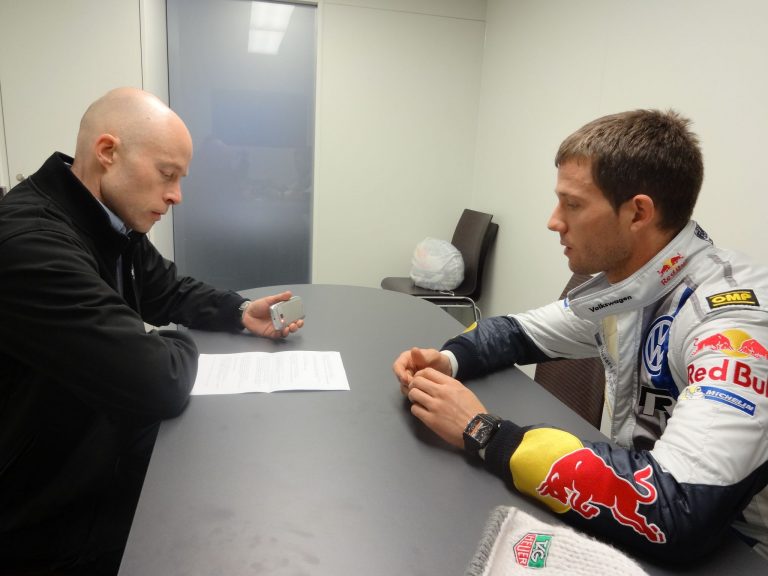
Atte Varsta (left) talks with eight-time World Rally Champion Sebastien Ogier at the Monte Carlo Rally.

By Atte Varsta |

Brands have existed as long as there has been a spoken and written history. Campfire stories, myths, and legends – stories that were meaningful and important to storytellers and their audiences – were  passed from one storyteller to another. Today, those relevant stories are called brands. Value promises that are bigger than life and storytellers. Value promise that lift you up, emotionally and functionally.

In sports, brands have always played a big role in terms of business. Great athletes are easy to admire for their incredible performances. Today, however, mere performance on a track or in an arena is not enough. Sport has become a serious business required to give a feasible return on investment.

Not all sports heroes become big brands. In addition to athletic success, brand status requires a unique personality and something to engage with consumers on an emotional level. Finnish Formula One world champion Kimi Räikkönen has been admired for decades for his deadpan expressions – his nickname Ice Man is well earned. On the contrary, the most legendary boxer Muhammad Ali garnered popular acclaim with his boasting comments. Both are genuine personalities and they have never taken orders from others when it comes to handling the media. Sports clubs, motorsports teams, sports clothing & equipment manufacturers, and everyone involved in the sports business want to have suitable brand ambassadors who reflect their brand values in the best possible manner. The athlete’s “track record” of sporting success is a “must,” but in addition, the value compatibility of both parties – the athlete and the company – is a necessity.

How do branding and sports fit together? Take the legendary Ferrari, for example. Everyone knows and recognizes the Ferrari brand. Ferrari’s core business is manufacturing sports cars. Still, Ferrari doesn’t market its cars on media, but Ferrari’s marketing is focused on running the Formula 1 team. When Ferrari’s F1 team succeeds, the brand succeeds. The value of Ferrari’s core business, sports car sales, is lower in terms of revenue than Ferrari’s merchandise operations.

What about the future of sports branding? The Internet has changed everything in our lives. And I mean everything. The Internet has changed the way we work, how we get information, how we consume entertainment, how we shop, how we handle warfare, how we take care of personal things, and how we interact with brands. The appeal of brands has always been based partly on their distance and mystique. At the same time, brands have been relevant in users’ lives without revealing the whole truth of brands. Due to transparency brought by the Internet, sports brands have become the property of all people.

Brands are under global public evaluation anywhere and anytime. For example, pre-internet era Michael Jordan became an icon of Nike brand in the 80’s and 90’s. Jordan’s image was easier to manage thru media. Jordan’s brand management was created to appeal to all parties. When Tiger Woods achieved a similar icon level position in golf everything was ruined overnight due to the internet and news which traveled around the world within hours. If it isn’t on the internet it didn’t happen and at the same time if you are on the internet your brand is vulnerable.

The old truth of publicity management has been that too much media publicity wears out the target audience quickly. This is also the case for brands in the world of the internet. Without constant renewal and the search for new engagement levels, today’s sports brands will be pushed aside from the path of newcomers. The capability of renewal is the power of success, even in sports branding.

Atte Varsta is the CEO of Proftraining Finland, an experienced sports manager and a collegiate business teacher.

NASCAR Begins to Distance Itself from its Southern Heritage

0
NASCAR Begins to Distance Itself from its Southern Heritage
Courtesy image

By Dr. Matthew Williams |

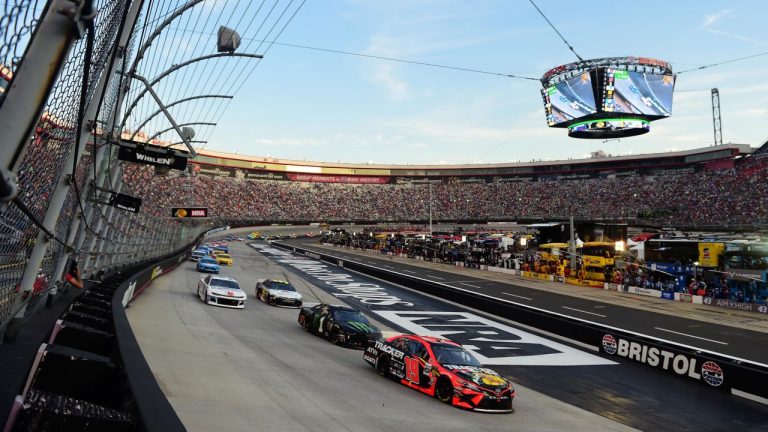
NASCAR has always had a reputation of being a rebellious redneck sport. It is a sport that was founded around bootleggers and moonshiners in the South and is intertwined with Southern Heritage. The sport has had a reputation of fans flying the Confederate Battle Flag, letting their hair down, and partying hard. They use Southern sayings like “American by Birth” & “Southern by the Grace of God”. They also have a very strong Southern belief that there are two days that you should never race on, Mother’s Day and Easter Sunday.

These past few years, NASCAR has decided to distance itself from its Southern Heritage and become more of a premier sport like it had been in the 1990s and early 2000s. NASCAR looked at three areas to bring change to the sport in hopes they could get back to being the premier sport. The areas that NASCAR has addressed were the Confederate Battle Flag, Mother’s Day, and Easter Sunday.

In June 2020 amid calls to ban the Confederate Battle Flag, NASCAR announced that the Confederate Battle Flag would be completely banned from all NASCAR tracks, events, and properties. NASCAR felt that it needed to create a more inclusive environment in which all fans would feel welcome. At the same time, NASCAR was feeling pressure from the Southern fans’ stance that the Confederate Battle Flag was part of their NASCAR sport and their Southern Heritage.

NASCAR has had a long-standing tradition that they would avoid scheduling a race on Mother’s Day and Easter Sunday.  Southerners have a strong belief that Mother’s Day is a day to honor your mother, spend time with her, and thank her for all that she has done for you.  Although NASCAR has raced on Mother’s Day weekend, they have not raced on a Sunday which is Mother’s Day. The last time NASCAR raced on Mother’s Day was in 2007 and was caused by weather. In 2021 NASCAR decided to schedule the Darlington Race on Mother’s Day and again have scheduled the same race on Mother’s Day in 2022.

NASCAR has always stayed away from scheduling a race on Easter Sunday, feeling that not racing on Easter Sunday would allow teams, along with fans, to gather with family, and celebrate the resurrection of Jesus Christ. The last time NASCAR raced on Easter Sunday was in 1989 and it was a makeup race. In 2022 NASCAR is scheduled to race on Easter Sunday, and it will be a night race and will be televised in primetime.

Will the new changes that NASCAR has incorporated in the sport while distancing itself from its Southern Heritage, bring NASCAR back to a premier sport again? Only time will tell?

Dr. Matthew Williams is an Associate Professor of Sport Management at The University of Virginia’s College at Wise and is an avid NASCAR fan.

Sport for Good? How the Landscape of Sport is Changing

0
Sport for Good? How the Landscape of Sport is Changing
The slogan 'Football stands together' is seen on a huge screen before the English Carabao Cup final between Chelsea FC and Liverpool FC at Wembley in London, Britain, 27 February 2022 (re-issued on 28 February 2022). The world's football governing body FIFA is set to suspend Russia as the International Olympic Committee (IOC) on 28 February 2022 recommended that athletes and officials from Russia and Belarus are banned from all international sports competitions. FIFA set to suspend Russia on Ukraine conflict, London, United Kingdom - 27 Feb 2022 - Photo: Courtesy image, Andy Rain/EPA-EFE

By Craig Foster |

Over recent weeks sport has been forced to react to Russia’s invasion of Ukraine. Various governing bodies and elite athletes have taken a principled stance, denouncing the atrocities, by banning Russia’s involvement in sport.

The conflict has forced sport – athletes, sporting bodies, administrators and fans – to interrogate the meaning of sport in the global context, and many detest what they see.

Can 2022 be the reckoning sport needs to step out from under the veil of ‘neutrality’ and to take a stand on issues like human rights, racial injustice and climate change? As #BlackLivesMatter taught the world, ‘silence is violence’ and there can be no neutrality. Every decision has consequences and sport has a responsibility to understand the harm it is complicit with, enables or creates by refusing to acknowledge its support of human rights-abusing nations, sportswashing of egregious abuse through sport promotion and inequality of all kinds.

Society’s expectations are changing, and sport is being forced to adapt. It will be up to the next generation of players, coaches, and fans to ensure human rights and equality underpin sport and to make an impact on the social, economic, and climate issues facing our communities.

In 2022, sport is asking very different questions and struggling to find the answers in a new world.

There is no doubt that it is complex, but it is time for the sporting world to rally – for athletes, sporting bodies and organisations, and fans to harness the powerful, wide-reaching platform of sport to stand up and speak out. 

To help build on this momentum I have collaborated with Torrens University Australia to create a series of free courses, Sport for Good, aimed at giving people in the sports industry, as well as fans and anyone with a social conscience, the skills and knowledge they need to understand how sport can be used to make the world a better place.

We explore the actions of athletes like Naomi Osaka, Lewis Hamilton, and LeBron James and, through the lens social responsibility in sport, examine how we can bring sport into conversations and more importantly, actions, on social justice and existential issues like climate change.

The courses also feature legendary current and former athletes from the Global South including rugby league and union star Sonny Bill Williams, former Matilda’s Captain and co-chief executive of Professional Footballers Australia Kathryn Gill, and former Wallabies captain turned political candidate David Pocock, who share their inspirational stories and discuss how they are using their voices to drive change for the global good.

The notion of athlete activism is not new – from early protests such as the 1968 Olympics’ Black Power or human rights salute to influential athlete activists like Naomi Osaka who used her appearances at the US Open in 2020 to draw attention to racial injustice. But it is time for the sporting world to accept its social responsibilities and use its power, platform and influence to drive meaningful and lasting change.

What I have seen over recent weeks makes me hopeful that things are changing. My hope is that the global sporting landscape is going to be fundamentally different in years to come. We all have a responsibility to ensure that it continues to shift for the better and that future generations of sport leaders and sport management professionals at all levels strive for a higher purpose by using the social power of sport for good.

Following a celebrated football career playing for Australia’s national team, Craig became one of the country’s most respected broadcasters with an 18-year, award-winning role at SBS Australia. Today, in addition to his role as Adjunct Professor of Sport and Social Responsibility at Torrens University, Craig works across a vast range of social programmes and believes the global sport industry, as a highly visible and influential social institution, is capable of changing the world by increasing equality and improving human rights. 

Republished with permission from insidethegames.biz.

International Social Emotional Learning Day

0
International Social Emotional Learning Day

By Robert L. Herron and Taylor Rogers |

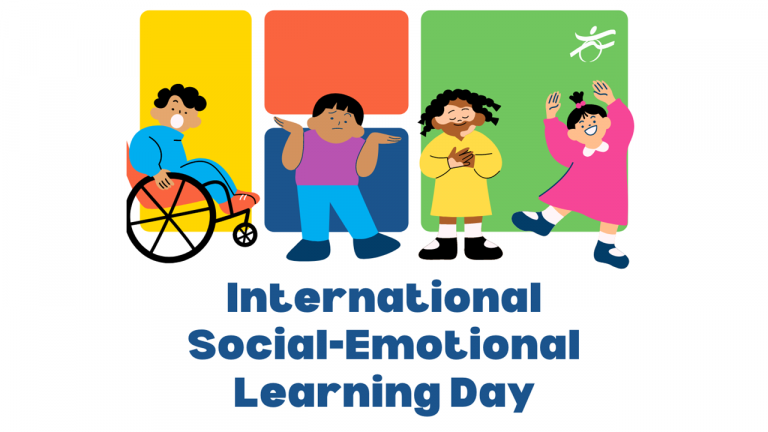
Please join us in celebrating International Social-Emotional Learning Day (#SELDay). SEL Day is an opportunity to collectively spread the word about the importance and impact of social emotional learning. Working together, we can raise awareness for SEL, bring on new SEL stakeholders, create artifacts that demonstrate SEL in action, and share SEL best practices.

Social emotional learning (SEL) changes lives—studies show that SEL improves well-being and academic outcomes, builds a positive school climate, and provides children with the necessary skills to excel in today’s workforce. Yet many members of our communities don’t know about SEL yet.

SEL is defined as the process through which all young people and adults acquire and apply the knowledge, skills, and attitudes to develop healthy identities, manage emotions and achieve personal and collective goals, feel, show empathy for others, establish and maintain supportive relationships, and make responsible and caring decisions.

Social-Emotional Learning (SEL) has been a natural part of the national physical education content standards for many years and teachers have taught it without realizing they are addressing this in their classrooms. As such, the impact of SEL impacts long-term health outcomes and quality of life. Below we share resources from the National Center on Health, Physical Activity, and Disability (NCHPAD) related to SEL.

NCHPAD’s Social-Emotion Learning Guide for practitioners is an incredible resource for those working with young people. The guidebook is designed to help physical educators emphasize SEL in their physical education classrooms that are inclusive of every student. The guidebook will provide classroom techniques, ideas, activities, training opportunities, and resources to help physical education programs promote SEL every day.

Physical education teachers can help mitigate the social and emotional issues that students may have by using the strategies discussed in the Social-Emotion Learning Guide. Strategies may include but are not limited to, classroom environment; crisis management strategies; etc.

Join the movement and sign up to support social emotional learning here today!

Robert L. Herron is Acting Director of Sport Exercise Science at the United States Sports Academy.  Robert is a Certified Strength and Conditioning Specialist® with distinction from the National Strength and Conditioning Association (NSCA-CSCS*D®) and a Clinical Exercise Physiologist through the American College of Sports Medicine (ACSM-CEP®). [email protected]

Taylor Rogers is the Academic Affairs Coordinator at the United States Sports Academy. Taylor is currently a graduate student at the United States Sports Academy where she is completing her master’s in Sports Management.

Female Representation in Sports Science Research

0
Female Representation in Sports Science Research
Courtesy image

By Robert L. Herron and Taylor Rogers |

March is Women’s History Month and March 8 is International Women’s Day. In sport, the continued increase in female sports’ popularity highlights the progress society has made, but also further underscores the need for more advancement – this is specifically true in sport science research.

Female-specific sports science research is lacking. In the past, most research was conducted on young, white, college males. Often studies were designed to exclude women based on sex- or gender-specific differences (perceived and/or real). As a result, data including women are underrepresented in the literature – writ large – and current “best practices” for practitioners are not informed by research that includes women. The problem of underrepresentation in research studies can have tremendous impacts on health and safety in sport.

There are several targeted interventions that may help improve this imbalance. However, a recently published tool can help those involved in sport-science research identify underrepresentation of female athletes – via an audit – and thus highlight the needs for additional work in a specific area.

In the February issue of the International Journal of Sports Nutrition and Exercise Metabolism, Dr. Ella S. Smith et al. published the review that provides a quality framework entitled, Methodology Review: A Protocol to Audit the Representation of Female Athletes in Sports Science and Sports Medicine Research. Of note, the tool/process allows future research to be informed by identifying gaps in the current research.

I encourage sport science students and researchers to read and review the article. In short, the process outlines addressing the following characteristics:

  1. Population
  2. Athletic Caliber
  3. Menstrual Status
  4. Research Theme
  5. Study Impact
  6. Sample Size

In order to create a more diverse, equitable, and inclusive field of study, it is important that focused efforts attempt to facilitate positive change. Standardized protocols with which gaps in research can be noted, helps justify the need for female-specific research in several areas of inquiry. This is critical in moving forward. While this tool alone will not rid the world of sex and gendered bias, it can help researchers work on filling the gaps and improving the science to better support women in sport.  

Robert L. Herron is Acting Director of Sport Exercise Science at the United States Sports Academy.  Robert is a Certified Strength and Conditioning Specialist® with distinction from the National Strength and Conditioning Association (NSCA-CSCS*D®) and a Clinical Exercise Physiologist through the American College of Sports Medicine (ACSM-CEP®). [email protected]

Taylor Rogers is the Academic Affairs Coordinator at the United States Sports Academy. Taylor is currently a graduate student at the United States Sports Academy where she is completing her master’s in Sports Management.

Z: The National War Symbol Displayed During Medal Ceremony

0
Z: The National War Symbol Displayed During Medal Ceremony
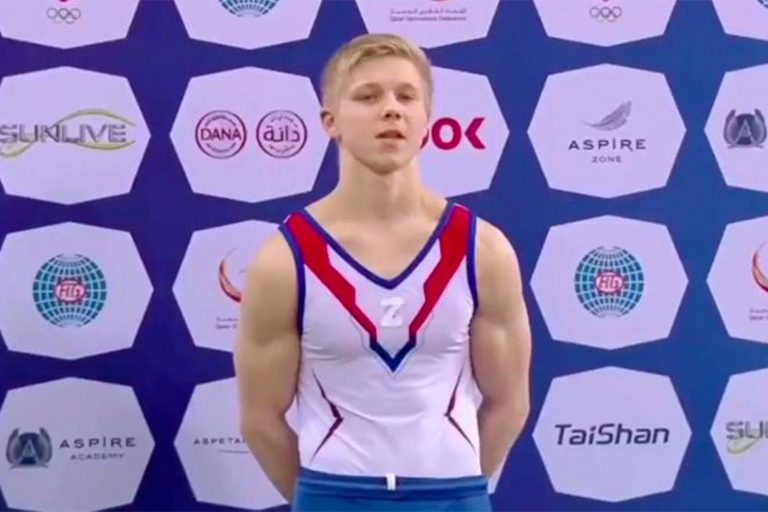
Russian Gymnast Ivan Kuliak was blasted for wearing a Z on his uniform to signal support for the invasion of Ukraine. Photo: Claro Sports

By Fred Cromartie, Ed. D. |

Many people say there’s no room for politics in sports. Recently, during the medal ceremony for the International Gymnastics Federation (FIG) event in Doha, Qatar, Russian gymnast Ivan Kuliak displayed what has been termed a national war symbol clearly visible on his leotard standing next to his competitor form the Ukraine on the podium.

The Ukrainian Illia Kovtun won the completion and took home the gold. 

The letter Z is a mark and symbol for those wearing it expressing their support for Russia’s invasion of Ukraine, the supportive symbol has been visibly displayed on Russian military equipment.

Due to the Russia athlete’s behavior the International Gymnastics Federation has called for an independent investigation.

“The International Gymnastics Federation (FIG) confirms that it will ask the Gymnastics Ethics Foundation to open disciplinary proceedings against Ivan Kuliak following his shocking behavior at the Apparatus World Cup in Doha, Qatar,” FIG’s full statement read.

Additionally, “We can confirm that (FIG) has informed us that they will formally be seeking the opening of disciplinary proceedings against male artistic gymnast Ivan Kuliak,” the Gymnastics Ethics Federation said Today.

Dr. Cromartie is the Director of Doctoral Studies at the United States Sports Academy.

Existentialism in Sport

1
Existentialism in Sport
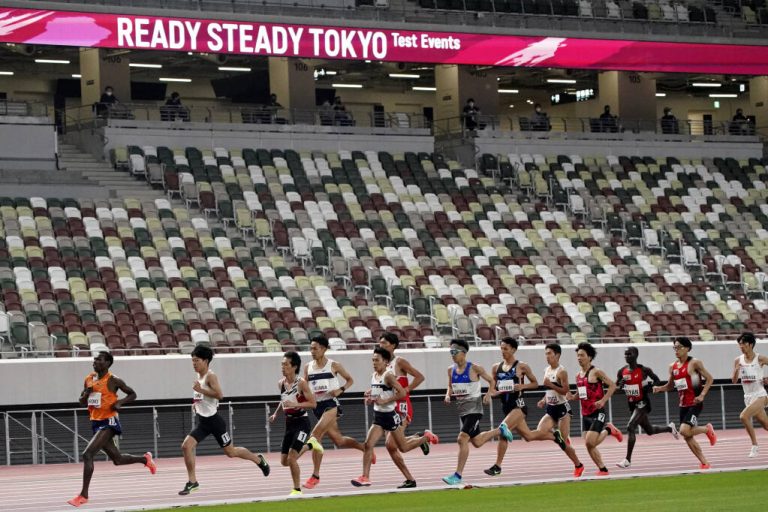
Japanese athletes compete during an athletics test event for Tokyo 2020 Olympics Games at the National Stadium, in Tokyo, Japan, Sunday, May 9, 2021. (AP Photo/Shuji Kajiyama)

By Dr. Tomi Wahlstrom |

Existential philosophy and its applications in psychology can assist athletes in their personal growth and development. It will help them to develop their physical strengths through sports coaching, and they can become stronger persons psychologically as well. As such, they are more likely to achieve their true sporting potential. Existential way of life has become more appealing to many especially during the recent years as the pandemic has challenged the world, and forced us to think about the meaning of it all. Many people have started to seek meaning in their lives as the world around them has started to appear increasingly absurd. Athletes are not exempt from these feelings. In the matter of fact, their lives may feel even more meaningless during these difficult times. Many of them have not been able to train and practice normally and many competitions have been cancelled. Even the Olympics was an unusual ordeal with athletes competing without spectators. They were alone in the Olympic village without their family members and support systems. It is, therefore, understandable that many athletes have quit their athletic careers or may be considering quitting. Sport just does not feel the same. It does not feel as meaningful as it once did. The entire sport industry is going through a sort of an existential crisis.

As a philosophy, existentialism emphasizes individual existence, freedom and choice. According to existentialism, humans define their own meaning and try to make decisions despite existing in an absurd universe. It focuses on human existence, and knowing that there is no purpose or explanation at the core of our existence. It holds that the only way to find meaning in life is by embracing existence. Existentialists believe that individuals are entirely free and must take personal responsibility for themselves. It emphasizes action, freedom and decision making as fundamental, and poses that the only way to rise above the essentially absurd condition of humanity is by exercising our personal freedom and choice.

Existentialists feel that we are free to choose our own terms of engagement in our situation. This is important for an athlete. Many times athletes are not given a voice by trainers, coaches, promoters, and team owners. People are only interested in their performance rather than who they are as individuals. Existential psychology can change that an empower athletes to have a voice. Existentialism encourages individuals to defy the restrictive norms that they are subjected to. Naomi Osaka and Simone Biles are recent examples of athletes who decided on their own terms of engagement. They spoke out and the world supported them. They are existential heroes.

Existentialists also think that human beings are not predefined as essence but rather defined by their actions. Athletes are individuals like the rest of us. They define who they are by their own actions and are free to be who they are. Serena Williams, for example, stepped into the tennis court in a black cat suit because that was who she was. The world had to accept her as such. She was free to defy the norms and the world is better for it.

According to existentialism, existence is a matter of continuous striving. Athletes are continuously thriving to be better and to break records. Sport is all about continuously improving reaching your highest potential. Existential philosophy and psychology can help you to be in the right mindset to do this. In addition, we must remember that we cannot expect the world to be meaningful from the outset without any effort. Rather, the world is full of ambiguity and contradictions, which can make existence arbitrary and the world seem absurd. Existential philosophy is an attempt to embrace this ambiguity and look deeper into what it is like to live under this elementary condition. From time to time, we are bound to experience an uncanny feeling of estrangement, alienation or disintegration, or even deep existential anxiety. All this is perfectly normal and just part of being a human. Existentialism can help us to cope better with this anxiety.

In summary, the strength of existential philosophy in relation to sport is its ability to reveal a range of ways in which human beings can find meaning and value in sport. It is a helpful philosophical and psychological perspective to those of us who are deep thinkers and passionate about sports.

Dr. Tomi Wahlstrom is the Provost at the United States Sports Academy.

Paralympic Athletes from Russia and Belarus Banned from Beijing 2022 after IPC U-turn

0
Paralympic Athletes from Russia and Belarus Banned from Beijing 2022 after IPC U-turn
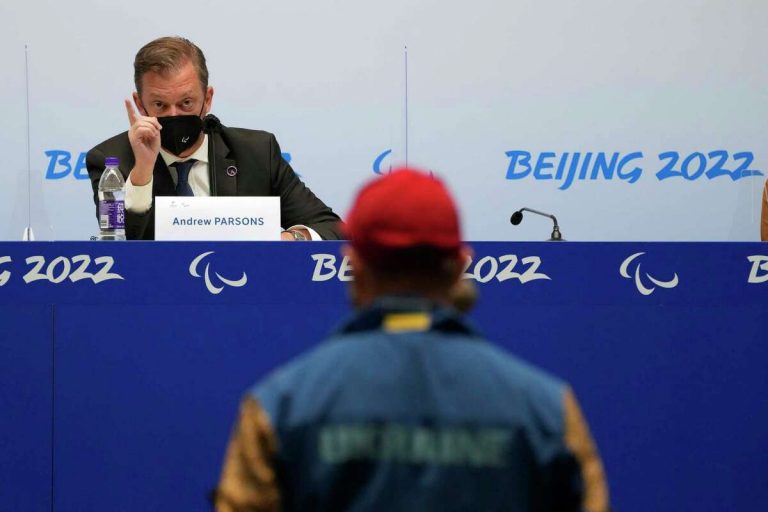
International Paralympic Committee (IPC) President Andrew Parsons speaks to a journalist from Ukraine during a press conference at the 2022 Winter Paralympics in Beijing, Wednesday, March 2, 2022. Photo: Andy Wong/AP

By Michael Houston |

Athletes from the Russian Paralympic Committee (RPC) and the Paralympic Committee of the Republic of Belarus will not be allowed to compete at the 2022 Winter Paralympic Games in Beijing, following further sanctions from the International Paralympic Committee (IPC).

Both nations were previously to compete under a neutral banner at the Games in light of the ongoing invasion of Ukraine, although Russian athletes were already competing neutrally under the ruling of the Court of Arbitration for Sport following the nation’s doping scandal.

Initially the IPC allowed athletes from the countries to be represented under the Paralympic flag, but quickly performed a U-turn just a day after.

This comes after multiple National Paralympic Committees threatened a boycott, forcing the IPC Governing Board into a change.

IPC President Andrew Parsons said nations were “likely to withdraw” if the two teams were not pulled, stating there would not be a “viable Games”.

He added that the environment in the Paralympic Villages was worsening as a result of the conflict in Ukraine, with many NPCs taking issue with the IPC’s original stance.

“At the IPC we are very firm believers that sport and politics should not mix,” said Parsons.

“However, by no fault of its own the war has now come to these Games and behind the scenes many Governments are having an influence on our cherished event.

“The IPC is a membership-based organisation, and we are receptive to the views of our member organisations.

“In taking our decision yesterday we were looking at the long-term health and survival of the Paralympic Movement. 

“What is clear is that the rapidly escalating situation has now put us in a unique and impossible position so close to the start of the Games.  

“Yesterday we said we would continue to listen, and that is what we are doing. 

“In the last 12 hours an overwhelming number of members have been in touch with us and been very open, for which I am grateful.

“They have told us that if we do not reconsider our decision, it is now likely to have grave consequences for the Beijing 2022 Paralympic Winter Games. 

“Multiple NPCs, some of which have been contacted by their Governments, teams and athletes, are threatening not to compete.

“Ensuring the safety and security of athletes is of paramount importance to us and the situation in the Athletes’ Villages is escalating and has now become untenable. 

“First and foremost, we have a duty as part of the Paralympic mission, enshrined in the constitution, to guarantee and supervise the organisation of successful Paralympic Games, to ensure that in sport practiced within the Paralympic Movement the spirit of fair play prevails, violence is banned, the health risk of the athletes is managed and fundamental ethical principles are upheld.

“With this in mind, and in order to preserve the integrity of these Games and the safety of all participants, we have decided to refuse the athlete entries from RPC and NPC Belarus.”

Parsons expressed his sympathy for the affected athletes, hailing from two of the best Winter Paralympic nations in the world.

Between them, Russian and Belarusian athletes won 12 gold medals at the Pyeongchang 2018 Winter Paralympic Games from 80 medal events.

“To the Para athletes from the impacted countries, we are very sorry that you are affected by the decisions your Governments took last week in breaching the Olympic Truce. 

“You are victims of your Governments’ actions. 

“Athlete welfare is and always will be a key concern for us. 

“As a result of today’s decision 83 Para athletes are directly impacted by this decision. 

“However, if RPC and NPC Belarus remain here in Beijing then nations will likely withdraw. 

“We will likely not have a viable Games. 

“If this were to happen, the impact would be far wider reaching.”

NPCs such as the Canadian Paralympic Committee expressed their opposition to allowing Russian and Belarusian athletes from competing at the Games, although there is no evidence that it planned to withdraw.

Some of the RPC’s top names unable to compete include two-time 2018 gold medallist in Nordic skiing Ekaterina Rumyantseva and Alpine skiing Paralympic champion Alexey Bugaev.

Yury Holub and Sviatlana Sakhanenka are the top athletes missing from Belarus.

The IPC plans to hold an extraordinary General Assembly to vote on whether to make compliance with the Olympic Truce a membership requirement.

It is also set to allow a vote on whether the RPC and NPC Belarus will have their memberships suspended or terminated.

Republished with permission from insidethegames.biz.

Workout on Vacation? Give it a Try.

0
Workout on Vacation? Give it a Try.
Courtesy image

By Dr. Cliff McCain |

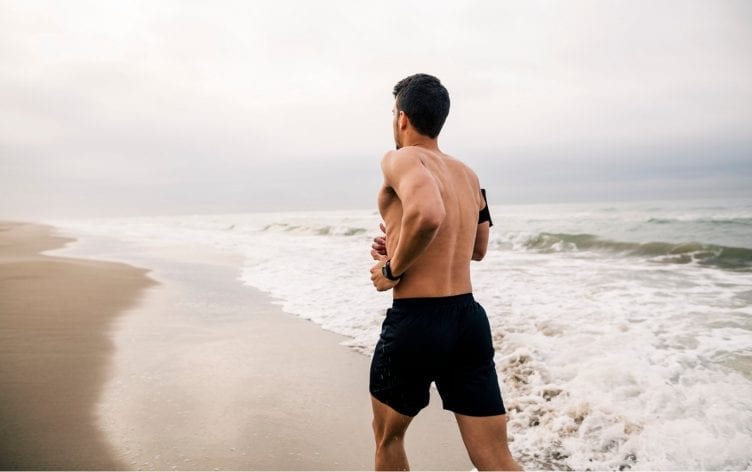
How many of you look forward to your vacation? We all love that bit of time that we get away with our families and relax. So, how many of you exercise on vacation? The word “relaxation” and “exercise” may not go together in some people’s vocabulary, but I have found that some exercise on vacation can be rewarding. You just have to find the right places! I have been blessed to be able to travel in the last few years and have found exercising in the right location can have both physical and psychological rewards for you.

Dr. Cliff McCain takes a selfie during a vacation run.

I am a novice runner but I take my health and mental wellbeing seriously. Vacations have given me an extra opportunity to grow as a runner and enjoy the experience at the same time. Some of the places I have been able to run include: On the Old Course at St. Andrews, Scotland, on the beach at Bandon, Oregon, and on campus on a beautiful morning at the University of Notre Dame. Everyone has places they visit that are special to them. These were special memories for me and benefitted me in many ways.  I hope you may find these reasons to exercise are also true for you.

KEEP YOUR STAMINA GOING

First and foremost, I was able to run some and not lose all my stamina on my vacation.  It is so easy to get out of shape, physically and mentally, and this kept me going.

INCREASED MOTIVATION

Secondly, it gave me some extra motivation. The change of scenery boosted my morale and I was even more eager to push myself when I return home.  I was proud of myself for doing it and used that feeling to keep getting better.

BREAK THE MONOTONY

Do you ever get bored or stale with your exercise routine?  Of course, you do.  We have all been there. Sometimes you just do not want to get up when that alarm goes off early or put on your exercise clothes after working all day. We all have to mix up some of our routines to keep them fresh. What better way to mix it up than running somewhere you have never been?  When you return home, your normal route will seem fresher.

CREATE SOME MEMORIES

Finally, it made some special memories for me.  Take a selfie and remember doing something you are proud of in a place you love being. When I look back at a selfie of me on the same beach in St Andrews where the race scene from Chariots of Fire was filmed, I smile every time. (And also hum the theme song!)

I am certainly not suggesting you do not take a break.  You do not have to do your normal workout.  Just do something.  Run a quick mile or run more at a slower pace that you won’t normally let yourself do.  Just go out and enjoy the experience and take in the surroundings. Packing that extra t-shirt and pair of shorts may be well worth the effort!

Cliff McCain works as Assistant Director of Academic Enrichment in the athletic department at the University of Mississippi. He spent two decades working as a coach and administrator at the secondary education level. McCain holds a doctor of education degree in higher education and master’s degrees in history and educational administration