Home Blog Page 61

2020 Fitness Trends for your New Year’s Resolution

1
2020 Fitness Trends for your New Year’s Resolution
Courtesy photo

By Robert Herron, MA, CSCS*D, ACSM-CEP |

New Year – New You.  In an effort to support those that wish to incorporate fitness into their lifestyle in 2020, this article will discuss the Top 20 Fitness Trends for 2020 according to the annual Worldwide Survey of Fitness Trends from the American College of Sports Medicine.  There are plenty of activities and things to help you along your way. 

20.  Children and Exercise – There are a number of relevant subtopics related to exercise (or physical activity) and children.  Of note, the relationship between physical activity and improved childhood health is important on the world’s stage.  Many recognize that society should attempt to provide the best environment in which children can live healthy and active lives.  However, as school systems continue to cut opportunities for physical activity and communities struggle to maintain or develop public infrastructure that provides opportunities outside of school, there has been a steady rise in complex issues in which exercise and physical activity may attenuate.  The World Health Organization (WHO), recommends 60 minutes per day of moderate/vigorous physical activity and some sort of bone and muscle strengthening activity at least 3 days per week for children.   

19.  Outcome Measurements – It is important to set goals, track progress, and make informed decisions.  As such, utilizing tools that provide relevant data are important.  However, taking good measurements can be extremely difficult.  One should be an informed consumer when purchasing products or services used to measure or track an outcome.  Depending on your goals, something as simple as how your clothing fits or as complex and blood analysis can help you along your way.  Working with a certified health and fitness professional can be of assistance in setting Specific, Measureable, Attainable, Realistic, and Timely goals (S.M.A.R.T. Goals). 

18.  Worksite Health/Wellness Promotion – Workplace production is at an all-time high but employee wellness is trending down.  As such, it is in the employer’s best interest to actively engage with employees in an effort to promote health and wellness around the workplace.  Likewise, it is wise for employees to take advantage of workplace wellness programs.  Check out some Workplace Wellness resources from the Center of Disease Control

17.  Circuit Training – is a type of exercise training that encourages participants to complete several exercises, that generally target all major muscle groups, in a sequential fashion with minimal rest.  This type of training can be very economical and, if prescribed correctly, can be great for beginners.  Make sure to speak with a fitness professional if you do not know if this is right for you.    

16.  Lifestyle Medicine –  The term may seem unfamiliar to some, but Lifestyle Medicine has to do with changing lifestyle habits that can improve health.  Increasing physical activity is a common lifestyle choice, most related to this list, but ceasing to use Tobacco, making better Food choices, and limiting Alcohol consumption are all fantastic lifestyle choices on their own.  Look for resources and a support system to help you work on making long-term improvement.    

15.  Licensure for Fitness Professionals – This topic is extremely relevant to practitioners and educators in the field.  In short, many places are exploring the requirement of some – or all – fitness professionals to have a license to practice with clients.  The concept is already familiar in nearly all other aspects of health and medicine professions (i.e., physicians, nurses, athletic trainers, etc.).  I would suspect the fitness industry will eventually follow this structure too and it is important for people to follow and engage in these discussions as they develop.

14.  Yoga – Yoga continues to be extremely popular and has evolved to include several different types and ways in which people can participate.  Try different studios in your area, learn more, and find out what you like! 

13.  Outdoor Activities – The great outdoors is, well, great!  Participating in outdoor activities and exercise can be helpful for many people.  Explore your local and surrounding communities.

12.  Functional Fitness – Quality of life is important.  This type of training emphasizes movement patterns that provide mobility, strength, and balance directly applicable to their daily lives and can be empowering to those that participate.  Additionally, this type of training can be tailored to be sport-specific for athletes.   

11.  Exercise for Weight Loss – Exercise, coupled with changes in one’s diet, is helpful in weight loss and long-term weight management.  However, it is important to understand that consistency in exercise and maintaining a healthy diet is key.  Fads do not last. 

10.  Certified Fitness Professionals – Get quality for your money.  While there is no industry standard (see #15 above), it is important that you have a trainer that is qualified on some level.  One can search for qualified professionals in their area on the US Registry of Exercise Professionals

9.  Health and Wellness Coaching – Having someone that is tasked with supporting you can help you reach your goals.  These types of coaching programs can be one-on-one or small group and have shown to be beneficial to many.    

8.  Fitness for Older Adults – The Baby Boomer generation is getting older.  As such, healthy aging has become a priority.  Regular physical activity and exercise assists in longer independent living and mitigates the age-related risks of chronic disease incidence and progression. 

7.  Body Weight Training – Using your body and minimal equipment can serve as the foundation or a welcomed part of a training program.  Read more about how it can be used with clients.

6.  Exercise is Medicine® – EIM is a global-health initiative aimed at encouraging health-care providers and exercise professionals to work together in order to help patients incorporate exercise in their everyday routine and improve health.  Fitness professionals can grow their business by meeting physicians and discussing how patients can be helped by becoming their clients.

5.  Personal Training –Personal training services have expanded to home visits and are part of some worksite wellness programs.  Working with a personal trainer can help jumpstart and keep one consistently engaged in an exercise program (see #10 above).    

4.  Training with Free Weights – A trend that has evolved from “Strength Training”, free weights (i.e., dumbbells, kettlebells, medicine balls, etc.) have increased in popularity.  Fitness facilities now highlight and specialize in free weight equipment.  With proper form and progression, free weights provide a great stimulus for improving fitness. 

3.  Group Training – Not surprisingly, group-exercise class participation is at an all-time high.  With a wide variety of class options and a supportive-group environment, group training will stay popular.  Technology has even put group training in the home with new products like Peloton®.    

2.  High Intensity Interval Training (HIIT) – Several gyms, trainers, and trainees are taking advantage of these powerful benefits of a method of exercise training that alternates high physical efforts with lower-effort recovery time periods.  If HIIT is appropriate, this type of training can provide the benefits of high-intensity training while potentially lowering training time, improving enjoyment, and maximizing healthy adaptations. 

1.  Wearable Technology – This returns as #1 again, four of the last five years.  The accuracy

continues to improve as the market share continues to rise.  At an estimated $96 billion industry, phones, watches, camera, and step counters can serve as reminders and track exercise progress over time and even lead workouts.

Robert L. Herron is a faculty member at the United States Sports Academy.  Robert is a Certified Strength and Conditioning Specialist® with distinction from the National Strength and Conditioning Association (NSCA-CSCS*D®) and a Clinical Exercise Physiologist through the American College of Sports Medicine (ACSM-CEP®). [email protected]

New Year’s Goals

1
New Year’s Goals
Photo: Alyssa Parten

By Alyssa Parten |

I grew up in the Deep South, where drinking sweet tea was a staple and as vital to life as water. Every year on New Year’s, once my younger sister and I were in our teen and college years, she and I would vow to cut out all sugar for two weeks. We were a big fan of our mom and granny’s holiday baking, so this was our method of resetting and getting back to healthier habits and choices. However, that sweet tea was our nemesis and the culprit to the demise of our efforts for many years. We were doing well if we made it a week without it, quite frankly.

Alyssa Parten is a NSCA and USAPL certified personal trainer and powerlifting coach from Birmingham, Ala.

Breaking habits that have been a constant part of your life (maybe daily or weekly) for a long time is hard! Even with the best of intensions, once the initial excitement of setting goals wears off, it can be extremely difficult to resist caving to old habits. But guess what, this isn’t even your fault!  Psychologically, the mind is programmed to automatically repeat what decisions are consistently made, so that it can more optimally focus on solving new or less-frequently occurring events. Take for instance backing your car out of a drive way. You have likely done it so many times that you hardly look around or behind to know exactly how much to turn the steering wheel or when to break before putting it into drive. Another prime example of this process occurred during the week of Christmas, as I was visiting my family. I was in town spending time with my dad when our way back to his house, he pulled into the turning lane for Publix. I asked him why we were going there, because he hadn’t mentioned needing anything. His reply? “I don’t know; I just usually go here on my way home from work.” Once habitual wires are embedded, it can be very hard to break and re-wire them, regardless of whether they assist in your daily life or are part of a behavior will be better for you – in the long term.

So how can you set and keep new goals and resolutions going forward? James Clear, the author of Atomic Habits, suggests making beyond simple goals. Ones that are so basic to achieve that there is almost no effort in working on them. He explained in his book that making a 1% difference adds up greatly over time and makes adding to the goal that much easier. In Atomic Habits, Clear shares how one man ultimately wanted to get into better shape by working out, but instead of jumping into it hard immediately and burning out as quickly as he began, he took the atomic approach. To begin his process, he decided that a few days a week he would drive to the gym and park there for a few minutes. Once simply driving to the gym became more automatic, he built onto it by driving to the gym, walking through the doors, and sitting inside for a few minutes. Following this he began to workout for only 10 minutes each visit. This may sound completely absurd to you, but when you are attempting to successfully rewire your mind to make habit changes from ground zero, starting smaller than small may be an optimal way to go about it, because as previously mentioned, 1% effort adds up over time. As you might guess, this route to a lifestyle change stuck for this man and he was able to alter his future and achieve a healthier way of living by very gradually adding to his new habit.

So, instead of rushing this New Year’s goals, why not take the Atomic Habits approach? Start with what you want and begin to break it down further into smaller and smaller parts. Instead of diving head first into the deep end of your goal, start with the smallest amount of effort towards it. Want to run a marathon? Start by wearing your tennis shoes daily. Need to be better about cleaning the house. Sit a broom by the back door. Trying to start your day earlier? Hit snooze one less time or set your alarm for 3 minutes earlier. Many it easy, make it stick.

Happy New Year!

For other health and exercise tips, see more on my Instagram, @ladybeef.athletes

Alyssa Parten is a NSCA and USAPL certified personal trainer and powerlifting coach from Birmingham, Alabama. She received her Bachelors in Exercise and Sport Science from The University of Alabama and is currently pursuing a dual Masters at the University of Concordia Chicago in Human Movement and Strength & Conditioning. Currently, she works in a private practice gym as a personal trainer and strength coach and also owns an online powerlifting coaching business, Ladybeef Inc. Additional certifications include: Precision Nutrition Level 1, TPI Level 1, and Human Movement Specialist. Follow Alyssa on Instagram.

Paleo: A Nutritional Strategy and Fitness Lifestyle

0
Paleo:  A Nutritional Strategy and Fitness Lifestyle
Photo: WebMD

By Brian Wallace, Ph.D., FACSM, CSCS |

The Paleo or ‘Stone Age’ diet has become exceedingly popular especially in health circles and among fitness enthusiasts. In fact, it seems to be a nutritional strategy that continues to evolve.  The name ‘Paleo’ does have considerable cachet and its own evolution has brought it to the forefront of the health, fitness and athletic arenas – encompassing more than just a diet but a health and fitness lifestyle as well – which all of us in the exercise, sport and nutrition fields know are inextricably connected for success.  So let’s take an objective look at this nutritional phenomenon.

The Paleo diet was actually initiated back in the 1970s by a gastroenterologist, Walter Voegtlin, who suggested that eating like our Paleolithic predecessors would make us healthier.  Of course, the fundamental hypothesis is a bit questionable – that there was a single and identifiable nutrition strategy used by our Paleolithic ancestors.  It seems more likely that food selections were largely directed by opportunity – seasonal, geographical, availability – the latter being the deciding factor. 

Leaving evolutionary and nutritional assumptions aside, many prefer to think as the modern Paleo plan as a lifestyle – exercise and nutrition program – as push back on the culture we have created; not just the unprecedented levels of inactivity but also such recent developments as fast food restaurants, supersizing, sugar laden sodas, and all you can eat buffets. We have fallen prey to our own evolutionary success, having created calorie dense foods (loaded with fat, sugar, sodium and an array of chemicals) while minimizing the amount of energy used through physical activity – an expansion of a survival mechanism passed on from our progenitors – conserving energy:  maximizing ‘calories in’ from our food while minimizing ‘calories out’ from physical activity.  In many ways, obesity, diabetes, heart disease and other common maladies today are the product of a survival strategy initiated millions of years ago. 

So how does our modern version of the Paleo diet equate to what our ancestors consumed and is that really the goal? Despite the Stone Age implications, the Paleo nutritional tenets are not in fact written in stone and seem to vary depending on who you are talking to. To be sure, the Paleolithic nutritional assumptions inherent in the diet have stimulated considerable debate which has led to varying interpretations of what foods should and should not be included.  It is this consensus discord that makes assessing the nutrient density, biochemical impact and health-fitness effectiveness of the Paleo diet more challenging.

Modern Paleo proponents typically recommend: the primary sources of protein and fat – meats (preferably pasture raised and grass-fed beef and bison), free range poultry and eggs (chicken, turkey, duck) – all antibiotic and hormone free, wild caught fish and shellfish, uncured cuts of free-range pork and organ meats like liver. It also typically includes: naturally grown plant foods, fresh fruits and vegetables, roots and tubers, nuts and seeds: rich in protein and healthy fats and healthy oils including olive oil, avocado, coconut, walnut, macadamia and flaxseed oils. Preferably all organic and locally grown. As most good nutrition plans though, Paleo is as much about what you should avoid:  processed foods, sugar, sugar alcohols, pesticides, hormones, antibiotics, grain fed beef and chicken, refined vegetable oils, oils derived from grains and legumes, trans fats, sweets, desserts. In particular, any foods that drive up blood sugars, insulin and inflammation while loading up on calories such as fast foods with supersizing, high sugary sodas, and processed foods – all should be avoided or at least limited in the diet because they are typically high in energy density and low in nutrient density and produce reactive oxygen species (ROS), inflammation, etc.

Proponents also recommend (and this is where the debates get more intense) staying away from grains, potatoes, legumes and dairy.  While that may be true for some, it is not true for all and can result in their own problems and deficiencies.  Ultimately, a decided limitation with any singular diet strategy is the one size fits all mentality which quite simply is an oversimplification of complex individual physiologic and biochemical dynamics which are in constant flux, varying relative to genetics and lifestyle and changing over time as we age.  The Paleo diet could be a good starting point, but to truly be effective your nutrition and exercise program must fit your specific individual physiology, biochemistry and lifestyle so monitor your responses and modify your plan accordingly. I’m sure Paleo man would’ve felt the same! See related articles in the Sport Digest:  Physiologic Individuality; Ketogenics – a Case Study; and the Living Lab: Mapping your Physiology.

Dr. Brian Wallace is the chair of sports exercise science at the United States Sports Academy.

Shiffrin Moves to Second on Women’s All-Time List

0
Shiffrin Moves to Second on Women’s All-Time List
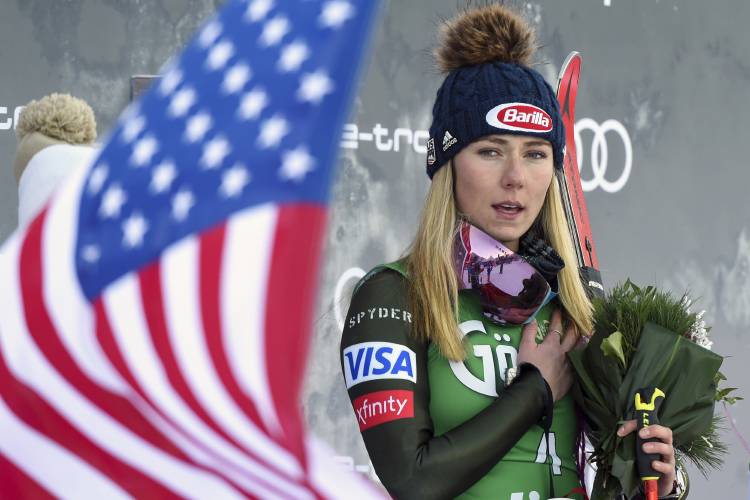
United States' Mikaela Shiffrin, winner of an alpine ski, women's World Cup giant slalom, listens to the national anthem, in Lienz, Austria, Saturday, Dec. 28, 2019. (AP Photo/Piermarco Tacca)

By Mike Rowbottom |

Mikaela Shiffrin earned her first giant slalom victory of the season in the Austrian resort of Lienz, taking her total of International Ski Federation (FIS) Alpine Skiing World Cup wins to 63 and moving her to outright second on the women’s all-time list.

The three-time reigning overall World Cup champion and double Olympic gold medallist missed the World Cup meeting in Val d’Isère last weekend after finishing 17th in Courchevel.

But the 24-year-old American was emphatically back to business today as she won both runs, finishing almost a second and a half clear of Italy’s Marta Bassino and home skier Katharina Liensberger.

“It’s pretty hard to believe this right now,” Shiffrin said. 

“I know that sounds strange, but it is. … 

“It sounds a little bit stupid, actually, to say the last week was a tough time because I still have already an amazing season. 

“One bad race, it’s stupid, really. 

“It’s just ski racing. 

“But I care.”

The American star’s combined total was 2min 07.31sec, with Bassino on 2:08.67 and the Austrian on 2:09.13.

Shiffrin has now passed the number of race wins achieved by Austria’s Annemarie Moser-Pröll and her next target is the total of 82 victories established by her compatriot Lindsey Vonn.

Republished with permission from insidethegames.biz.

Experiencing the Olympic Dream

0
Experiencing the Olympic Dream
Colombia's Mariana Pajón won Pan American Games gold in the women's BMX. Photo: Pan American Games in Lima

By Dr. Sandra Geringer |

I have two very exciting trips planned for 2020. I will be visiting my husband’s (Javier) homeland of Colombia and I will be co-facilitating a trip to the 2020 Tokyo Summer Olympic Games. As much as I am born and bred in the US of A, I have taken great interest in learning more about the Colombianos and especially their sport culture. Javier is an avid volleyball player. He started competing when he was 14 years old. He welcomed the discipline in his life, and the passion he has for volleyball shaped his confidence and he still maintains a healthy lifestyle. He made his college team, and even played for the Colombian National Team. He now enjoys playing beach volleyball and has become a certified beach and indoor volleyball official. He has taught me as much about volleyball as I have taught him about American Football. Unfortunately, I have unintentionally influenced him to be a Cleveland Browns fan… there is always next year!

As I look forward to my travels this coming year, I thought it would be fun to become a bit more familiar with Colombian athletes winning their way to the 2020 Olympics. There were some outstanding performances throughout 2019. Here are the top six athletes (with Javier’s approval) that have had a stellar year and to keep an eye on in the upcoming Olympic Games:

5) Anthony Zambrano – sprinter – Zambrano is best known as being ranked fifth in the world for the 400m sprint. He earned a silver medal in the 2019 World Championships in Doha, Qatar and set a national record at 44.15s. He also won two gold medals in the 2019 Pan American Games, one in the individual 400m and one as the anchor for the 4x400m relay. Fans will be hoping to see Zambrano’s proud smile on the photo finish.

4) Robert Farah and Sebastian Cabal – tennis – The Colombian doubles duo captured the two most prestigious doubles championships this year – Wimbledon and the US Open. They also clinched the year-end No. 1 world ranking in men’s doubles. They are the first South American team to achieve this feat since 1986. In an interview with Farah, he mentioned that tennis has become quite popular in Colombia these days. He also stated that he and Cabal are showing the next generation that it is possible to fight and to win these big tournaments. This pair is truly a smashing hit with their followers!

3) Mariana Pajón– BMX – Pajón is known as the Queen of BMX. She is the only Colombian to be a two-time Olympic gold medalist. She won her first national title at the age of 5, and her first world title at age 9. She has won 14 world championships, 2 national championships in the US, 9 Latin American Championships, and 10 Pan American Championships. She is looking to lap Colombia’s colors back to the top of the podium for the third time in the 2020 Olympics.

2) Egan Bernal – cyclist – Bernal won the 2019 Tour de France, becoming the first Latin American winner of the race. It is questionable at this time if Bernal will compete in the road racing event in the 2020 Olympic Games. Although, it is favorable for him to compete because the course has many hills which he excels at and it could be another historical achievement for the young Colombian as well as his country. But, he and Team Ineos are deciding what road to follow.  

1) Caterine Ibargüen – high jump, long jump, triple jump – Ibargüen is best known for her success at the triple jump. She won a silver medal in the 2012 Olympic Games, however she has pretty much been in the top spot ever since. She won the gold medal in the 2016 Olympic Games. She was named the 2018 International Association of Athletics Federations (IAAF) Female Athlete of the Year Award. She had to withdraw from the 2019 Pan American Games due to an injury. However, she is still the favorite to win the gold medal in the 2020 Olympic Games. Her homeland will be jumping for joy for her when she succeeds.

I do have to give an honorable mention to James Rodríguez for being one of the most popular (and many may say good looking (this side note is unapproved by Javier)) athletes for Colombia. He plays middle-forward for the national futbol (soccer) team. Associations affiliated with Fédération Internationale de Football Association (FIFA) can send teams to participate in the Olympic Games. However, men’s teams are restricted to players under the age of 23 years with a maximum of three players that can be over that age. Colombia will be sending a team, but it is yet to be determined if Rodríguez will be one of the overaged players.

Like Colombia, every country has their stars and expects them to compete at their peak performance on the world stage. The Olympic Games are the ultimate show for pride in an athlete’s country and just having the opportunity to be a part of such a tradition can be enough of an honor for someone who has given his or her life towards being a champion. And, for me, to be able to not only immerse myself in the Colombian culture but to also feel the Olympic spirit is definitely fulfilling a longtime desire. As much as 2019 was a stellar year – even for me, I am thrilled about what’s to come in 2020 by experiencing the Olympic dream!

The following links contributed to this article:

https://www.eltiempo.com/deportes/ciclo-olimpico/perfil-de-anthony-jose-zambrano-oro-en-los-juegos-panamericanos-2019-398714

https://www.tennis.com/pro-game/2019/10/juan-sebastian-cabal-and-robert-farrah-atp-doubles-columbia/85596/

https://readysteady.tokyo2020.org/en/news/detail/colombia-s-double-olympic-medallist-mariana-pajon-dreams-of-her-third-win-in-tok/

https://www.rcnradio.com/deportes/por-que-egan-bernal-pondria-en-riesgo-su-presencia-en-los-olimpicos-si-va-al-giro

https://www.globalsportscommunication.nl/athletes/most-successful-athletes/EN11866-Caterine-Ibarg%C3%BCen.aspx

Dr. Sandra Geringer is the Director of Recreation Management and Sports Studies at the United States Sports Academy.

Almost a Total Sports Shut Down on Christmas Eve

0
Almost a Total Sports Shut Down on Christmas Eve
Photo: Marco Garcia-USA TODAY Sports

By Evan Weiner |

It is Christmas Eve and in the sports world, it is pretty quiet or supposed to be quiet. The National Hockey League has shut down for three days. The National Basketball Association has nothing scheduled. The Hawaii Bowl is back with Brigham Young University playing Hawaii. In 2018, the game was played on December 22. Other than 2018, the Hawaii Bowl has been a Christmas Eve fixture since 2009. Technically, the game is an afternoon affair in Honolulu but a night time contest on most of the mainland. The NHL last scheduled games on Christmas Eve in 1971 and stopped playing Christmas Day games in 1972. The NHL even has a trade ban between December 19 and 27 of each season. College basketball is also taking Christmas Eve off. Presumably it is also a quiet sports betting day.

The NFL generally avoids playing on Christmas Eve and Christmas Day. But times and TV commitments have changed. The NFL in 1955 pushed the Cleveland-Los Angeles and in 1960 Green Bay-Philadelphia league championship games to Monday December 26. The NFL was stung by political criticism in 1971 after playing a pair of playoff games. It was the second game, a long overtime affair between Miami and Kansas City that was the problem. Allegedly families missed traditional Christmas Day dinners because people were too concerned with the game. The issue became so heated that one Kansas state legislator who introduced a law calling on the NFL to ban Christmas Day games. The proposal went absolutely nowhere but the NFL didn’t take any chances. The league reworked the schedule and did not have any Christmas conflicts for years. Since then, no politician has introduced legislation barring the NFL or any leagues from playing on Christmas. Sports does not take days off.  The games must go on. It is on the schedule.

This article was republished with permission from the original publisher, Evan Weiner.

US Women End Decade Where They Started it, as World’s Best

0
US Women End Decade Where They Started it, as World’s Best
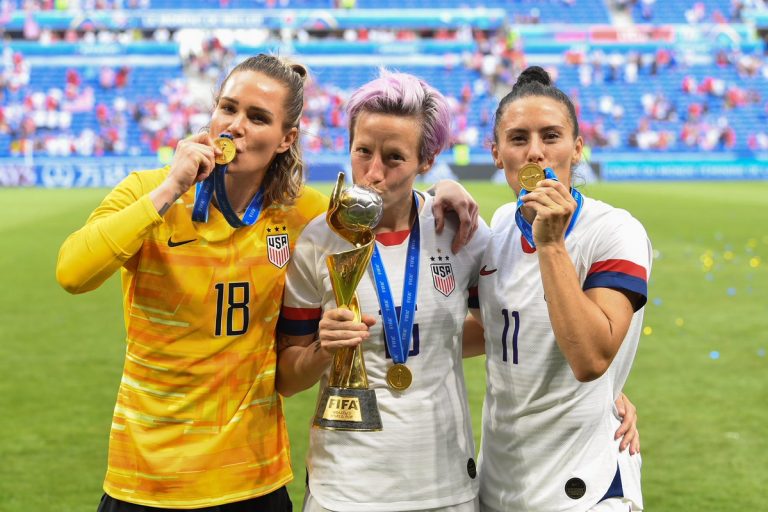
U.S. players Ashlyn Harris, Ali Krieger and Megan Rapinoe celebrate after defeating the Netherlands on Sunday in the FIFA Women's World Cup Final. Photo: https://twitter.com/USWNT

By Nancy Armour |

When the decade began, the U.S. women were the No. 1 soccer team in the world. Halfway through, the Americans were still No. 1, having just won the World Cup for a third time.

Now, as the decade comes to a close, the U.S. is, yes, you guessed it, No. 1. And World Cup champions again. 

Those who criticized the Americans during the World Cup, calling them arrogant or suggesting they tone down their celebrations, got it all wrong. When it comes to the best team of the 2010s, like everywhere else, the U.S. women have no competition.

There were other teams that won more titles since 2010 – that’s you, Alabama and Connecticut. Other teams that might be equally intimidating or inspire similar feelings of dread – cough, New England Patriots, cough.

But no other team came close to the U.S. women’s sustained success over the past decade. In other words, they have earned every inch of their badassness – and then some.

“We’re a confident team,” longtime defender Becky Sauerbrunn said during the World Cup. “We know how hard we work, day in and day out. We know what we’ve sacrificed for years.

“People see that as arrogance, we see it as preparation. And we believe in one another. That’s all we need.”

Over the past 10 years, the U.S. women won two consecutive World Cups (2019, 2015) and finished runner-up in the other (2011). They won the Olympic gold medal in 2012.

But the most telling stat of their dominance is 10. As in, the number of months over these past 10 years that they weren’t ranked No. 1.

That’s right. Out of the 120 months of this decade, the Americans have been the top-ranked team in the world for all but 10 of them. Odds are it wouldn’t even be that many if not for FIFA going roughly three months between rankings. 

Having been No. 1 for more than six years, the U.S. women dropped to No. 2 in December 2014, behind Germany. They stayed there in the next rankings, in March 2015, but were back at No. 1 in July 2015, after winning their first World Cup title since 1999.

They stayed at No. 1 until March 2017, when they again fell behind Germany. But they were back on top when the next rankings were released, in June 2017, and haven’t budged since.

Think about that. During the decade, the Americans have switched coaches three times and had dozens of world-class players come and go, including all-time international scoring leader Abby Wambach and Hope Solo, perhaps the best goalkeeper ever to play the game.

Yet they kept right on winning.

Of the 219 games they played this decade, the U.S. women won 175 of them. They had three seasons in which they didn’t lose a single game. 

Even their low point, their worst showing ever at a major international tournament, was a loss in the quarterfinals at the 2016 Olympics in Rio de Janeiro. On penalty kicks.

“The expectation is you will do everything you can to win,” said Kate Markgraf, a starter on the U.S. team that won the 1999 World Cup and now the general manager of the women’s national team. “That mentality, you walk into (it). So if you don’t have it yet, you learn it.”

The Americans have maintained their status despite the women’s game being better than ever.

As the most recent World Cup showed, there are no longer only three or four dominant teams. Countries all over, in Europe in particular, are pumping money and resources into the women’s game, and the impact is already being felt.

Germany, the reigning Olympic champion, was knocked out in France by the Netherlands, which went on to reach the final in only its second World Cup appearance. The domestic leagues in France, England and Spain are thriving.

But the U.S. women are still the team setting the standard. 

“They are wired for this, they’re built for this,” just retired coach Jill Ellis said in France. “I think some teams will visit pressure, but I think we live there a lot. And I think that’s part of the pride in the history of this program.”

As dominant as the U.S. women have been this decade, their influence off the field has been just as significant.

They have been standard bearers in the fight for equal pay, suing their own federation. They have forced America to examine our attitudes toward women, female athletes in particular. Megan Rapinoe emerged from the World Cup as an international icon, refusing to back down from her pleas for equality and inclusiveness even after President Donald Trump directed his Twitter rage at her.

“It impacts everyone, not just the girls. And not just people who can relate and who are similar,” Markgraf said. “Everybody. Now you have boys looking up to girls, you have boys wearing Rapinoe jerseys.

“The same thing happened in ’99,” she added, “but this feels like a different tipping point to me than in ’99.”

When history revisits this decade, it will be clear that no team had the success or the impact of the U.S. women. By any measure, they were the best team of the 2010s.

This article was republished with permission from the original author and 2015 Ronald Reagan Media Award recipient, Nancy Armour, and the original publisher, USA Today. Follow columnist Nancy Armour on Twitter @nrarmour.

Coubertin’s Record Sale Olympic Manifesto is Beyond Price

0
Coubertin’s Record Sale Olympic Manifesto is Beyond Price
Photo: https://coubertinspeaks.com/

By Mike Rowbottom |

The official line following this week’s record sale of the original Olympic Games manifesto – for a sum faster, higher and stronger than eight million dollars – is this: “The identity of the document’s buyer was not disclosed.”

Sorry?

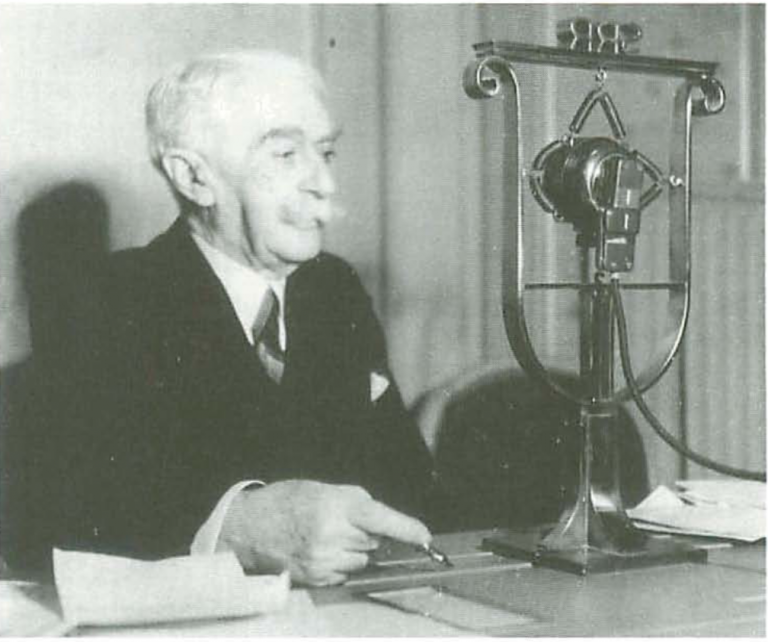
So where is this historic document that was agonised over and re-worked into its finishing form by the founder of the modern Games, Baron Pierre de Coubertin?

There is only one place it should be – within the International Olympic Committee’s archives.

But you can only conclude that it was not the IOC that laid out a small fortune for this template of its own being.

Otherwise, surely, it would be publicizing the fact? The indications are that they are not the new owners.

I put the matter to a friend of mine who is an expert on Olympic history, and they too expressed surprise that the IOC had not made its position clear vis-à-vis this formative document.

Has it been bought by a wealthy benefactor, who will present it with a flourish to the founding organization at an appropriate moment? Will it surface in a sporting museum somewhere other than Lausanne?

Or will it merely remain in some bank vault?

The 5,000-word Olympic Games Manifesto was expected to fetch between $700,000 (£535,000/€630,000) to $1 million (£770,000/€900,000) when it went up for auction last Wednesday at Sotheby’s in New York City. But after a 12-minute, three-way bidding war, the item was sold to an unidentified buyer for $8,806,500 (£6,764,543/€7,916,191). The identity of the vendor also remained undisclosed.

The documents were lost during the First and Second World Wars but, NBC News reported, were eventually recovered by a French nobleman, the Marquis d’Amat, who had located them in the possession of a collector in Switzerland.

The manifesto consists of 14 pages hand-written by Coubertin, who presented his argument for the re-establishment of the Olympic Games at the fifth annual meeting of the Union des Sociétés Françaises de Sports Athlétiques (USFSA) in 1892, which was held at the University of the Sorbonne in Paris.

Coubertin asserted that the world needed a “return to Olympian ideals” in time for the new century.

“It is clear that the telegraph, railways, the telephone, the passionate research in science, congresses and exhibitions have done more for peace than any treaty or diplomatic convention,” Coubertin wrote in the manifesto.

“Well, I hope that athletics will do even more. Those who have seen 30,000 people running through the rain to attend a football match will not think that I am exaggerating.

“Let us export rowers, runners and fencers; this is the free trade of the future, and the day that it is introduced into the everyday existence of old Europe, the cause of peace will receive new and powerful support.”  

Powerful words, and a powerful vision. But as it turned out on that day in Paris, the response from the USFSA was polite rather than enthusiastic.  Reports indicate that those present were more concerned with their own particular issues and preoccupations. Plus ca change

Coubertin had to paddle hard to maintain his Olympic idea. It was formally presented and adopted at a Congress held at the Sorbonne on June 23 in 1894, although only in tandem with proposals to deal with the pressing issue of the time regarding the threat to amateurism within sport.

The Olympic movement was officially born on that day, and Demetrius Vikelas was established as the first President of the IOC that was then instituted and set in motion.

The first modern Olympic Games were held in Athens two years later.

The auction price reached last Wednesday (December 18) was the highest ever paid for a piece of sports memorabilia, surpassing the $5.4 million (£4.1 million/€4.8 million) bid made earlier this year for the New York Yankees jersey owned by baseball legend Babe Ruth.

The jersey in question had been in the possession of a private owner for 30 years – and the current owner is “undisclosed.” Excellent.

As such, the Ruth shirt, with its Spalding label and name embroidered into the inside collar, is lost to the world. It is just a chip in an investment game, to be played again at an opportune moment.

But unlike a shirt that was worn by Babe Ruth, the Olympic Manifesto is ultimately an expression of something intangible – a summation of the Olympic spirit.

As such, its deepest meaning transcends the physical form it takes. So while the original, with all its odd marks, and crossings-out and re-workings, is a timelessly fascinating record of a work in progress, a faithful rendition of the document still holds immense value.

Three years ago, on Olympic Day, I visited the very room in the Sorbonne where the Olympic idea had been posited, and then created – the Salle Greard.

Standing in this moderately-sized wood-panelled room I found it hard to fathom the passions that must have flowed through it on that summer’s day exactly 122 years earlier.

Did the 31-year-old Coubertin, his handlebar moustache yet to take on the grey of age, glance occasionally at the Salle Greard’s assymetric stained glass windows of pale lemon and mauve as he attempted to shape the delegates into acceptance of the vision that had been growing in his mind since he had read Tom Brown’s Schooldays, that paean to muscular Christianity, as a teenager and concluded that “organised sport can create moral and social strength”?

In his closing address to the Congress, Coubertin was exultant.

“In this year, 1894, and in this city of Paris, whose joys and anxieties the world shares so closely that it has been likened to the world’s nerve centre, we were able to bring together the representatives of international athletics, who voted unanimously for the restitution of a 2,000-year-old idea, which today, as in the past, still quickens the human heart,” he told delegates.

“I lift my glass to the Olympic idea, which has traversed the mists of the ages like an all-powerful ray of sunlight and returned to illumine the threshold of the twentieth century with a gleam of joyous hope.”

Yes. It is the sunlight that is valuable. Beyond price.

Republished with permission from insidethegames.biz.

WBSC Athletes’ Commission Outlines Plans for 2020

0
WBSC Athletes’ Commission Outlines Plans for 2020
Argentina captain Bruno Motroni was elected as a male athlete representative on the WBSC Softball Division Board in June. Photo: WBSC

By Daniel Etchells |

The World Baseball Softball Confederation (WBSC) Athletes’ Commission has vowed to help globalize the sports and make sure participants all around the world play their part in the process.

The WBSC Athletes’ Commission recently completed elections and now has a full complement of members.

Co-chair María Soto played for the Venezuelan softball national team for 18 years, representing her country at the Beijing 2008 Olympic Games – where she was also flagbearer at the Opening Ceremony – three Pan American Games and six World Championships.

As one of the longest-playing members in her national team, the 41-year-old is aiming to make a big difference inside and outside of baseball, softball and ubran discipline baseball5.

“I look forward to the Athletes’ Commission having a key role in 2020, an Olympic year,” Soto, who participated in the Softball Americas Olympic qualification tournament in Canadian city Surrey earlier this year, said.

“I think we can really work together and help the full reinstatement of baseball and softball in the Olympic programme for good.”

She added: “We have started to be more visible to our peers and I think they will have more confidence in us, thanks to the job we are doing.”

Soto’s fellow co-chair, Justin Huber of Australia, recently talked of the goals of the WBSC Athletes’ Commission in an interview published by the International Olympic Committee.

“We’re just continuing to stick to our main strategic drivers, one of which is to be the voice at the executive decision-making level of the athletes, and we’ve got some big projects that we’re working through to achieve that by the middle of next year,” Huber said.

“Probably the biggest, most immediate preparation step remaining is that we have an undertaking to support athlete well-being and safeguarding at the tournament.

“That’s something that we have taken on as a main focus.”

In addition to Soto and Huber, who are also members of the WBSC Executive Board, the other Athletes’ Commission members include Canada’s Ashley Stephenson and Erika Polidori for women’s baseball and women’s softball, respectively.

The list is completed by France’s Pauline Prade for women’s softball, Argentina’s Bruno Motroni for men’s softball and The Netherlands’ Randolph Oduber for men’s baseball.

Oduber’s election, which took place during last month’s Premier12, completed the WBSC Athletes’ Commission. 

A native of Aruba, Oduber is an outfielder who spent six seasons in the Washington Nationals organisation.

He also played in the Honkbal Hoofdklasse – the highest level of professional baseball in The Netherlands – for Neptunus Rotterdam and is currently on the roster of the Lincoln Saltdogs of the American Association of Independent Professional Baseball.

Meanwhile, Motroni, the starting catcher and team captain for world champions Argentina, was elected the men’s softball representative during the WBSC Men’s Softball World Championship in Czech Republic in June.

He received 53.92 per cent of the votes cast with Australia’s Nick Shailes second on 28.57 per cent and South Africa’s Tidima Kekana third on 16.13 per cent.

All 272 participating athletes in the WBSC Men’s Softball World Championship were eligible to vote, with a turnout of 79 per cent.

Both Oduber and Motroni were present along with Soto at last month’s WBSC Congress and Executive Board meeting in Japanese city Sakai.

Republished with permission from insidethegames.biz.

Olympic Studies Centre: “A New Approach to Future Host Elections”

0
Olympic Studies Centre: “A New Approach to Future Host Elections”
Photo: https://www.olympic.org/olympic-studies-centre

By Dr. Brandon Spradley |

Recently, the Olympic Studies Centre hosted a conference call to discuss key information regarding the Olympic Agenda moving forward.

Just to provide some background about the Olympic Studies Centre, it is the official centre of reference for Olympic knowledge and part of the Olympic Foundation for Culture and Heritage. The centre shares Olympic knowledge and provides reliable and relevant information that stimulates intellectual exchange among researchers and professionals in the sports industry.

The recent conference call was “Online the Line with an Expert – A new Approach to Future Host Elections”. The experts on the call were Mr. Christophe Dubi, Olympic Games Executive Director, and Ms. Jacqueline Barret, Associate Director of the Olympic Games.

The session included a presentation by the experts as well as a (Q&A) session for those invited to the conference call. Here are some of the key changes that were approved by the International Olympic Committee (IOC) and further discussed on the conference call:

  • Establish a permanent, ongoing dialogue to explore and create interest among cities/regions/countries and National Olympic Committees for Olympic Games and Youth Olympic Games
  • Create two Future Host Commissions (Summer/Winter) to oversee interest in future Olympic Games and Youth Olympic Games
  • The term “Host” does not necessarily refer to a single city but can refer to multiple cities/regions/countries.
  • Election timings are flexible and adjusted to opportunities, context, and needs. A new approach has been approved to increase flexibility that will enable the IOC to better react to various developments and opportunities, whether it be strategic, economic, societal, or geographical.

This information is relevant for sport management professionals and researchers; especially those interested in the Olympic Agenda.

If you are interested, here are a few videos about the Olympic Agenda and the legacy of the Olympic Games:

References: https://www.olympic.org/olympic-studies-centre

Dr. Brandon Spradley is the chair of sports management at the United States Sports Academy. He recently discussed issues related to the rise of eSports in the sports profession.