Home Blog Page 47

WADA Updates Guidance as Anti-Doping Organizations Aim to Restart Testing
0
WADA Updates Guidance as Anti-Doping Organizations Aim to Restart Testing
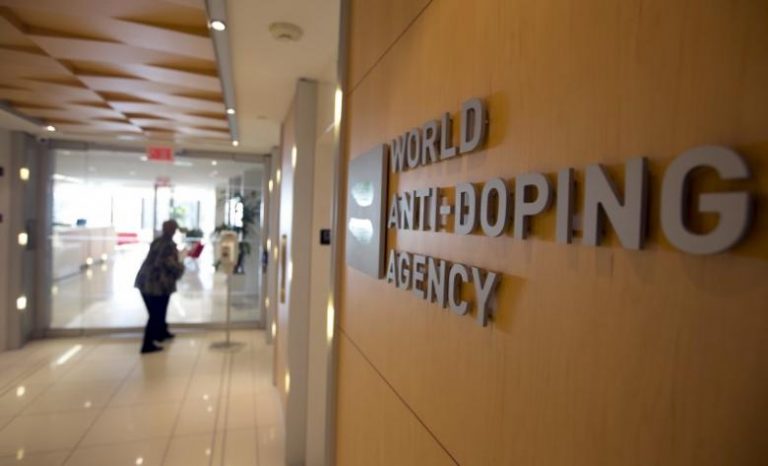
A woman walks into the head office for the World Anti-Doping Agency (WADA) in Montreal, Quebec, Canada on November 9, 2015. Photo: REUTERS/Christinne Muschi/File Photo

By Michael Pavitt |

The World Anti-Doping Agency (WADA) has updated its guidance for Anti-Doping Organizations (ADO) as several aim to restart or return to normal doping control programs in their countries.

The latest update follows guidance issued on March 20, which provided advice on developing specific guidelines, procedures and training for sample collection personnel, as well as ensuring those collecting samples do not show any symptoms related to coronavirus.

Sample collection personnel should also be instructed to ask athletes upon initial communication whether anyone at the testing location is sick, experiencing symptoms or in the at-risk demographic.

WADA said the guidance has been refined to reflect the evolving nature of the pandemic, its effect on the global testing programme and the fact that some parts of the world that had suspended or significantly reduced testing are getting back to normal as COVID-19 restrictions begin to be lifted.

The guidance concentrates in particular on what procedures should be employed by ADOs and their sample collection personnel when conducting testing during this period.

WADA has advised ADOs to consider several criteria to guide its decision on how and when testing should resume, including the status of the virus and whether there are movement restrictions.

Considerations should also include whether sport and competitions are beginning to resume in the country, the amount of personal protective equipment and whether it could be difficult to provide or potentially jeopardise its availability to frontline health care workers.

Organizations should also assess the status of their WADA accredited laboratory, including whether there are restrictions related to the shipment of samples.

A phased approach has been suggested should testing resume, with WADA saying out-of-competition testing ideally should focus on home visits where only one athlete is tested.

Collection of urine samples would keep the number of sample collection personnel to a minimum, with advice to consider blood sample collections only if intelligence warrants it or if blood samples for the Athlete Biological Passport (ABP) are urgently required from athletes in high-risk endurance sports.

Further advice includes a call to consider focusing on registered testing pool athletes from high-risk sports, athletes from sports and disciplines where training is still possible and athletes from whom there is intelligence, a suspicious ABP profile or an Athlete Passport Management Unit recommendation for testing.

WADA suggest organizations slowing increase the pool of athletes tested as they eventually aim to resume a full testing program.

Guidance on the use of personal protective equipment is included, such as the use of gloves, face masks and disinfectant products, as well as clear instructions on hand washing and physical distancing.

Recommendations are also made over sample collection personnel and the information and communication strategy for athletes and other stakeholders.

“Throughout the COVID-19 pandemic, WADA has been keeping in close contact with Anti-Doping Organisations in order to provide leadership and support in the face of this unprecedented situation,” said Witold Bańka, WADA President.

“As always, our first priority must be public health, safety and social responsibility.

“Therefore, we continue to urge everyone to follow closely the advice of relevant health authorities and Government agencies.

“Where testing programs can resume, we are providing clear guidance so that the integrity of the system can be maintained without jeopardizing the health of athletes, sample collection personnel or anyone coming into contact with them.

“It is crucial that the system can return to full power as quickly as possible once the various restrictions are lifted, in line with the different circumstances around the world.

“What this pandemic has demonstrated is the need for further innovation in anti-doping. 

“WADA knows that to make anti-doping more effective, we continually need to innovate.

“Our work, in collaboration with the wider anti-doping community, researching new sample collection and analytical techniques has been ramped up, in particular in the areas of dried-blood-spot analysis and artificial intelligence.

“We continue to develop practical applications for these innovations while ensuring the appropriate consultation process is followed, and that they are legally sound and in compliance with the World Anti-Doping Code and related international standard before coming into force.”

Republished with permission from insidethegames.biz.

Sports Clubs Allowed to Reopen in Germany as Bundesliga Gets Green Light

0
Sports Clubs Allowed to Reopen in Germany as Bundesliga Gets Green Light
Courtesy photo

By Neil Shefferd |

Sports clubs across Germany have been allowed to reopen as part of the initial relaxation of restrictions across the country, Chancellor Angela Merkel announced today.

The German Olympic Sports Association (DOSB) welcomed the news, which it said would help its 27 million members and 90,000 clubs both “physically and emotionally.”

Under the relaxed regulations, outdoor sports for children and non-professional leagues will be allowed to take place, as reported by DW.

Merkel also announced that the top two tiers of German football could resume their seasons from the middle of the month, with the Bundesliga announcing their intention to resume competitive action on Friday May 15.

Reacting to Merkel’s announcements, DOSB said the ability of sports clubs to reopen their doors signalled a gradual return to “the new normal.”

In a statement DOSB said: “The nationwide reopening of club sports under clear rules is an encouraging and enormously valuable signal from politics.

“On the basis of the 10 DOSB guidelines and the sports-specific concepts of the national associations, we can now return to sports clubs and active movement across the board.

“We call on all members to follow the sports-specific rules in an exemplary manner so that we can now work together to be able to return to normality step by step. 

“On the part of the DOSB, we will be happy to actively support this process in close cooperation with politicians.”

There was more good news for German sport today with the announcement that the Bundesliga and Bundesliga 2, Germany’s top two football divisions could resume their seasons later this month, with matches played behind closed doors.

“It is associated with a great responsibility for the clubs and their employees to implement the medical and organisational requirements in a disciplined manner,” said chairman of the DFL’s Executive Committee Christian Seifert.

“Matches without stadium spectators are not an ideal solution for anyone.

“However, during this crisis, which threatens the existence of some clubs, it is the only option to preserve the leagues in their present form. 

“I would like to thank the decision-makers at the state and federal level for placing their confidence in us.”

If the Bundesliga does manage to resume, it will be the first major league in Europe to do so.

The top divisions in France and the Netherlands have both cancelled their seasons due to the lockdown regulations in their respective countries.

Among the other relaxations in Germany are the reopening of all shops, the phased reopening of schools and the resumption of religious services in most states.

Social distancing measures will continue until at least June 5 and the ban on mass gatherings also remains.

Republished with permission from insidethegames.biz.
A Note About the Academy’s April Athlete of the Month Ballot

A Note About the Academy’s April Athlete of the Month Ballot

United States Sports Academy |

Among the fun things that occurs at the United States Sports Academy is the monthly convening of the Academy Awards of Sport Selection Committee to select candidates for the monthly Athlete of the Month ballot.

This committee, comprised primarily of Academy faculty, meets to review, debate (sometimes heatedly) and otherwise consider athlete sport performances from virtually every sport imaginable and every corner of the globe. In many ways the process is a reaffirmation for the faculty of the Academy as an educational institution dedicated to the profession of sports!

Nominate the next Athlete of the Month!

Once the monthly ballot of six males and six females has been selected, it is distributed through an email distribution list numbering more than 15,000 individuals so they can weigh-in for the final selection. The winners on the monthly ballot go on to be considered for inclusion in the annual Athlete of the Year Ballot posted in January and one that has garnered tens of thousands of votes from around the world.

For the first time since the Academy launched its Athlete of the Year program in 1995, the institution has been unable to assemble a monthly ballot for April. It is a testimony to the destructive influence that the COVID-19 virus has had upon the worldwide sport community as virtually every sporting event at every level around the world has been cancelled or postponed.

There are hopeful signs that change is coming as athletes are once again beginning to practice and sport competitions resume, being led by NASCAR on 17 May. Hopefully, this is a harbinger of things to come and the sign of life slowly returning to normal.

In closing, we do want to thank all of you who have participated in the voting over the years and we look forward to putting up our monthly ballots again soon.

Stay safe everyone!

Click here to tell us who you want to be the next Athlete of the Month!

US Open Could be Moved to Indian Wells if New York Unsafe

0
US Open Could be Moved to Indian Wells if New York Unsafe
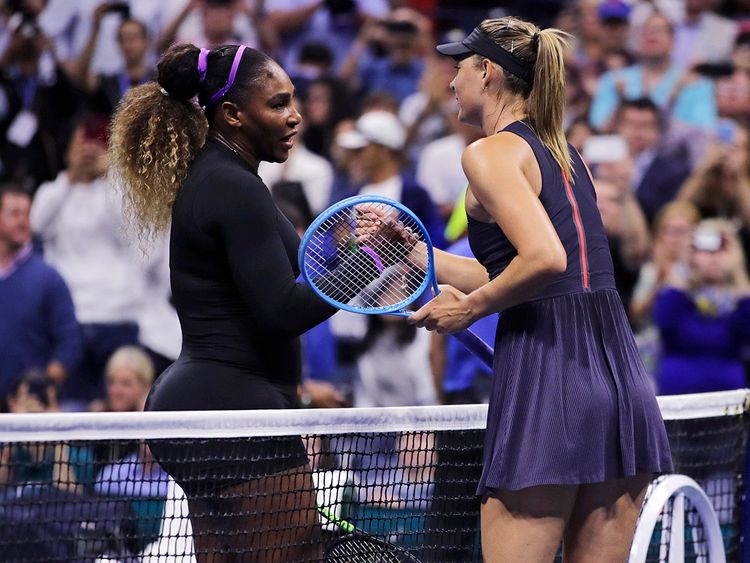
Serena Williams, left, shakes hands with Maria Sharapova after their first-round match at the U.S. Open tennis tournament in New York, Monday, Aug. 26, 2019. Photo: AP

By Ali Iveson |

This year’s US Open could be moved from New York to Indian Wells if it meant the tournament could be staged, United States Tennis Association chief executive and executive director Michael Dowse has suggested.

“Nothing is off the table,” Dowse said in an interview with Inside Tennis.

The US Open is currently scheduled to run from August 24 to September 13 in New York, the American city worst hit by the coronavirus pandemic.

There have been almost 25,000 COVID-19 deaths in the state of New York – more than 35 per cent of the American death toll.

The Billie Jean King National Tennis Center in New York, home to the US Open, has been converted into a makeshift medical facility for coronavirus patients in light of how severe the crisis is there.

A decision on the fate of this year’s edition of the Grand Slam is expected in June.

“There’s too much speculation – we’ll know so much more in June,” Dowse said. 

“In reality it’s certainly possible to play without fans.

“No formal decision has been made about Indian Wells. 

“Whatever we do, we’ll have to do it in alignment with the owners of Indian Wells, and the ATP [Association of Tennis Professionals] and the WTA [Women’s Tennis Association].”

Indian Wells is on the other side of the US in southern California.

The Indian Wells Masters – sometimes known as tennis’ fifth Grand Slam – was cancelled at short notice in March as the severity of the pandemic started to become clear.

The ATP, WTA and International Tennis Federation have had all events on hold ever since, with one Grand Slam cancelled – Wimbledon – and the French Open rescheduled to begin on September 20.

Dowse’s latest comments represent a softening of his stance on whether the US Open could go ahead without fans – something he called “highly unlikely” in April.

The notion of holding the event outside of New York would also suggest there is more scope for it to go ahead this year, given other areas of the US have not suffered as badly as the Big Apple and some states are already easing lockdown restrictions.

Last week, citing the situation in New York, six-time Grand Slam champion Boris Becker said he did not “think it would be wise to have a tournament there.”

Republished with permission from insidethegames.biz.
Athlete Return to Training Guidelines During the COVID-19 Pandemic

0
Athlete Return to Training Guidelines During the COVID-19 Pandemic
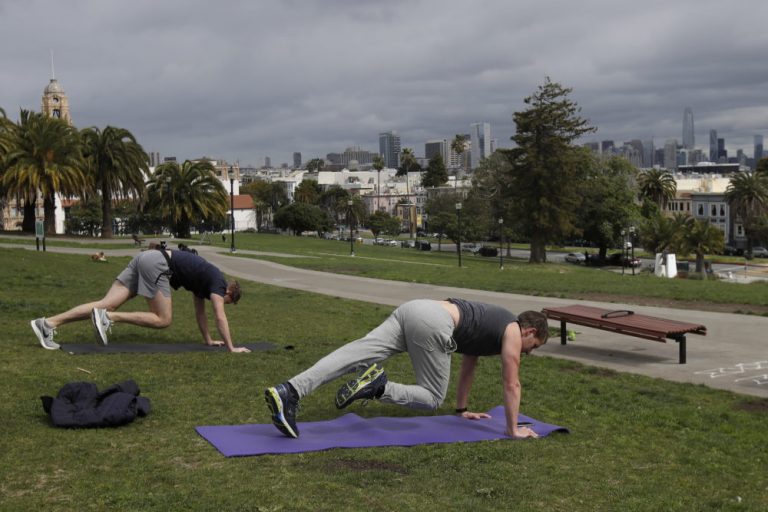
Ty Walrod and Mike McCormick keep their distance for coronavirus concerns while using a phone app to do a full body weight workout at Mission Dolores Park in San Francisco, Tuesday, March 24, 2020. Photo: AP / Jeff Chiu

By Robert L. Herron |

Without question the SARS-CoV-2 virus, COVID-19 illness, and public-health responses have made a tremendous impact on the world in which we live.  As the health experts continue to learn more about the virus and public-health measures evolve, in the coming weeks and months ahead – more people will return to work.  The process of returning to work will differ for everyone.  As such, in the world of sport, the challenges of returning to training and competition must be met with the reality that things have changed. 

To this end, the National Strength and Conditioning Association (NSCA), and their COVID-19 Return to Training Taskforce, recently published guidelines to assist those preparing for the new normal.  Within the report, the guidelines discuss a number of issues that require an altered plan of action for those wishing to return to training for sport and sport competitions.  The guidelines are summarized below.  It should be noted that everyone is encouraged to read the full guidelines and resources, follow best-practices, and obey the policies put forth by one’s organization, local-, state-, and federal governments.     

Minimizing Risk – Scheduling 

Currently, the public health recommendations still encourage social distancing.  In sport, this is obviously a challenge.  Those working in sport should attempt to minimize the COVID-19 related risks for everyone involved by making sure the training schedule allows for smaller group sizes, minimizes person-to-person exposures, allows appropriate time to clean facilities between sessions.  This is important in training applications but also in other day-to-day activities (i.e., film sessions, medical treatment, meetings, dining options, etc.).    

Sanitation Procedures – People, Facilities, & Equipment 

Safety should be the number one priority in all sport-related activities.  Weight-room training surfaces and group spaces (i.e., restrooms, meeting spaces, etc.) should be cleaned regularly and between repeated exposures.  Proper cleaning supplies should be readily available.  Furniture items and equipment that are unnecessary should be removed and placed in storage to reduce the number of items that need cleaning.  Fresh air circulation and allowing sunlight to enter the space are recommended. 

Training Safety Following Period of Inactivity 

For a number of reasons, athletes may have experienced limited exposure to training during this, unprecedented period.  As such, the NSCA’s Guidelines recommend two resources. 

  1. CSCCa & NSCA Joint Consensus Guidelines for Transition Periods: Safe Return to Training Following Inactivity was published in 2019 and aims to provide guidelines for protecting athletes for situations similar to those most are experiencing due to the pandemic.  In short, coaches should refer guidelines and alter training sessions to account for risks related to exertional heat illness, exertional rhabdomyolysis, and cardiorespiratory failure in athletes.  The guidelines suggest alterations for the first 2-4 weeks.   
  1. The NCAA Sport Science Institute’s Interassociation Recommendations for Preventing Catastrophic Injuries in Death in Collegiate Athletes was also published in 2019 and provides further support with respect to lowering risk for strength and conditioning coaches – more specifically – at the NCAA level.     

Along with individual-athlete and environmental considerations, the guidelines recommend no more than 3 training sessions per week, with 1-2 days of recovery between sessions, and favor the upper-limits of recovery time with respect to work-to-rest ratios.  Additionally, initial programming should avoid eccentric- and plyometric-heavy activities until athletes have had time to adjust to consistent training stimuli.  An initial focus of introductory programming is encouraged with an emphasis on redeveloping dynamic-movement patterns within the warm-up period.  As always, strength and conditioning professionals should follow best practices.   

Other Important Factors 

The athlete’s primary needs are still of upmost importance.  This includes reacclimating to their “normal” schedule, managing stress, getting an appropriate amount of sleep, meeting their nutritional needs, and taking care of themselves and other non-athletic responsibilities.   

In summary, these are difficult times.  When working with athletes, make safety a priority and follow the policies established by health experts and those within your government.  It is important to have a plan in place that protects the athletes and those working with and around them.  While transitioning back to a regular schedule, be mindful of COVID-19 testing and tracing resources that may be available to your organization or community.  I encourage all to please review the guidelines and related resources.  Within the guidelines one will also find a checklist, which could be especially helpful in developing a plan that fits one’s athletes and organization.  Below, are two infographics created by Adam Virgile than display content from these resources in a creative and concise format.   

Robert L. Herron is a faculty member at the United States Sports Academy.  Robert is a Certified Strength and Conditioning Specialist® with distinction from the National Strength and Conditioning Association (NSCA-CSCS*D®) and a Clinical Exercise Physiologist through the American College of Sports Medicine (ACSM-CEP®). [email protected] 

Developing Core Stability

0
Developing Core Stability
Photo: Alyssa Parten

By Alyssa Parten |

Core stability is characterized by the ability to retain or reclaim control of the trunk (osteoarticular and muscular structures), when disturbed by internal and external forces. Without the supportive muscles of the trunk, it is estimated that it would take approximately 9kg/(20lbs) of external load for internal structures of the human body to buckle. This fact alone illustrates how important it is to achieve and maintain strength and stability of what links the upper and lower extremities together. In athletics, stability of the core promotes better bracing to protect the spine under heavy loads, and guarding internal structures and vital organs in contact sports. Additionally, core stability and stiffness is crucial in force transfer from the lower body (hips) through to the upper body (shoulders), especially in sports involving throwing, striking, kicking, pushing, pulling, swinging, and/or running. From an injury prevention perspective, development of the core enhances stability of the spine and pelvic region, which may contribute in lowering the risk of lumbar and lower extremity pain and injury.

There are many exercises that can increase core stability, such as planks, bird dogs, dead bug variations, etc. To get the most out of them, proper technique must be maintained throughout the duration of the exercise. This includes correct positioning from head to toe and moving or holding a position in a controlled manner. Rushing through a core stability exercise may drastically decrease the potential effectiveness. When performed correctly, core stability exercises improve coactivation patters of muscles that enhance the stability of spinal structures. Among my favorite exercises for core stability are the traditional dead bug and the dead bug with overhead letdown.  

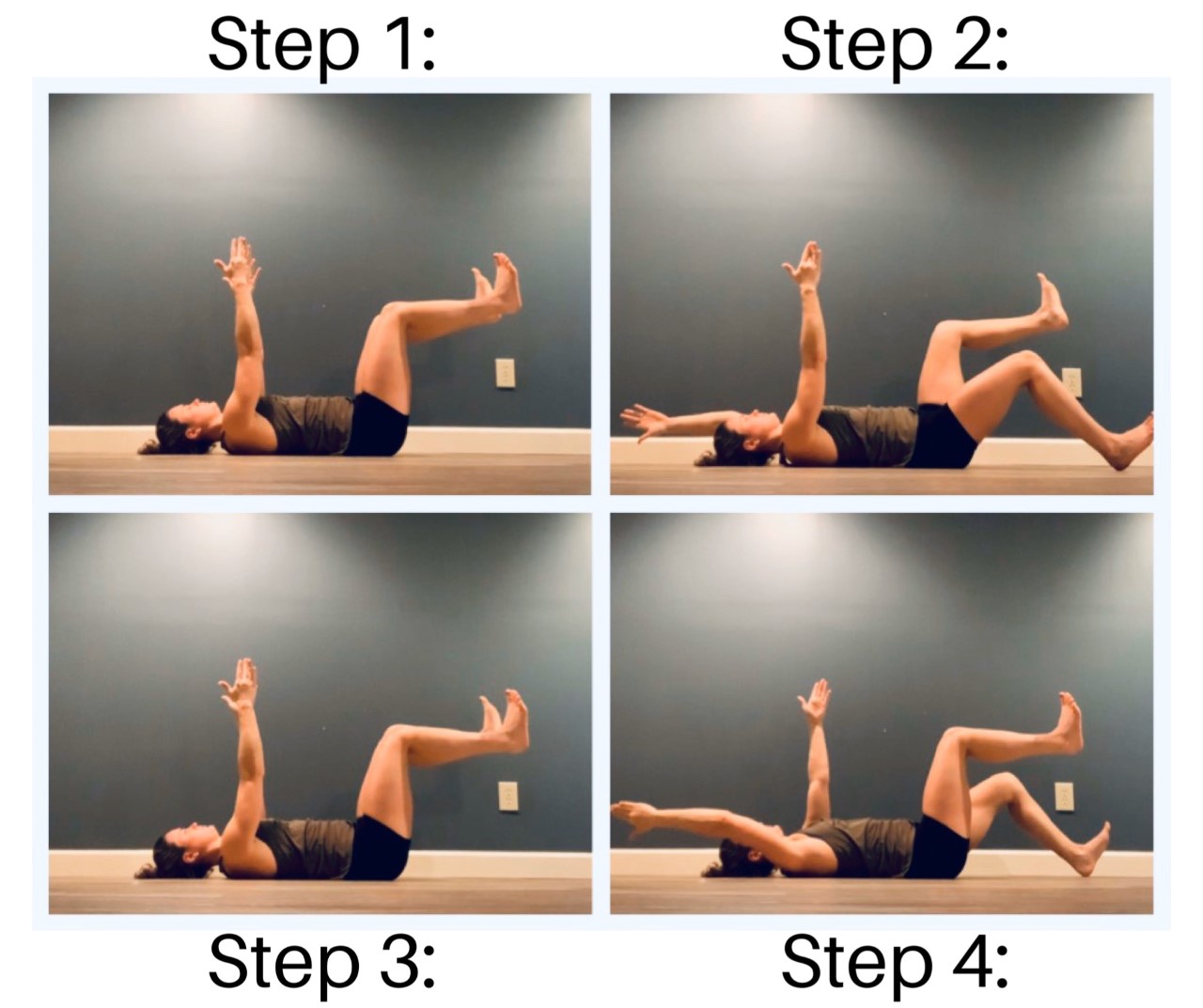
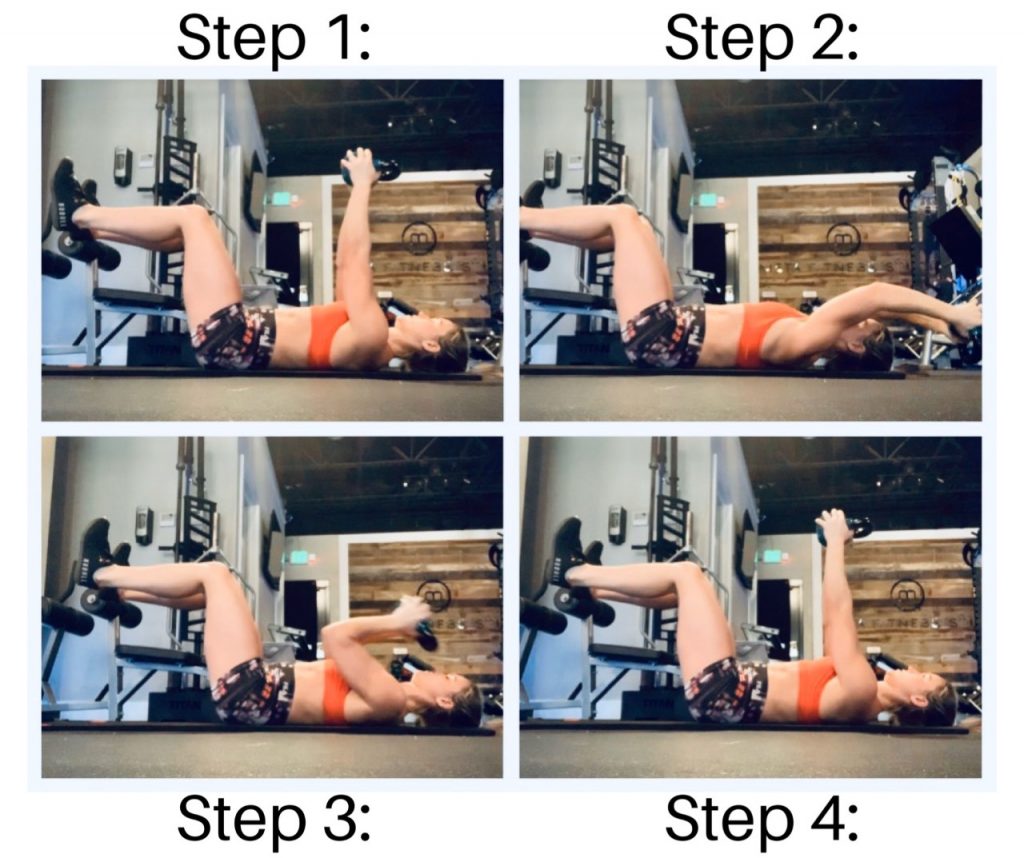
The dead bug is an isometric anterior core exercise that targets primarily the rectus abdominus and external obliques. To perform the dead bug, begin by lying in a supine (chest up) position with arms up and directly over the shoulders, elbows fully extended, knees and hips flexed at a 90-degree angle, and ankles in dorsiflexion. In an alternating fashion, lower one heel to the ground (maintaining 90 degrees of flexion at the knee). After touching the heel to the floor, return to starting position and repeat on the opposite leg. A common reflex is as one leg lowers to the ground; the opposite knee moves upward. Instead, be sure the knees are stacked over the hips, and at no point during the exercise pass the hips toward the naval. Additionally, maintain a neutral lumbopelvic position by pressing the ribs into the floor, preventing extension of the lumbar spine. The dead bug overhead letdown implements the starting position of a traditional dead bug, as well. The difference is, instead of movement of the lower extremities, the arms slowly lower to the floor with a light kettlebell in hand, resisting flaring of the ribs to prevent extension of the low back. It is ok for the elbows to be slightly bent as the arms move over head. Below are photo demonstrations for each.

A picture containing photo, woman, different, same

Description automatically generated

 Dead Bug

  1. Begin with hips and knees flexed at 90 degrees, ankles in dorsiflexion, and elbows fully extended over chest. Make sure knees and ankles are about hip width apart, and arms about shoulder width apart.
  2. Press the ribs into the floor to prevent until he low back from extending. This should be focused on throughout the exercise.
  3. Slowly and controlled, lower one arm overhead together with the opposite leg until the heel grazes the floor.
  4. Return those limbs to starting position and repeat on other side. Continue alternating sides for desired reps or until form begins to break down.
A picture containing photo, different, various, woman

Description automatically generated

Dead Bug with Overhead Letdown

  1. Begin with hips and knees flexed at 90 degrees, ankles in dorsiflexion, and elbows fully extended over chest, holding a light kettlebell. Make sure knees and ankles are about hip width apart/not touching.
  2. Press the ribs into the floor to prevent the low back from extending, as the kettlebell is slowly lowered overhead. It is ok for the elbows to be slightly bent during this phase.
  3. Once the handle of the kettlebell does or comes close to grazing the floor, in one swift swoop, bring it right in front of the chest and back to the starting position.
  4. Repeat for desired reps or until form begins to break down

Alyssa Parten is a NSCA-CSCS and USAPL certified personal trainer and powerlifting coach from Birmingham, Alabama. She received her Bachelors in Exercise and Sport Science from The University of Alabama and is currently pursuing a double Masters at the University of Concordia Chicago in Human Movement Science and Strength & Conditioning. Currently, she works in a studio personal training gym as a personal trainer and strength coach and owns an online powerlifting coaching business, Ladybeef Inc. Additional certifications include: Precision Nutrition Level 1, TPI Level 1, and Human Movement Specialist.

Website: www.ladybeef.com

Instagram: @alyssaparten

Email: [email protected]

Call for Papers: Sport and COVID-19

Call for Papers: Sport and COVID-19
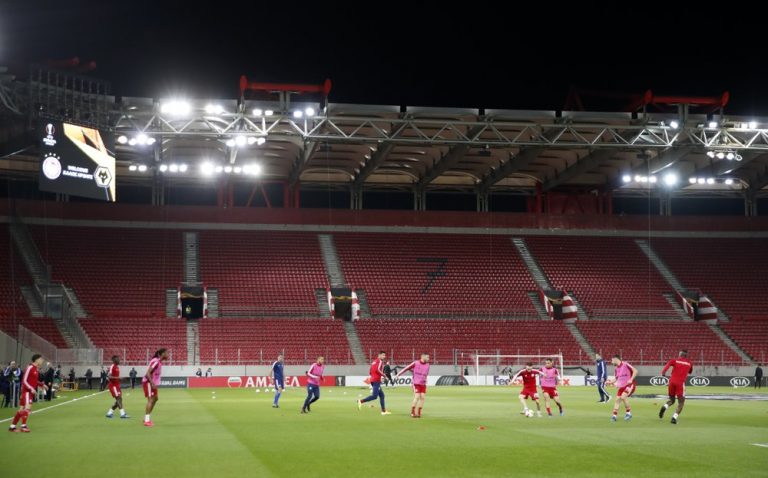
Olympiakos players challenge for the ball during warm up prior the Europa League round of 16 first leg soccer match between Olympiakos and Wolverhampton Wanderers at the Karaiskakis Stadium in Piraeus, Greece, Thursday, March 12, 2020. The match was played in an empty stadium because of the coronavirus outbreak. (AP Photo/Thanassis Stavrakis)

Editorial Board of The Sport Journal |

The coronavirus disease, COVID-19, has now been deemed a pandemic by the World Health Organization. The COVID-19 pandemic has upended all areas of life – and sports is no exception. Every aspect of sport has been affected, from the athletes themselves to every event and competition to the resulting media coverage. COVID-19 has upended sporting calendars and is superseding the business model of sports. 

This special call for papers aims to serve as a platform for researchers, practitioners, and policy makers in various countries, asking for reflective contributions on the impact of COVID-19 in sport and the changes we may expect to see going forward, to exchange experiences, challenges, successes, and lessons learned during and for a future amid and after the COVID-19 pandemic. 

We are interested in receiving both empirical research – such as it may be conducted in these times – and (shorter) theoretical and critical commentaries on the longer term – and present – implications of COVID-19. There are almost endless avenues of inquiry to be pursued as the ramifications of the pandemic become clearer. Authors are encouraged to submit on the following questions:

  1. How will sport resume amid the COVID-19 pandemic?
  2. How may COVID-19 or related public health precautions impact acute and chronic health, fitness, or sport performance?
  3. How do people respond to the situation in your sport?
  4. What is helpful and what is less helpful in dealing with the current situation resulting from the pandemic?
  5. How is sport currently organized and what will or should change?

The Sport Journal invites you to help address the issue of sport during and after COVID-19 through your research and writing. For submission guidelines, please see http://thesportjournal.org/publication-information/.

The Sport Journal is a peer-reviewed journal of sports published by the United States Sports Academy.

Judge Dismisses US Women’s Unequal Pay Claim

0
Judge Dismisses US Women’s Unequal Pay Claim
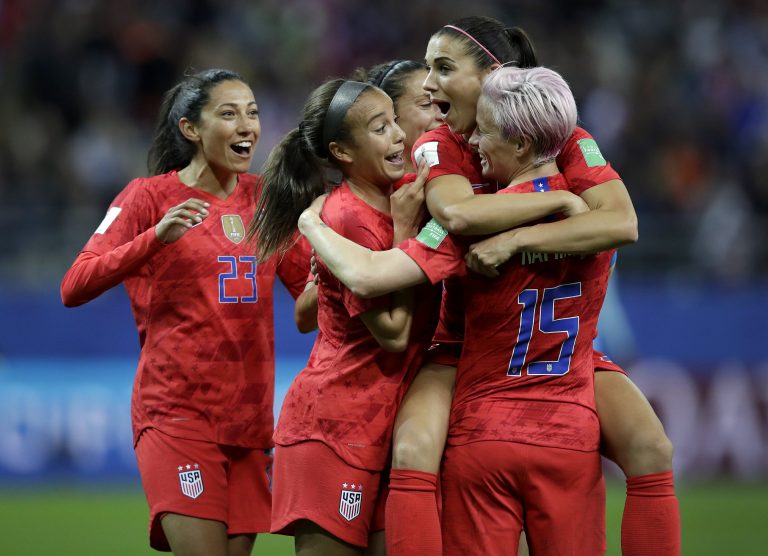
United States' Alex Morgan, second right, celebrates after scoring her side's 12th goal during the Women's World Cup Group F soccer match between United States and Thailand at the Stade Auguste-Delaune in Reims, France, Tuesday, June 11, 2019. Photo: AP Photo/Alessandra Tarantino

By Liam Morgan |

An unequal pay claim by the United States women’s national team in their lawsuit against US Soccer has been dismissed by a federal judge.

Judge R. Gary Klausner has allowed their allegation of discriminatory working conditions to go to trial, which is expected to begin in Los Angeles on June 16.

A group of players led by Alex Morgan had been seeking $66 million in damages after claiming they had been paid less than their male counterparts.

Klausner threw out the Equal Pay Act allegations but left in tact the Civil Rights Act claims, which include accusations that US Soccer discriminated against the women’s team in the money it spent on charter flights and hotel accommodations, and support services, including medical.

The judge said the unequal pay claims had not been proven as the women’s team played more games and made more money than the men’s team.

Klausner added that the women’s team had turned down an an offer to be paid under the same pay-to-play structure as the men’s team.

“Accordingly, plaintiffs cannot now retroactively deem their collective bargaining agreement (CBA) worse than the men’s national team CBA by reference to what they would have made had they been paid under the MNT’s pay-to-play terms structure when they themselves rejected such a structure,” he said.

The ruling, issued in response to a motion for summary judgment to dismiss the lawsuit by US Soccer, deals a huge blow to the women’s team’s fight for equality.

Molly Levinson, a spokesperson for the four-time winners of the FIFA Women’s World Cup, said they were “shocked and disappointed” by the decision and would look to appeal.

Asking the Ninth US Circuit Court of Appeals to overturn the ruling from the judge could delay the trial into next year.

“We will not give up our hard work for equal pay,” Levinson said.

“We are confident in our case and steadfast in our commitment to ensuring that girls and women who play this sport will not be valued as lesser just because of their gender.”

Players including Megan Rapinoe, one of the stars of the 2019 Women’s World Cup in France, reacted with defiance on social media.

“We will never stop fighting for EQUALITY,” Rapinoe wrote on Twitter.

Defender Becky Sauerbrunn said the team has “a lot of fight left in us”.

“We knew this was not going to be easy, change never is,” Sauerbrunn added.

In a statement, US Soccer spokesperson Neil Buethe said: “We look forward to working with the women’s national team to chart a positive path forward to grow the game both here at home and around the world. 

“US Soccer has long been the world leader for the women’s game on and off the field, and we are committed to continuing that work to ensure our women’s national team remains the best in the world and sets the standard for women’s soccer.”

Republished with permission from insidethegames.biz.
Little League World Series Canceled Due to Coronavirus

0
Little League World Series Canceled Due to Coronavirus
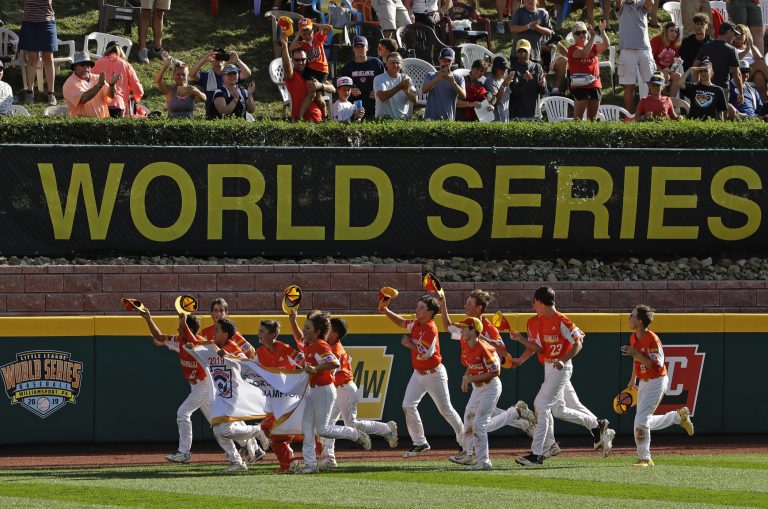
River Ridge, Louisiana takes a victory lap around the field at Lamade Stadium after winning the Little League World Series Championship game against Curacao, 8-0, in South Williamsport, Pa., Sunday, Aug. 25, 2019. (AP Photo/Gene J. Puskar)

By Dr. Fred J. Cromartie, Ed.D. |

The Coronavirus continues to impact sports globally, this time with the announcement that the Little League World Series has been canceled for 2020. Organizers cited issues caused by the pandemic as having a direct impact on the global youth baseball championship for pre-teen children world-wide.

Little League International, which offers 6,500 community-based programs in 84 nations, announced last Thursday the unprecedented decision to cancel all regional tournaments and the 16-team finals that were scheduled for August in South Williamsport, Pennsylvania.

“This is a heartbreaking decision,” Little League president Stephen D. Keener said. “After exhausting all possible options, we came to the conclusion that because of the significant public health uncertainty that will still exist several months from now… it will not be possible to proceed with our tournaments as we’ve hosted them for nearly 75 years.”

Issues that doomed the 2020 series for the LLWS event were the inability to play regional qualifying events in many areas, global travel restrictions and the testing and safety issues that would be necessary to stage the tournaments safely.  Additionally, testing and mitigation protocols that would need to be in place at these significant public events should a player, team or other individual participating or attending an LLWS event be diagnosed with COVID-19.

Little League board of directors chairman Hugh Tanner said “As our world comes together, we must do everything we can to help stem the spread of this deadly virus.”

Another cancelation will be the scheduled Major League Baseball contest that had been set for August 23 at the event between the Boston Red Sox and Baltimore Orioles. MLB has plans to stage a similar contest at the 2021 Little League World Series.

The cancellation includes the 82 regional qualifying tournaments and their respective seven World Series events: Little League Baseball – South Williamsport, Pa.

  • Little League Softball® – Greenville, N.C.
  • Intermediate (50/70) Baseball – Livermore, Calif.
  • Junior League Baseball – Taylor, Mich.
  • Junior League Softball – Kirkland, Wash.
  • Senior League Baseball – Easley, S.C.
  • Senior League Softball –Sussex County, Del.

Dr. Cromartie is the Director of Doctoral Studies at the United States Sports Academy.

Managing Remote Employees

1
Managing Remote Employees
Courtesy photo: LinkedIn

By Dr. Tomi Wahlström |

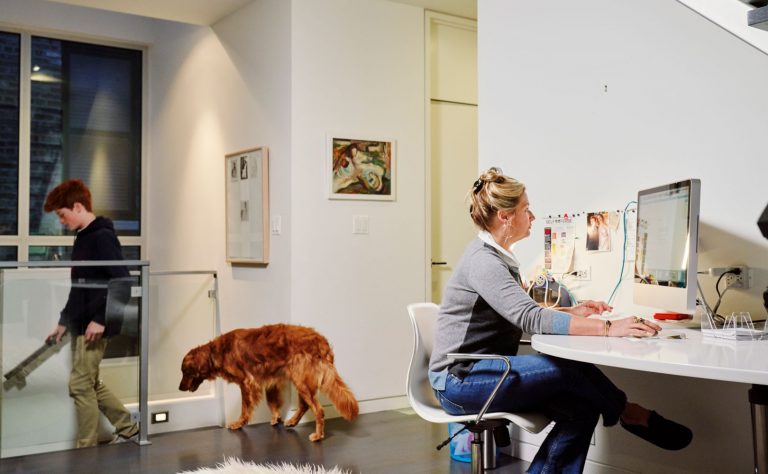
I find it almost impossible these days to read or write about anything that does not involve mentioning of the coronavirus pandemic. A lot has changed in the world in just a matter of a few months. Management is not an exception. As more employees are working from home, managers struggle to motivate and engage their teams. Without the ability to conduct face-to-face meetings, managers must now communicate via Zoom sessions, emails, and phone calls. Some managers are able to cope with this better as in many ways this situation is an introvert’s paradise and extrovert’s hell. People leaders may feel the need for human-to-human interaction while task leaders may find that they now have fewer interruptions and more time for reading and writing reports. Employees are obviously experiencing this in the same way. Some of them like working from home while some may see remote work as a true challenge. We are all doing the best we can under the circumstances.

It is possible to manage remote workers effectively. This pandemic does not have to be a cause for productivity losses. However, managing distantly under the pressures and anxieties of this crisis takes special skills. I have personally managed virtual teams for over a decade and learned that it is possible to build and maintain high performing teams while working from home. It takes time and focus, and rethinking of work as whole. It takes a paradigm shift of a kind. One cannot look at time and location in the same way, as one cannot control those dimensions anymore. Everything has to be purely performance based now. Remote workers need specific goals and projects to be assigned to them, and an ability to work on them independently. Managers must be able to work with these employees to carefully calibrate their performance goals, and empower them to work towards them without the need for direct supervision. Employees must also understand their goals and have all the resources and tools needed to reach them. A manager, in this scenario, is a support system rather than a control mechanism. Daily communications should consist of encouraging and empowering employees, and not just briefings on task delivery alone.

Managing remote employees requires trust. Managers who have not cultivated trust previously may find the current situation unbearable. Trust is a complex and multidimensional concept. Employees must be able to not only to trust their managers, but also trust themselves. Similarly, managers must be able to trust their employees as well as their own abilities to manage under these circumstances. They must be able to be authentic and empathic as some employees need holding during these difficult times. That is, they need their managers to care about them and their well-being. They must be able to feel that they are able to talk about their anxieties and frustrations with their managers. After all, we all have fears around this pandemic. This situation influences all of us and we need to express these feelings to release them. Managers must become sort of like counselors in the middle of all this. Managing must become more transformational than transactional. We all must be a bit more vulnerable and trusting.

Remote work may be here to stay even after the pandemic is over. Therefore, managers should adjust fast and learn how to manage remote employees. Sport industry is not an exception as remote work is required in sports organizations as well. When done properly, it can be a cost saver and a productivity booster.

Dr. Tomi Wahlström is Provost at the United States Sports Academy.