Home Blog Page 254

Armour: Lakers-Celtics Rivalry Does Not Age Well in Documentary

1
Armour: Lakers-Celtics Rivalry Does Not Age Well in Documentary
Boston's Larry Bird and Los Angeles' Magic Johnson battle for position. Photo: Boston Globe

It’s not easy to age well.

That’s one of the biggest takeaways from ESPN’s latest “30 for 30,” Celtics/Lakers: Best of Enemies. Oh, the rivalry is still riveting, a fascinating snapshot of race and culture in this country seen through the lens of sports. The characters are even more compelling than they were 30 years ago, their perspectives both sharpened and softened by time.

But the games themselves? Yeah, not so much.

I know it’s heretical to say that and, believe me, it pains me to do so. Magic Johnson and Larry Bird are icons, and those Celtics and Lakers teams have been burned into my memory as something otherworldly. No team could match either of them for skill and finesse, and the way they played should be the model for every player and team to come.

Or so I thought.

As I watched the three-part documentary, though, I was struck by how both teams looked so … ordinary. Magic dribbling almost exclusively with his right hand, only switching to his left before he took a shot. A numbing number of hook shots and almost no threes. So much walking even Russell Westbrook would raise an eyebrow.

Even that Lakers fast break, considered avant-garde at the time, now seems predictable and simple, like something you’d see at the Y on Saturday morning.

It’s like coming across your favorite movie from 20 years ago, only to realize it wasn’t filmed in HD. It’s still good, just not quite as great as you remembered it.

This isn’t a criticism of Magic, Bird, Kareem Abdul-Jabbar, Cedric Maxwell, James Worthy, Kevin McHale or the many other legends on those teams. There were 10 Hall of Famers involved in that rivalry, many of whom forever altered the game.

Abdul-Jabbar is still the NBA’s all-time leading scorer. It was his deftness inside that transformed the center position and made it the focal point of NBA offenses. You can draw a direct line from Magic to LeBron James and Kevin Durant. A point guard in a forward’s body who could play every position – and did in Game 6 of the 1980 Finals – Magic shattered the notion that your size and shape dictated your position.

Or that a lineup had to have two guards, two forwards and one center.

Bird was as complete a player as you will find, and there’s a lot of his game in Westbrook’s. Sixth men everywhere owe McHale their thanks – though he ultimately entrenched his spot in the starting lineup.

But the game has evolved. Just as the set shot became outdated, the style of play from the ‘80s would now be considered one-dimensional as players and their skills have developed and advanced.

Nothing has played a bigger role in that change than the 3-point shot. It wasn’t adopted by the NBA until the 1979-80 season, and many coaches saw it as little more than a gimmick from the free-wheeling American Basketball Association.

The game was played around the basket then, with a mid-range jumper the closest anyone would come to downtown. Steph Curry, these guys were not.

“It was kind of like a last-ditch shot. `If I’m really desperate, I can go to this,’ ” said Steve Springer, who covered the Lakers for the Los Angeles Times for more than two decades, beginning in 1980.

“But it was not as good percentage-wise as a jumper or certainly a layup.”

But as younger players started developing, so, too, did their long-range shots. Now it’s as much a staple of the game as the opening tip.

The players are different, too, having been groomed for the NBA since they could hoist a basketball. Players such as Magic or Bird might have played year-round, but it was pickup ball. Not AAU leagues so competitive they rival some of the NCAA’s power conferences.

There are offseason workout regimens, strict diets, weight training. And it shows in their bodies. Look at photos of Magic, Bird, McHale or Michael Cooper in their heyday. They weren’t chiseled or strapping. Now look at Durant, Dwyane Wade, even Curry. The difference is noticeable.

“It’s just a different style of play,” Springer said.

Nothing will ever diminish what the Lakers and Celtics’ rivalry did for the NBA. But as you watch those classic games, appreciate them for what they were then, not what they seem now.

By Nancy Armour

This article was republished with permission from the original author and 2015 Ronald Reagan Media Award recipient, Nancy Armour, and the original publisher, USA Today. Follow columnist Nancy Armour on Twitter @nrarmour.

Someone Wants the 2026 Olympics

0
Someone Wants the 2026 Olympics
Sion with its landmark castle sits at the feet of some of the highest mountains in the Alps. Photo: Keystone

The International Olympic Committee, which has not been getting any good news lately from cities who want the group’s product, the Olympics, may have a real live bidder for the 2026 Winter Olympics. Innsbruck, Austria.

The IOC has had problems finding cities and countries who want to put up money for the Games. Just Paris and Los Angeles want the 2024 Summer Olympics. Switzerland, which is the home of the International Olympic Committee, could not get support for a 2022 Davos Winter Games and in February, voters around the St. Moritz area turned down an opportunity to fund a 2026 St. Moritz Games. But the Swiss have settled on Sion as the country’s candidate for the Games.

There is a long way to go before Sion can be presented as a candidate. The Swiss Parliament of Sport’s General Assembly has said yes but it is quite possible that voters in the Sion area could decide the fate of that bid in 2018. Sion has failed in three previous attempts to land the Games. The Swiss city lost to Denver for the 1976 Games but Colorado voters said no, due to costs, and Denver was replaced by Innsbruck.

Turkey could make a pitch for the 2026 Games along with Canada as there are a number of people in Calgary who may support a bid. But before that, Calgary Flames owners want the city to put up hundreds of millions of dollars for a new arena. Calgary has had financial problems as the Canadian loonie has dropped to around 76 cents US and Calgary is an oil city and the price of oil has fallen. The city is in a recession but Olympics backers contend 40,000 jobs would be created if Calgary won the bid. The Calgary Olympics cost would be more than five billion loonies. Sticker shock is chasing cities away.

By Evan Weiner For The Politics Of Sports Business

This article was republished with permission from the original publisher, Evan Weiner.

Coleman Blazes at USATF Trials on Day when Rupp Loses Out

0
Coleman Blazes at USATF Trials on Day when Rupp Loses Out
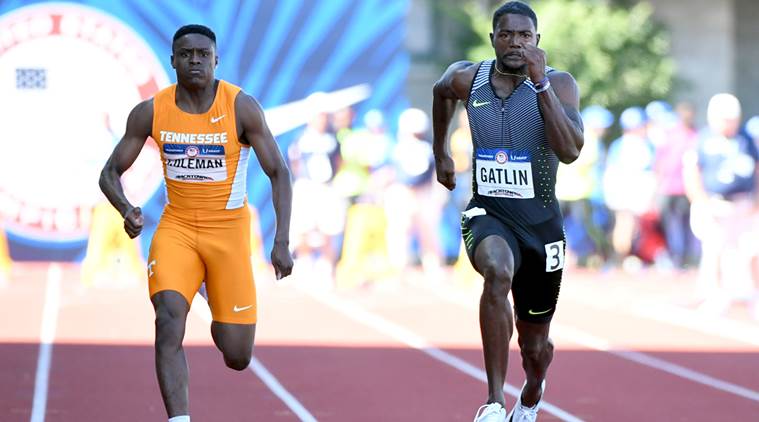
July 3, 2016; Eugene, OR, USA; Christian Coleman (left) and Justin Gatlin (right) compete during the men's 100m semifinals heats in the 2016 U.S. Olympic track and field team trials at Hayward Field. Mandatory Credit: James Lang-USA TODAY Sports/File Photo

Christian Coleman gave another display of sizzling pace as he won his 100 meter heat at the USA Track and Field (USATF) World Championship trials in Sacramento in 9.93sec on a day which saw Galen Rupp lost out in the men’s 10,000m.

Isiah Young, with 9.97, was the only other runner to clock a sub-10 time in the 100m on the day at the Hornet Stadium.

Former world and Olympic champion Justin Gatlin offered evidence of his intent by posting the third fastest time of the day, 10.00, with another relative veteran of the event, Mike Rodgers, finishing in the same time.

Coleman, head of year’s 100m world rankings after recording 9.82 earlier this season, noticeably slowed towards the finish and said he is up for taking anyone on the track, including Jamaica’s Usain Bolt, at this year’s International Association of Athletics Federations (IAAF) World Championships in London.

“Yeah, I have complete confidence in myself that I can beat anybody I get on the line with, whether it’s him [Usain Bolt] or anybody else,” the 21-year-old from Atlanta said.

Gatlin, returning to fitness after a string of injuries, said he was happy with his time.

“It’s a surreal time for me,” the 35-year-old Athens 2004 men’s 100m champion said.

“I am an older guy in a year that I’m probably the most injured I have ever been.”

But another sprint veteran, the 2007 world champion Tyson Gay, failed to progress to tomorrow’s semi-finals after stumbling at the start, eventually finishing in 10.17.

Ronnie Baker, a surprise winner of the IAAF Diamond League 200m in Shanghai clocking 19.90, moved through with a time of 10.02, the same as Christopher Belcher.

Cameron Burrell, son of former world record holder Leroy, also made it to the semi-finals, clocking 10.11.

Double Olympic medalist Rupp refused to talk to the media after failing to win a ninth 10,000m USATF title in what may have been his last track race on home soil before he concentrates on road running.

Rupp, fifth in 29min 04.61sec, exited despite being asked by USTAF officials to speak to journalists present.

In temperatures that had mercifully dropped by the evening, Hassan Mead took the title in 29:01.44, with two United States Army runners, Shadrack Kipchirchir and Leonard Korir, second and third in 29:01.68 and 29:02.64 respectively.

Three women broke 11 seconds in the first round of the 100m, with double Olympic medalist Torie Bowie qualifying fastest in 10.90.

Behind her were Morolake Akinosun, who clocked 10.98 to win a heat in which multiple world and Olympic champion Allyson Felix also qualified in 11.03, and Barbara Pierre with a time of 10.99.

Felix is running the 100m and 200m in Sacramento as speed work for the 400m in London, where she already has a wildcard as reigning champion.

Molly Huddle won a dramatic women’s 10,000m race in 31:19.86, ahead of Emily Infeld and Emily Sisson.

Ajee’ Wilson was back to racing after the US Anti-Doping Agency announcement that she would lose her indoor national 800m record of 1:58.27 on February 11 after her sample showed up positive for the anabolic agent zeranol, but would receive no ban after it was concluded she had eaten meat which contains this agent.

Wilson safely won her opening heat in 2:02.84.

Also through to the semi-finals were 2013 world bronze medalist Brenda Martinez, the fastest qualifier in 2:02.31, and Raevyn Rogers, who clocked 2:03.01.

Former national 800m champion Alysia Montano, wearing a Wonder Woman T-shirt, ran the championships for the second time in four years while pregnant.

Five months with child this time, she finished last in the preliminaries in 2:21.40.

Montano was eight months pregnant when she ran at the Championships in 2014.

“There is something about coming out to any venue not really expecting to win but going along with the journey and seeing what comes out of it,” she said.

“It is the most beautiful part about me being a track and field athlete.”

Fred Kerley, who set the world’s fastest 400m of the year, 43.70, for Texas A&M University in May, moving to seventh on the all-time list in the process, reached the semi-finals with a heat victory in 45.13.

Clayton Murphy, seeking the first part of an 800/1500m double, moved safely through to the semi-finals, winning his heat in 1:47.88.

Eric Sowinski was fastest qualifier in 1:46.55.

Murphy then negotiated the first round of the 1500m in 3:40.94, with Olympic champion Matt Centrowitz third fastest in 3:40.79.

Alex Young took the men’s hammer title with a sixth round effort of 73.75 metres.

Kara Winger took the women’s javelin title with a best of 62.80m, while the women’s triple jump title went to Keturah Orji, who reached 14.26m.

By Mike Rowbottom

Republished with permission from insidethegames.biz

It is the Little Things: Phillies Beat Phillies

0
It is the Little Things: Phillies Beat Phillies
AP Photo

The other day my beloved St. Louis Cardinals emerged victorious over the Philadelphia Phillies although it is all but impossible to claim my birds “won” the game. The Phillies were up by five runs early and after a series of base running blunders, fielding mistakes, and mental errors; the Cardinals managed to win the game. What I find interesting about this turn of events is the Cardinals have largely been losing games this way for the last two seasons.

The Cardinals are widely considered one of the model organizations in baseball and have a tradition of success that dates back nearly one hundred years. The Cardinal Way is sort of a mantra. It basically means the players are more interested in winning games than their own statistics. Like all sayings, it’s not completely true. But there is a special relationship between the city of St. Louis and the Cardinals. Players like coming to this town and they are largely treated with kid gloves by the media and fans.

That’s why these last two years have been painful to watch, and why this game is a beacon to returning to glory. Should the Cardinals choose to understand why they won the game over the Phillies they might be able to use it as springboard back to relevance. Right now, they are usually the team guilty of making base running errors, throwing to the wrong base, losing focus, and trying to make a spectacular play when an ordinary one would do just fine.

This is not only a blueprint for failure on the diamond but in real life as well. The Cardinals are about as talented as any team in baseball. Perhaps there are a few better and a few worse but at the major league level most of the teams are fairly equal. Certainly, a superstar starting pitcher or closer can make the difference but it’s often a matter of the team making the fewest mistakes that wins the game.

It is human nature to want to perform the spectacular, to stand out from the crowd. We yearn to do something so well everyone notices us and heaps praise and rewards upon us. But how do we manage the remarkable? It’s often a matter of simply doing all the little things perfectly. A Cardinal example of this was Ozzie Smith. He took infield practice every day, for hours. He practiced doing all the simple things so that he could do them easily and without thinking in stressful situations. He didn’t generally attempt spectacular plays, although he certainly has many to his credit.

This is a good lesson for all of us. Don’t attempt the amazing. Just do all the little things perfectly and you’ll be just fine, in fact, you’re more likely to achieve the amazing.

And, of course, Go Cardinals!

By Tom Liberman

Tom Liberman is a regular fellow from St. Louis, Mo., who enjoys spending time with his wonderful family and great friends. He writes Sword and Sorcery fantasy novels in his spare time. 

PGA to Begin Blood Testing for Banned Substances

0
PGA to Begin Blood Testing for Banned Substances
File photo

As part of a more stringent anti-doping policy, the American PGA Golf Tour will begin blood testing next season.

Revising its list of banned substances to reflect those prohibited by the World Anti-Doping Agency (WADA), the PGA Tour said in a statement that urine samples will still be used for the bulk of drug testing, but starting with the 2017-18 season that begins in October, blood testing will allow for the detection of human growth hormone.

As part of the changes, the PGA Tour will be adding three categories currently prohibited by WADA: asthma medications, allergy and anti-inflammatory medications, and pseudoephedrine over a designated threshold. While not a signatory of the WADA Code, the PGA Tour said that “given the global nature of professional golf, consistency with the WADA list ensures professional golfers need to comply with just one list in competition around the world as well as in Olympic competition.”

This story first appeared in the blog, The Sport Intern. The editor is Karl-Heinz Huba of Lorsch, Germany. He can be reached at [email protected]. The article is reprinted here with permission of Huba.

Reaching the Upper Deck

1
Reaching the Upper Deck
Baseball card collage via baseballessential.com

I remember when baseball card collecting was big.  My dad and I would drive around town in the late 1980s to early 1990s, looking for shops that echoed our primary collecting principle: have fun!  It was a great father / son bonding activity.  We didn’t spend much money on our outings, but we enjoyed them.

Not every baseball card shop was the same.  Some of the shops catered to “investors.”  Cards were all behind glass cases.  Beckett price guides were studied like stock quotes.  Rookie cards were sealed in large, heavy plastic holders, never to be touched by a human hand for fear that a tiny corner crease or fingerprint could lessen its value.  Thousands of dollars might exchange hands in a single transaction.

So, my dad and I could walk in and size up a new baseball card shop pretty quickly.  Usually one question would let us know if we were in the right kind of place: “where is your dollar bin?” would often do it.  We sought out card shops that offered things like bins of old cards, where you could search through and handpick ones that you wanted for ~$.10 per card.  There was little to no value in those cards, but my dad and I had fun doing it.  We stumbled upon some great little shops.  I loved places that were like cluttered, dusty antique shops, with baseball collectibles filling the walls (along with cards).  Maybe we’d end up with an old pin or pennant or button or other trinket, in addition to a few cards that day.  Our collecting interests expanded beyond just baseball cards.

Rather than focus on high-value cards, my dad and I organized albums by themes such as: silly names, funny faces, great mustaches (usually cards from the 70s), ugly uniforms, favorite teams, etc.  And we each had albums devoted to single teams: the Senators and the Astros.  I also had some old ‘Seattle Pilots’ cards.  I loved having cards from a bygone era.  I loved sifting through my boxes of mismatched cards, sorting and resorting them, labeling and relabeling the boxes.  The boxes were neatly stacked in my bedroom closet.  I’d go through hundreds of old colored rubber bands to sort them into different categories.  Sometimes, on rainy afternoons, my dad and I would sit around and trade ‘doubles’ or make deals for a particular card that one of us really wanted.  I’m pretty sure my dad let me get away with pretty good ‘deals’ over the years.

I distinctly remember going over to a dinner party at a family friend’s house one evening.  After dinner, the father showed us his card collection.  It was clear that he viewed the hobby as an investment.  He proudly showed off his extremely valuable cards.  They were in flawless condition.  He had a bookcase filled with them, stored in leather albums encased in protective plastic sleeves.  I’ll admit, I was little envious.  I realized that it was this guy those card shops with the fancy display cases wanted to walk in.  They wanted someone who wouldn’t hesitate “investing” hundreds of dollars on a single card.

Alas, the market bubble burst in the early 1990s, partially driven by overproduction.  For decades, buying a pack of baseball cards meant buying a pack of Topps (a stick of stale, cardboard-like gum included).  They had a virtual monopoly on the industry.  But by the late 80’s, there were several competitors on the scene: Fleer, Donruss, Upper Deck, Score, etc.  Within each major brand, there were spin-offs made just for collectors: cards that were manufactured for their value (hologram cards, “limited” edition series, “gold foil,” etc.).  At the same time, the industry expanded well beyond baseball.  There were cards for every professional sport.  There were cards for pro wrestlers.  There were cards for the U.S. military during “Desert Storm.”  There were even cards for “Cabbage Patch Kids.”  It had all gotten slightly ridiculous.  As a kid, I remember thinking, “do I collect all of them or just focus on Topps?  Is Upper Deck better than Topps?  Do I want to start collecting basketball cards?  This is overwhelming.”

I wasn’t the only one who shared those thoughts – kids and adults were buying cards just to try to make a profit on them.  At its peak in the early 1990s, around 80 billion baseball cards were being produced each year. “That’s about 325 cards for every man, woman, and child in the United States,” notes Dave Jamieson in his book, “Mint Condition: How Baseball Cards Became an American Obsession” (Atlantic Monthly Press).

Soon, it was apparent that the card market was oversaturated.  And the infamous 1994-1995 MLB strike was the nail-in-the-coffin for the industry.  The strike lasted 232 days and wiped out an entire post-season, including the World Series (an unprecedented occurrence in professional sports).  It was a low-point for the game, a bitter pill to swallow, and it would take years to regain the trust of fans.  In the end, I guess the owners and players were both to blame.  As a 14-year-old kid who loved baseball, the strike was hard to understand.  Is the entire game really just about money?

At the time of the strike, card sales were already in decline.  But the value of cards plummeted as fans lost interest (and faith) in baseball during the strike-shortened season.  By the late ‘90s, very few mom and pop card shops were still in business.  A few held on, but they typically sold other items, such as comic books or model trains.  Soon thereafter, a disruptive technology known as “eBay” made it even tougher for those brick and mortar stores to compete.

In the end, the cards that were truly “rare” and featured great players held their value over time.  As anyone who watches “Antiques Roadshow” will tell you, this principal holds true with many collectibles: high-end, rare items are impervious to market slumps (art, furniture, coins, Persian carpets, etc.).  Today, a mint condition 1909 Honus Wagner tobacco card continues to set new records at auction, but the 1989 Upper Deck Ken Griffey, Jr. rookie card encased in a thick plastic holder is probably worth considerably less than the Beckett guide once stated.

The lesson from living through this experience is that investing in anything other than the stock market is highly risky and usually not a great long-term investment.  Another lesson was that my dad always imparted the right philosophy when it came to collecting baseball cards: have fun!  After all, whether collecting baseball cards or not, those are great words to live by.  To this day, I have fond memories of the shared experience of collecting cards with my dad and enjoying every minute of it.

By Alex V. LeBuffe

About the Author:  The author grew up in the Houston area, watching the Houston Astros since the age of seven.  Alex currently works in the energy field in Houston.  He and his wife Jill are the proud parents of two future baseball fans, Liam and Grant, ages six and two.

Presidents Bach and Trump to meet at the White House

0
Presidents Bach and Trump to meet at the White House
Thomas Bach via mercopress.com

International Olympic Committee (IOC) President Thomas Bach will meet with United States President Donald Trump today amid the ongoing Los Angeles bid for the 2024 Olympics and Paralympics.

The New York Times said the meeting would take place in Washington D.C, citing a White House official.

All three IOC members from the US, Anita DeFrantz, Larry Probst and Angela Ruggiero, could also be in attendance.

It has been reported, however, that no officials from Los Angeles 2024 will be present.

Bach is currently in the US as technology firm Intel signed on as a worldwide partner of the IOC in New York City yesterday.

Bach spoke to Trump on the telephone last November shortly after his election as US President.

The two reportedly got on well and the conversation lasted well over the five-minutes originally scheduled.

“President Trump has been and continues to be supportive of the bid and the administration has been helpful to the United States Olympic Committee in its application,” the White House said in a recent statement, as reported by USA Today.

Read more here.

By Dan Palmer

Republished with permission from insidethegames.biz

Taipei 2017 Torch Relay Begins in Turin

Taipei 2017 Torch Relay Begins in Turin
Turin was chosen as the venue after it hosted the first ever Universiade in 1959. Photo: FISU

The Taipei 2017 Summer Universiade Torch was officially lighted in the Italian city of Turin.

The flame is set to burn until August 30, the date of the Universiade’s Closing Ceremony at the Taipei Stadium in Taiwan.

The Italian city was chosen as the venue to mark its role as the host of the first ever Universiade in 1959.

“Each Universiade is of course a special moment in the life of the International University Sports Federation (FISU),” said FISU President Oleg Matytsin.

“We know our biggest competitions are also very special moments in the lives of the many thousands of students they touch as athletes, as organizers, as volunteers, coaches, officials and fans.

“With a vision to shape the leaders of tomorrow through their experiences of international student sport, the Universiades are the most powerful tool at our disposal.

“In this regard, I am confident that Taipei 2017 will greatly help FISU achieve its vision.”

During the ceremony the original Turin 1959 torch was also lit.

It was then passed by Professor Gianmaria Ajani, the rector of the University of Turin, to Matytsin.

He then transferred the flame to the Taipei 2017 Torch, which was held by Ko Wen-je, the Mayor of Taipei.

Ko then handed the Torch to Athens 2004 Olympic taekwondo champion Chu Mu-yen, who ran the first leg of the Relay.

“The Torch Relay for Taipei 2017 links the past, present and future of the Universiade,” added Matytsin.

“As it does so, it is a reminder that we at FISU are stewards of a great tradition that has served countless leaders around the world, including Thomas Bach, the President of the International Olympic Committee.

“They have all learned from their participation in the Universiades.

“Like all rights holders of major international multi-sport events, FISU is determined, as I am determined, to do everything to make each edition of the Universiade an improvement on the last.

“The bar has been set very high by previous hosts of the Universiade.

“I am very pleased about the support that the Taipei 2017 Organizing Committee and the Taipei City Government have shown FISU in working to do even better.”

Following the ceremony in Turin, the flame will now head to Napoli, the Italian host of the 2019 Summer Universiade.

It will also visit Thai capital Bangkok, host of the 2007 Summer Universiade, and South Korea’s Daegu, host of the 2003 edition, before making its way to Taipei.

The domestic leg of the Torch Relay will see the flame visit all of the country’s 22 cities and counties.

The 2017 Summer Universiade will be the largest international sports showpiece that Taiwan has ever staged.

It will feature 21 sports and be held in venues across Taipei, Keelung, New Taipei, Taoyuan and Hsinchu.

By Max Winters

Republished with permission from insidethegames.biz

Hosszú Claims FINA in Chaos, Calls for Global Professional Swimming Union

0
Hosszú Claims FINA in Chaos, Calls for Global Professional Swimming Union
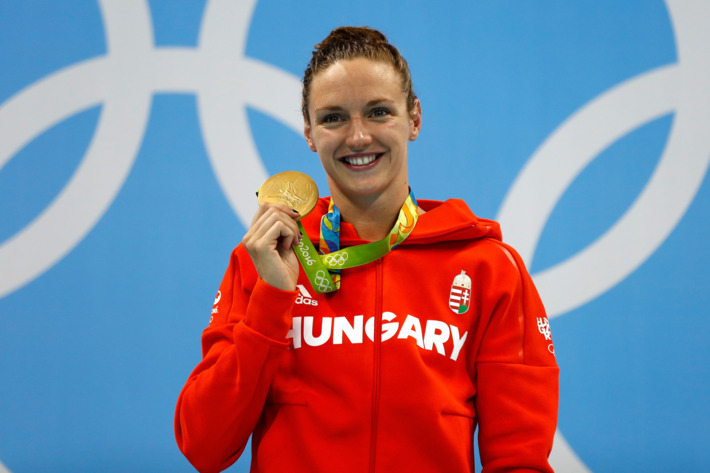
Hungarian swimmer Katinka Hosszú. Photo: NYmag.com, Clive Rose

Triple Olympic gold medalist Katinka Hosszú has claimed the International Swimming Federation (FINA) is in “chaos” and has called for the creation of a worldwide professional union among the sport’s athletes.

The 28-year-old Hungarian, winner of gold medals in the women’s 100 meter backstroke, 200m medley and 400m medley at Rio 2016, has penned an open letter that she has posted on Twitter.

In the letter, Hosszú claimed that “if swimming is still not a professional sport, then that is a reflection of the work FINA has been doing for the past few decades, not a reflection on the sport that is one of the fundamentals of childhood athletic development.”

The three-time reigning FINA women’s Athlete of the Year added: “It’s not an exaggeration to say that FINA is in chaos.

“There is the lack of transparency in the financials, the constantly changing rules, and leaders with no vision.

“At first it may seem a bit scary, but this is the time for us, the swimmers, to do something about the future of our sport.

“We wouldn’t need to be pioneers; there are so many inspiring examples from other sports before us.

“Based on regulations in the NBA (National Basketball Association), the league has to give more than half of the yearly basketball-related income to the athletes; exactly 51 percent goes to the athletes as salary, not more, not less.

“Therefore both the league and the athletes have the same motives.

“This system is transparent and fair.

“Do you know why the league is set up this way?

“Not because the leadership of NBA was so generous and offered a percentage of the basketball-related income as a gift.

“It’s because the players recognized the power of being united and the NBA had to realize that without the players the league would be worth nothing.”

Hosszu’s argument focuses on recent rule changes to the FINA World Cup series, limiting competitors to four individual events per meet.

FINA claimed the changes have been made to “attract more stars and improve the exposure and visibility” of the competition.

Alterations include Olympic and World Championship medalists having direct access to finals and a maximum of 25 events per leg.

FINA also promised there will be increased financial rewards for each race with swimmers competing for prize money of $3,900 per race.

The overall amount of prize money available could rise to $2 million.

It is the change that allows swimmers to only enter a maximum of four individual races per leg, though, that has angered Hosszú the most.

The “Iron Lady” has dominated the World Cup in recent years, finishing top of the women’s standings in the last five editions after entering into almost every discipline.

In a post on Twitter, Hosszú said the move was “ridiculous” and that “swimming is going backwards.”

Athletes will, however, be able to enter relay events on top of their individual races.

For winning last year’s women’s and men’s overall World Cup titles respectively, Hosszú and Russia’s Vladimir Morozov received $100,000 in prize money.

“First of all, they should reach out and listen to us, the swimmers,” Hosszú, a five-time long-course world champion, said in the letter.

“They should hear us out and not decide upon major rule changes without our input on the topic.

“If they would have asked for our opinion, we could have told them that the World Cup has huge potential, but the planned new rule changes are destructive and hypocritical.

“Everyone thinks that the new World Cup rule changes are against Katinka Hosszú.

“That can be partially true, because they definitely screwed me over.

“Imagine, I’m like one of those students that got straight As in every class, plus took-on drawing and chorus as extra-curricular activities.

“Then, the next year I’m told I cannot do extra-curricular activities because my success was bothering the rest of the students.

“The real truth, however, was that it was only the teacher who was bothered.

“I could view myself as a victim, but, on the other hand, I get advantages from FINA that I never requested.

“I don’t want to automatically advance to the finals of the World Cup competitions based on my previous results at international competitions.

“I want to race for the final spots with young talents and if they are better than me at the age of 14, let them show their talent.

“With the new World Cup rule changes, they have to start from a disadvantage – they have to wait until the sport’s top athletes get old or finish their careers before they can have the advantage of automatic advancement to finals.

“This is just not fair.”

When asked about the changes in an interview with ZRT ATV, FINA executive director Cornel Marculescu claimed the new rules will “stimulate the participation of the best athletes.”

He also revealed the changes would be reviewed after one year and declared it was FINA’s Technical Committee that were responsible for the move and that FINA vice-president Tamás Gyárfás was not involved.

Gyárfás resigned as President of the Hungarian Swimming Federation in November following criticism from the country’s top stars after 23 years in the post, with a catalog of problems alleged by swimmers.

Hosszú claimed her relationship with Gyárfás had been adversarial ever since he supposedly urged her to “stop swimming and retire” in 2008.

Other changes to the World Cup include enhanced sport presentation and television production at every event, additional promotional activities on-site involving athletes and medal ceremonies will be held at the end of each day.

Hosszú is not the first swimmer to raise the idea of a worldwide professional union.

Previous efforts in Olympic sports have generally failed because of an inability to engage leading athletes publicly.

Held between August and November, this year’s FINA World Cup series will comprise of nine legs split into three clusters.

The first leg is due to take place in Russia’s capital Moscow between August 2 and 3.

By Daniel Etchells

Republished with permission from insidethegames.biz

Intel Announced as Olympic TOP Sponsor Until 2024

0
Intel Announced as Olympic TOP Sponsor Until 2024
Photo: https://twitter.com/iocmedia

Intel have officially been announced as a member of the International Olympic Committee’s (IOC) top-tier sponsorship program until 2024.

It will see the technology giants join the IOC’s TOP (The Olympic Partner) Program.

The agreement, which had been widely speculated, was confirmed at a press conference in New York City attended by IOC President Thomas Bach and Intel chief executive Brian Krzanich.

Membership of the TOP Program costs approximately $200 million for a four-year cycle.

The IOC already has numerous other technology partners, including Samsung, Panasonic and Alibaba.

The latter was announced as a member of the TOP program in January.

“As a result of Olympic Agenda 2020, the IOC is forging ground-breaking partnerships,” said Bach.

“Intel is a world-leader in its field and we’re very excited to be working with the Intel team to drive the future of the Olympic Games through cutting-edge technology.

“The Olympic Games provide a connection between fans and athletes that has inspired people around the world through sport and the Olympic values of excellence, friendship and respect.

“Thanks to our new innovative global partnership with Intel, fans in the stadium, athletes and audiences around the world will soon experience the magic of the Olympic Games in completely new ways.”

The partnership will see Intel work across the Olympic Movement and with other Olympic partners to integrate technology into many areas of the Olympic Games, according to the IOC.

They will focus primarily on using 5G, virtual reality 3D and 360 degree content development platforms.

Artificial intelligence and drones will also be used to “enhance” the Olympics.

Intel technology will provide real-time virtual reality viewing at Pyeongchang 2018 in February, with the next Winter Olympics the first major event of their partnership.

The company will also provide technological and content support for Olympic Broadcasting Services’ host broadcaster operations, as well as for the Olympic Channel.

It is claimed 5G platforms will be used at the Olympic Games to demonstrate how it can “transform communications” over the next decade, with Pyeongchang 2018 due to be the first showcase.

According to the IOC, Intel 360 replay technology will allow fans to experience the “most memorable Olympic moments from every angle at the Olympic venues.”

“We are excited to join the Olympic Movement and integrate Intel’s innovative technologies to advance the Olympics Games experience for fans around the world,” said Krzanich.

“Through this close collaboration with the Olympic family, we will accelerate the adoption of technology for the future of sports on the world’s largest athletic stage.”

Krzanich was invited by Bach to attend the lighting of the Pyeongchang 2018 Torch in Ancient Olympia in October, while he also offered him the chance to become a Torchbearer.

The IOC President presented Krzanich with a replica of the Pyeongchang 2018 Torch.

Intel’s deal with the IOC comes less than a week after the end of the TOP program deal with fast food giant McDonald’s.

McDonald’s had extended its sponsorship with the IOC in 2012 for a further eight years in a deal worth $100 million.

Although this will not be seen through, they will continue to sponsor Pyeongchang 2018 with domestic marketing rights in South Korea only.

The company will also deliver its Games-time operations, including restaurants at the Olympic Park and the Athletes’ Village.

Intel’s addition takes the number of Olympic TOP sponsors back up to 13. They join, Dow, Panasonic, P&G, Coca Cola, Samsung, Atos, General Electronic, Visa, Omega, Toyota, Alibaba and Bridgestone.

By Michael Pavitt

Republished with permission from insidethegames.biz