Home Blog Page 230

Rio 2016 Organizers Seek New Ways for Brazilian Government to Help Pay Debt

0
Rio 2016 Organizers Seek New Ways for Brazilian Government to Help Pay Debt
The Rio 2016 Olympic Games closing ceremony. By Agência Brasil Fotografias - Terminam os Jogos Olímpicos Rio 2016,

Attempts by Rio 2016 organizers to convince all three levels of Brazilian government to provide financial support to tackle their remaining debts are still proving unsuccessful.

A latest audit cited in Brazilian newspaper Folha de S.Paolo estimated that they still owe approximately $40 million to different companies and suppliers used during the Olympic and Paralympic Games last year.

The newspaper reports that negotiations so far with the Municipal, State and Federal level authorities have proved unsuccessful.

They are reportedly now preparing a “new statement” so that they can lay out their debt in a “detailed fashion”.

“There is a gap between the money owed and that which the city is willing to cover,” Rio de Janeiro’s Municipal deputy secretary of sports and leisure, Patrícia Amorim, told Folha de S.Paolo.

“This issue is being widely discussed, although no-one has reached an agreement.”

It is virtually unprecedented for an Olympic Organizing Committee to still owe money a year after the Games.

The City of Rio, under former Mayor Eduardo Paes, signed an agreement shortly before the end of the Olympics to free $46 million to organizers to specifically assist preparations for the following month’s Paralympics.

Only $9.6 million of this was actually received, however, with the remaining funds dependent on spending reports from organizers.

Paes’ administration reportedly claimed this was never received.

The State Government remains in a state of bankruptcy following a surfeit of corruption scandals.

The Federal authorities seem similarly disinterested in providing more assistance after also making additional contributions last year.

International Olympic Committee (IOC) President Thomas Bach insisted again last week that Brazil should be given more time to deliver promised legacy benefits given “the extremely difficult situation in Brazil which is the worst crisis the country has ever gone through”.

The IOC made it clear following an Executive Board meeting last month, however, that they will not be contributing any more money having already given Rio 2016 $1.53 billion.

“The Executive Board stated that the IOC has closed all its obligations with the Organising Committee in December 2016,” a statement said.

“The IOC contributed a record amount to the successful staging of the Olympic Games and Paralympic Games in Rio de Janeiro.

“This is in addition to an exceptional financial undertakings by all the Olympic stakeholders which amounted to hundreds of millions of dollars to make these historic Games possible.”

A report published last month by a Federal Agency responsible for Olympic legacy also found that the Games budget had increased to $13.2 billion – around $4.4 billion more than originally planned.

By Nick Butler

Republished with permission from insidethegames.biz

Prince Feisal Re-Elected as Jordan Olympic Committee President

0
Prince Feisal Re-Elected as Jordan Olympic Committee President

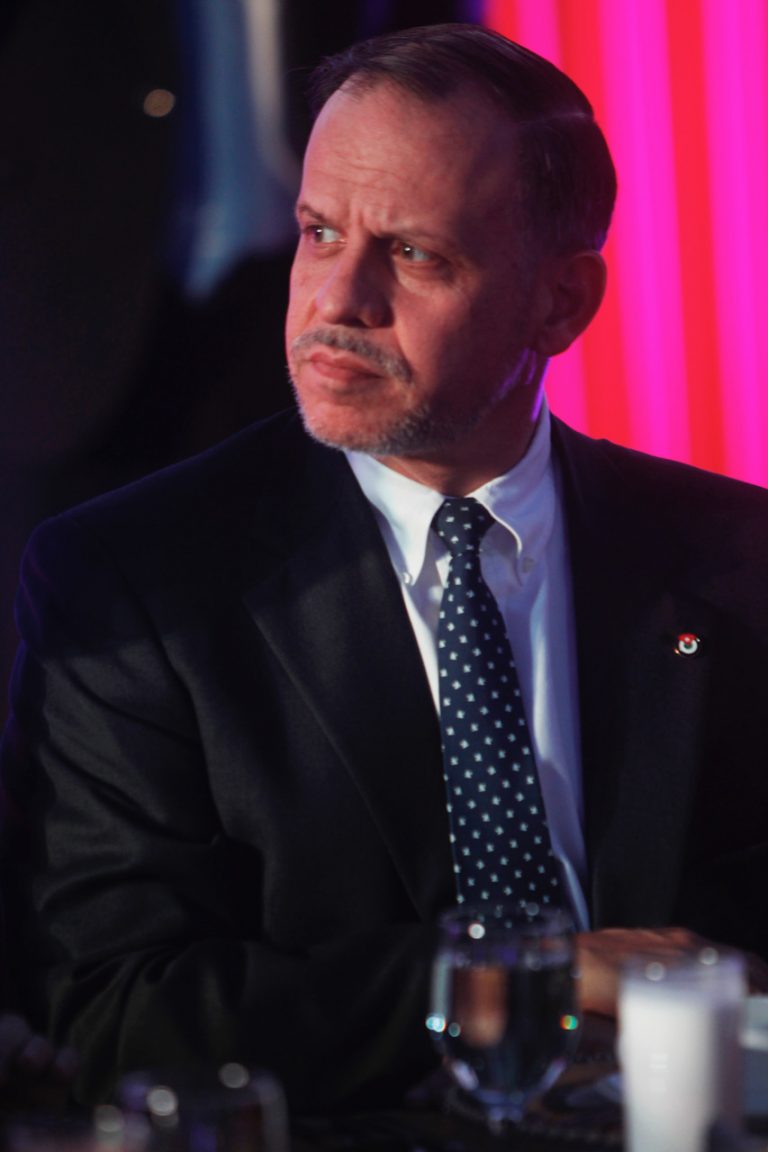
Prince Feisal Al Hussein has been re-elected as President of the Jordan Olympic Committee (JOC).

His Royal Highness stood unopposed in an election at Al Hussein Youth City and will now serve another four-year term.

He was first elected as JOC President in 2003 and became a member of the International Olympic Committee in 2010.

“I am proud to have been re-elected President of the Jordan Olympic Committee, it is a duty and honor to serve Jordan’s sporting family for four more years,” said Prince Feisal, also the founder and chairman of Generations For Peace.

“I am looking forward to continuing the excellent progress the JOC has made and to leading our ambitious new national sporting strategy.

“We aim to ensure sport plays a greater role in the lives of all Jordanians and inspires the next generation to embody Olympic values.”

Prince Feisal will be joined by 17 Board members, representing “distinguished individuals”, Olympic and non-Olympic sports and former athletes.

Three women are among the number, including the President’s daughter Princess Ayah Al Feisal.

She is President of the Jordan Volleyball Federation.

The distinguished individuals are His Excellency Dr Haditha Al Khresha, the Minister of Youth, who will serve as vice-president alongside Dr Sari Hamdan.

Ahmed Hanandeh is also a member of this group.

Joining Princess Ayah as an Olympic Federation representative is Dr Khalid Atyat for fencing, who will also serve as vice-president.

Cycling’s Jamal Al Fa’uri, tennis’ Ameen Al Momani, football’s Lu’ai Omeish, karate’s Mu’een Al Fa’uri, badminton’s Omar Bani Hani, swimming’s Maher Mahfouz, table tennis’ Fawaz Al Sharabi and handball’s Tayseer Al Mansi will also take seats.

Non-Olympic sports will be represented by Ratib Al Damen, for billiards and snooker, and Dr Husam Barakat for squash.

The Olympic athletes include another member of the Royal Family in HRH Princess Zaina Al Rashed.

She competed at both Athens 2004 and Beijing 2008 at table tennis.

Taekwondo Olympian Nadin Dawani will also take a place on the board.

The sport provided Jordan with its first medal at Rio 2016, when Ahmad Abu Ghaush won gold in the men’s 68 kilograms division.

By Dan Palmer

Republished with permission from insidethegames.biz

**Editor’s Note: Prince Feisal Al Hussein was awarded an International Honorary Doctorate from the United States Sports Academy in 2014. **

Armour: USA Gymnastics Looks for its Generation Next

0
Armour: USA Gymnastics Looks for its Generation Next
USA gymnast Ragan Smith. Photo: Twitter / Inside Gymnastics

Even Simone Biles wasn’t always Simone Biles.

A poor performance at a qualifying meet four years ago shook her confidence badly enough that coach Aimee Boorman pulled her off the floor before her last event. No one knew quite what to expect when she showed up at the national championships three weeks later.

Biles won, of course, kicking off an unprecedented run over the next four years that culminated in the all-around title and three other gold medals at last summer’s Rio Olympics.

It’s a story worth remembering as the women’s competition at the P&G Championships begins Friday with no clear heir apparent to Biles. With three years until the Tokyo Olympics, someone will emerge.

Someone always does.

“It’s the changing of the guard. It happens every time,” said Kim Zmeskal Burdette, who coaches Ragan Smith and Emma Malabuyo, two of the gymnasts who could emerge as the next big thing.

Smith, considered a veteran at 17, was one of three alternates in Rio last summer and won the American Cup earlier this year. The 14-year-old Malabuyo is still a junior, but she posted the fourth-highest all-around score in the world this year at last month’s U.S. Classic.

The top two spots on that list? Those belong to fellow American juniors Gabby Perea and Maile O’Keefe. All three will be eligible to compete as seniors next year, giving them plenty of time to get experience ahead of Tokyo.

“I actually think about the Olympics almost every day,” Malabuyo said. “That’s my goal so, every day that’s what motivates me and that’s what pushes me. You want to be there so every day that’s in my mind and I try pushing myself.”

As Zmeskal said, the year after the Olympics is always one of transition and this one is more so than most. Martha Karolyi, the women’s national team coordinator since 2001, retired after Rio and was replaced by Valeri Liukin, who trained daughter Nastia, the 2008 Olympic champion.

Liukin and Karolyi have very different personalities, but their expectations are similar.

As the gymnasts said they should be.

“It’s still hard core,” said Ashton Locklear, who also was a Rio alternate. “And it has to be to hold the bar where we have it set.”

One way to ensure that is a deep talent pool, which was Liukin’s goal when he took over as director of the developmental program five years ago. Those athletes are now juniors, and the competition in that division will be far tougher than at the senior level.

It’s reminiscent of the scenario after Beijing, when Jordyn Wieber, McKayla Maroney, Kyla Ross and Aly Raisman dominated the junior ranks. Wieber would win the all-around title at the 2011 world championships, where she, Maroney, Raisman and Gabby Douglas also claimed the team title.

A year later, the Fierce Five steamrolled the competition at the London Olympics. In addition to team gold, the first by an American gymnastics team outside the U.S., Douglas won the all-around title and Raisman claimed gold on floor.

That history is not lost on the gymnasts here this week. They have watched women they know, women they’ve trained with, shine, and they’re eager for their turn in that spotlight.

“I try to take my goals one goal at a time and always have Tokyo in the back of my mind as the ultimate goal,” said Morgan Hurd, a first-year senior. “I feel like (a good showing here) can really help me move up in the ranks.”

The calendar says the Tokyo Olympics are still three years away. This week, however, it’s all about Generation Next.

By Nancy Armour

This article was republished with permission from the original author and 2015 Ronald Reagan Media Award recipient, Nancy Armour, and the original publisher, USA Today. Follow columnist Nancy Armour on Twitter @nrarmour.

North American Bid Reveals List of Proposed Cities for 2026 World Cup

0
North American Bid Reveals List of Proposed Cities for 2026 World Cup
The Rose Bowl in Los Angeles is one of the venues proposed for the North American bid for the 2026 FIFA World Cup. Photo: By Bobak Ha'Eri via Wikimedia Commons

A total of 44 cities across the United States, Canada and Mexico are on the list of proposed venues to stage matches at the 2026 World Cup if their joint bid is successful, it has been announced.

The United Bid Committee will consider 49 stadiums for inclusion in their official bid for the tournament, due to be submitted to FIFA by March of next year.

Cities who wish to be included as part of the joint attempt from the three countries have until September 5 to officially register their interest.

The Bid Committee will then draw up a shortlist of proposed locations late next month before candidate cities submit their final bid in January.

Around 20 to 25 venues will form part of the official submission to world football’s governing body.

At least 12 cities could ultimately serve as hosts, the Bid Committee said in a statement.

Cities interested in holding the opening match and the World Cup final must have stadiums where the capacity is at least 80,000.

Stadiums with a capacity of at least 40,000 will be considered for group matches.

The list includes three venues in the Los Angeles area – the Memorial Coliseum, the proposed new Los Angeles Stadium at Hollywood Park and the Rose Bowl, all of which feature in plans for the 2028 Olympic Games due to be held in the city, pending a formal decision at the International Olympic Committee Session in Lima next month.

In 1994, the Rose Bowl hosted the World Cup final when the US hosted the tournament.

Two stadiums in two in Dallas, Montreal and Toronto are also on the proposed list, along with stadiums of all 32 NFL teams are on the list except for the Buffalo Bills’ New Era Field.

“The Host Cities included in our bid will be critical to its success – not only because of their facilities and ability to stage major events, but because they are committed to further developing the sport of soccer by harnessing the impact of hosting a FIFA World Cup – and looking beyond the game itself to make a positive contribution to our communities and the world,” said United Bid Committee executive director John Kristick.

“We have had a great response so far and we’re looking forward to working closely with each city and determining the best venues for our official bid that we’ll submit next year.”

Should the joint US, Canada and Mexico bid secure the hosting rights for the 2026 World Cup – the first edition of the tournament to feature 48 teams after FIFA agreed to expand the number of competing nations from 32 earlier this year – the majority of the matches would be held in the US.

Mexico and Canada will host just 10 games each, with the other 60 played in the US, including from the quarter-finals onward.

The joint effort from the US, Canada and Mexico is the favorite to host the tournament but is facing competition from Morocco after the African country submitted a last-minute bid.

Morocco were able to submit a candidacy for the 2026 World Cup after FIFA’s Council rejected a proposal from Canada, Mexico and the US to fast-track their bid in May.

FIFA instead opted to keep the bidding window open for a further three months and gave other interested countries until August 11 to confirm their intention to bid.

By Liam Morgan

Republished with permission from insidethegames.biz

Baumann Praises Double Olympic Award as Best Possible Outcome

0
Baumann Praises Double Olympic Award as Best Possible Outcome
Los Angeles Mayor Eric Garcetti, right, discusses L.A.'s winning bid to host the 2028 Olympic and Paralympic Games during a news conference at the StubHub Center in Carson on July 31. Photo: Los Angeles Times

Patrick Baumann believes that the double-award of the 2024 and 2028 Summer Olympics and Paralympic Games to Paris and Los Angeles was the “best possible outcome” .

The Swiss, who headed the International Olympic Committee (IOC) Evaluation Commission visits to both cities when they were still competing for just the 2024 edition, said it was vital for the Olympic Movement to capitalize on the interest of both bidders.

It was agreed at the Extraordinary IOC Session in Lausanne last month that a Tripartite Commission would be formed consisting of representatives from the IOC and both prospective host cities.

Los Angeles then announced its candidacy for the 2028 Games, leaving the path clear for Paris to host the earlier edition.

The recommendation to award 2024 and 2028 simultaneously is now expected to be rubber-stamped by the IOC membership at their Session in Lima on September 13.

Patrick Baumann Photo: FIBA

It will mark the third time that both Los Angeles and Paris have hosted sport’s showpiece event.

The French capital played host in 1900 and 1924 and the Olympics took place in Los Angeles in 1932 and 1984.

Baumann, an IOC member, is also President of the Global Association of International Sports Federations, the umbrella body formerly known as SportAccord, and secretary general of the International Basketball Federation.

He believes that taking advantage of both cities’ interest in hosting the Games was the ideal outcome for everyone involved.

“It does not happen very often that you have two Olympic cities like Paris and Los Angeles that both want the Games with such intensity,” he told insidethegames.

“With both having already hosted the Games, everything is already there to make 2024 and 2028 a success so taking advantage of this situation has definitely been the best possible outcome for both cities and the IOC.”

Under the terms of the Host City Contract 2028, the IOC will advance funds to the Los Angeles Organizing Committee in view of the longer planning period.

They will also increase participation and access to youth sports programs in the city in the years leading up to the Games.

Baumann paid tribute to both cities’ long-standing history and close ties to the Olympic Games.

“These are great Olympic cities,” he said.

“Both have hosted the Games twice and have deep roots within the Olympic Movement.

“Paris has the direct link to Pierre de Coubertin and the rebirth of the Olympic Games while the Los Angeles bid is being run by people who experienced the Games there in 1984 as kids.

“But of course both cities also have their differences and have been able to express very solid bids but very much taking into consideration their local conditions.”

By Max Winters

Republished with permission from insidethegames.biz

Nightengale: Derek Jeter is a Perfect Fit to Run the Marlins

0
Nightengale: Derek Jeter is a Perfect Fit to Run the Marlins
Retired New York Yankees shortstop Derek Jeter, right, looks around during a pregame ceremony after his No. 2 was retired in Monument Park at Yankee Stadium in New York, Sunday, May 14, 2017. The plaque is a replica of the one in Monument Park. Photo: AP Photo | Kathy Willens

Jeffrey Loria, the soon-to-be-former owner of the Miami Marlins, has always loved the New York Yankees.

It’s his favorite team.

He goes to games at Yankee Stadium.

He lives in New York.

He collects art there.

And ever since he decided to sell the Marlins, he’s always wanted the franchise to go to Derek Jeter.

So he waited.

The Jeb Bush group came and went. The Mitt Romney group disappeared. New York businessman Wayne Rothbaum bowed out. Miami businessman Jorge Mas jumped in late, but didn’t come up with the money.

So Loria waited, and waited, and finally, with New York businessman Bruce Sherman joining Jeter’s group, they came up with the minimum price Loria desired at $1.2 billion.

The deal was finalized Friday, a high-ranking executive with direct knowledge of the sale confirmed to USA TODAY Sports, but spoke only on the condition of anonymity, since the proposed sale has yet to be presented to Major League Baseball.

Sherman will be the control person. Jeter will be the baseball and business man, and everyone in the MLB offices on Park Avenue in N.Y. are ecstatic.

Jeter, one of the iconic names in all of baseball, with five World Series rings and a 14-time All-Star, is back in the game and immediately becomes the most famous face in baseball’s ownership circles, supplanting minority owner Magic Johnson of the Los Angeles Dodgers.

Sure, Jeter is only putting in about $25 million of his own cash.

Yes, Jeter has zero front office experience.

And, yes, the team is in financial disarray, with projected losses of at least $60 million this season while the team already is in about $500 million of debt.

Yet, there finally is hope that the Marlins will be a valuable franchise again, knowing that whatever Jeter has touched, whether it’s his Yankee teams, his brands, or even his website, has turned to gold.

The news of the sale will surely dominate the MLB owners’ meetings next week in Chicago, but no vote will be taken. Sherman and Jeter still have to meet with the ownership committee, there will be a recommendation, and finally a vote.

The deal should be finalized in October, far too late to save this season, but in plenty of time to save the franchise.

It’s a happy day in Florida, and throughout the game of baseball.

Jeter is back.

And, just maybe, so are the Marlins.

By Bob Nightengale

This article was republished with permission from the original publisher, USA Today. Follow Bob Nightengale on Twitter and Facebook

U.S. Women Target Back-to-Back Solheim Cup Titles in Iowa

0
U.S. Women Target Back-to-Back Solheim Cup Titles in Iowa
Gerina Piller will compete for the United States in this week's Solheim Cup. Photo: Kevin Lamarque/Reuters

The United States will be aiming to retain their Solheim Cup crown when the 2017 edition of the event begins at the Des Moines Golf and Country Club in Iowa tomorrow.

The Solheim Cup is the women’s equivalent of the Ryder Cup, pitting teams from Europe and the US together across three days of play.

At the 2015 edition of the competition, the Americans completed a spectacular comeback to beat Europe at the St Leon-Rot golf course in Germany.

Going into the singles matches on the final day, the US found themselves 10-6 behind but proceeded to win eight of the 12 games on their way to a memorable 14½-13½ triumph.

Controversy surrounded the 2015 edition when Europe’s Suzann Pettersen was forced to apologize for her actions during a fourball match following a controversial incident regarding the concession of a hole by her team.

Norway’s Pettersen and England’s Charley Hull were level with the American duo of Alison Lee and Brittany Lincicome heading onto the 17th hole.

Lee picked up her ball after believing that the Europeans had conceded after Hull had walked away.

Pettersen contested that they had not conceded, resulting in the European pairing being awarded the hole and eventually beating their opponents.

Hull, one of five English golfers in the team, has been included in this year’s European squad while Pettersen has been withdrawn due to a recurrent back injury.

Georgia Hall, Jodi Ewart Shadoff, Mel Reid and Florentyna Parker all join compatriot Hull while Spain’s Carlota Ciganda, France’s Karine Icher and Catriona Matthew of Scotland have also been included.

Swedish duo Anna Nordqvist and Madelene Sagstrom, Caroline Masson of Germany and Emily Pedersen of Denmark are Europe’s wildcard picks.

They will be led by Annika Sorenstam of Sweden while the Americans are captained by Juli Inkster.

The American squad is made up of Lexi Thompson, Stacy Lewis, Gerina Piller, Cristie Kerr, Jessica Korda, Danielle Kang, Michelle Wie, Brittany Lang, Brittany Lincicome and Lizette Salas.

Inkster’s captain’s picks are Austin Ernst and Angel Yin.

Play begins tomorrow with four foursome matches in the morning and four fourball contests in the afternoon.

By Max Winters

Republished with permission from insidethegames.biz

Armour: USA Gymnastics Returns to Competition after Year of Triumph, Turmoil

0
Armour: USA Gymnastics Returns to Competition after Year of Triumph, Turmoil
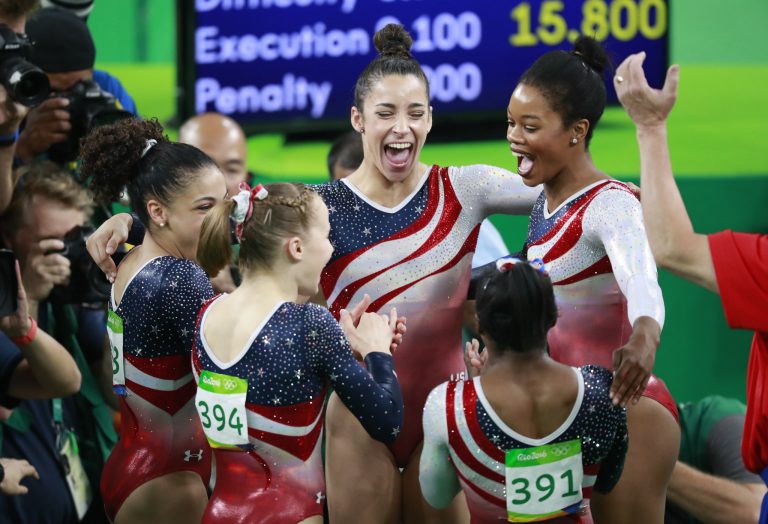
The women’s gymnastics team, led by four gold medals and a bronze by Simone Biles (No. 391), contributed to the United States’ high medal count in the Rio 2016 Olympics. Photo: Doug Mills/The New York Times

One flip symbolizes how the USA Gymnastics’ women’s program has changed in the last year.

Ashton Locklear performed the trick when she threw out the first pitch before the Cubs and White Sox met in the Crosstown Series last month, two days before the U.S. Classic. That’s right. Instead of being on lockdown so close to competition, as she would have been in years past, Locklear was out, having fun and enjoying the perks of all those hours she’s spent in the gym.

“Absolutely it is more open,” said Rhonda Faehn, the women’s program director. “Yes, there’s always going to be a fine line between keeping that focus and that discipline but at the same time still allowing for the little things. Those little things were always done maybe in the past but not as open.

“When you’re smiling down here on the competition floor, it doesn’t mean you’re not focused,” Faehn said. “It means you’re enjoying the process and the journey.”

The P&G Championships get underway Thursday after what has been a year of both triumph and tumult for USA Gymnastics. After the U.S. women won a record nine medals, four of them gold, at the Rio Olympics, the federation was rocked by a sexual abuse scandal centered around longtime team physician Larry Nassar.

Nassar pleaded guilty last month to federal child pornography charges, and faces 22 to 27 years in prison when he’s sentenced Nov. 27. He still faces 33 charges of criminal sexual conduct in Michigan, and has been sued by more than 115 women and girls who said Nassar sexually abused them during medical appointments.

USA Gymnastics has been named in some of the lawsuits, accused of not doing enough to protect young gymnasts from abuse.

The scandal cost former president and CEO Steve Penny his job and prompted a far-reaching review of the federation’s practices by former federal prosecutor Deborah Daniels. In her report, released June 27, Daniels said USA Gymnastics needed a “complete cultural change,” putting the priority on the safety and well-being of athletes rather than world and Olympic medals.

Amidst all this, Martha Karolyi, the architect of the U.S. women’s success the past 15 years, made good on her promise to retire after Rio and was replaced by Valeri Liukin.

“Of course it adds stress on all of us,” Liukin said of taking over during the upheaval. “We talk a lot about this, we make sure we’re doing the right thing. I know all eyes are on us right now. This is our goal.

“It should be our goal all the time,” he added. “Not just because something happened.”

While there is no denying Karolyi’s success, or the system that was the foundation for it, she also was known as an exacting taskmaster.

Coaches and athletes on the national team would joke about “Martha time,” knowing that if you weren’t at least five minutes early, you were considered late. There might have been a selection committee for world and Olympic teams, but Karolyi had the only say that mattered.

Training camps before big meets were long and demanding — the U.S. women were at her ranch outside of Houston for almost three weeks before Rio — and fun was something to be had when competition was over.

Liukin won’t criticize Karolyi — “Obviously Martha is a genius when you’re talking gymnastics preparation for the competition, and she proved it with the results,” he said — but there is definitely a different, less rigid tone to the program.

There was Locklear’s promotional appearance before the Classic. Results at the training camps, which used to be top secret unless an athlete or coach spilled, are now announced by USA Gymnastics. Even podium training before the U.S. Classic lacked its usual tension.

Liukin knows the semi-centralized system as well as anyone and has, perhaps, the most unique perspective of it. He competed under a similar national team structure with the Soviet Union, winning two gold medals at the Seoul Olympics. He trained daughter Nastia, the all-around champion at the Beijing Olympics, under the American version.

And for the four years before he replaced Karolyi, he ran the developmental program, training both the young athletes and coaches who will be factors for Tokyo in 2020.

“This is not a one-man job and it’s never been,” Liukin said last month. “Definitely we can give directions and put them together as a team, but it’s the coaches who do their job.

“We have some really good, young coaches (and for) that I’m very, very happy,” he added. “If you look at the podium, you actually see only a few old names. There are a lot of new faces and that was my biggest goal when I got the job on the junior side, to develop new coaches.”

The year after the Olympics is always one of transition and this one is no different. None of the Final Five is competing this week, and it’s too soon to know if any will return to make a run at Tokyo. Meanwhile, there’s no established heir apparent to four-time national champion Simone Biles, with the most likely candidates still in the junior ranks.

“The year after the Olympics is a tough one and it’s always been this way. Just hoping it’s not only for us,” Liukin said, laughing.

But no matter if it’s a time of transition or a time of turmoil, the program moves on.

By Nancy Armour

This article was republished with permission from the original author and 2015 Ronald Reagan Media Award recipient, Nancy Armour, and the original publisher, USA Today. Follow columnist Nancy Armour on Twitter @nrarmour.

New Athletics Competition Between Britain and USA Launched

0
New Athletics Competition Between Britain and USA Launched
Aug 30, 2015; Beijing, China; Allyson Felix takes the handoff from Natasha Hastings on the third leg of the United States womens 4 x 400m relay that placed second in 3:19.44 during the IAAF World Championships in Athletics at National Stadium. Photo: Kirby Lee-USA TODAY Sports

A new track and field event which will see the best athletes from Great Britain and the United States take on each other has been announced.

In what is a joint venture between British Athletics and USA Track and Field (USATF), The Meet will begin at the Olympic Stadium on July 21 next year in a one-day competition taking place over two hours, with nine running, jumping, hurdles and relay events on the schedule.

Athletes will score points for their respective nations through their performances.

A more detailed schedule and the athletes taking part are due to be released early next year.

Several athletes have expressed their excitement at the competition, including Britain’s Adam Gemili, part of the 4×100 meter men’s relay gold medal winning team at the International Association of Athletics Federation World Championships which concluded at the same stadium on Sunday (August 13).

“We have a great sporting rivalry with the USA team and we look forward to seeing which nation comes out strongest at The Meet next summer,” the 23-year-old said.

On the US side, six-time Olympic gold medal-winning sprinter Allyson Felix said the Americans are also looking forward to the event.

“The UK has passionate fans who love track and field,” she said.

“Bringing team competition back to the stadium will be special.

“There is nowhere like it in the world for track and field and it has been the site of some memorable team USATF performances.”

By George Thorpe

Republished with permission from insidethegames.biz

Article Shows Kaepernick Still Has Ability to Play in NFL

0
Article Shows Kaepernick Still Has Ability to Play in NFL
In this Dec. 4, 2016, file photo, San Francisco 49ers quarterback Colin Kaepernick warms up before an NFL football game against the Chicago Bears. Photo: AP Photo/Charles Rex Arbogast,

We all have our opinions about the political stance and actions of former NFL quarterback Colin Kaepernick. I’m not here writing about his political stance or actions. I know, you’re not willing to just take my word for it, I don’t blame you for not wanting to hear me out on the matter. Indulge me on this one!

This writer is here to state that you need to read the following article about Colin Kaepernick’ s ability to still play quarterback in the NFL, according to Stephen White. According to White, there’s a lot of misinformation out there about Kaepernick’s play and ability to still play. White has the expertise to support the statement because he’s a retired NFL defensive end and football analyst.

White dives into Kaepernick’ s quarterback performance by taking a look at the last couple of years of his play and provides supportive factual information and numbers regarding his performance by going back and reviewing real game film. The breakdown of the game film was to offer the best and most accurate assessment of Kaepernick’s ability to play, then and now, in the NFL as a quarterback.

Some of the arguments concerning Kaepernick’s ability to play include: he has the slowest release in football; he holds onto the ball until he gets sacked or has to throw it away; he runs the ball too much and he’s lost a step; he’s peaked and has nothing left to offer. However, read the article to see that many of the myths concerning his ability to play then and now are addressed in-depth.

The following contributed to the writing of this piece. White, S., (2017 August 14) Colin Kaepernick’s film shows there is no excuse for him to be unemployed. SB Nation. https://www.sbnation.com/2017/8/14/16058454/colin-kaepernick-film-breakdown-free-agency

By Dr. Fred J. Cromartie

Dr. Fred J. Cromartie, is the Director of Doctoral Studies at the United States Sports Academy, and can be reached at [email protected].