Home Blog Page 18

Hashimoto Says Tokyo 2020 Will Go Ahead as 10,000 Volunteers Quit Over COVID-19

0
Hashimoto Says Tokyo 2020 Will Go Ahead as 10,000 Volunteers Quit Over COVID-19
Seiko Hashimoto, president of the Tokyo 2020 Organizing Committee, attends a news conference after the International Olympic Committee (IOC) general meeting in Tokyo, Japan March 11, 2021. Photo: Eugene Hoshiko/Pool via REUTERS

By Geoff Berkeley |

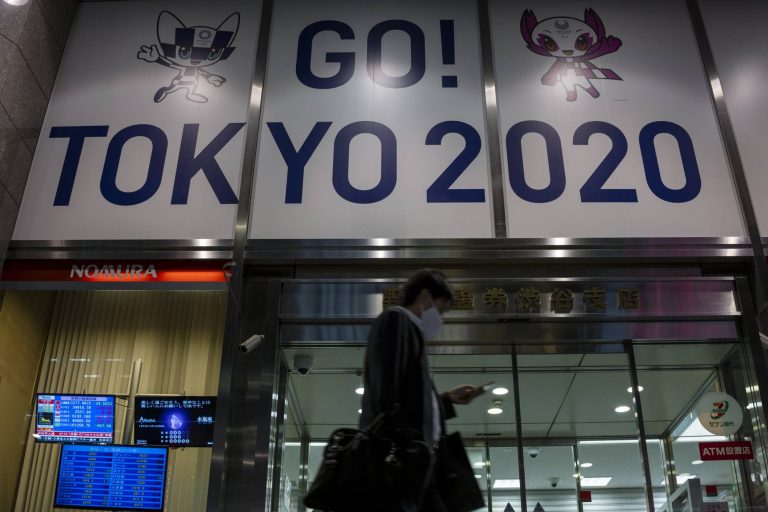
Tokyo 2020 President Seiko Hashimoto insists this year’s Olympic and Paralympic Games will take place as planned – unless the majority of teams are unable to travel to Japan because of the COVID-19 pandemic.

There are 50 days to go until the scheduled Opening Ceremony of the Olympics on July 23, but questions marks continue to hang over the staging of the event due to the COVID-19 crisis and concerns among the Japanese public.

It has also been reported that 10,000 of the 80,000 volunteers for the Games have quit, largely because of coronavirus fears.

But Tokyo 2020 organisers have ruled out a second postponement and have spoken of their determination to stage the Games against the backdrop of the global health crisis.

“If various countries around the world experience very serious situations, and delegations from most countries can’t come, then we wouldn’t be able to hold it,” Hashimoto told the Japanese newspaper Nikkan Sports.

“But conversely, unless such a situation emerges, the Games will not be cancelled.”

Speaking to BBC Sport, Hashimoto said she was “100 per cent” certain the Olympics would be held next month.

Several surveys carried out in Japan have highlighted public opposition in Japan, with a Kyodo News poll last month finding that 85 per cent are concerned that staging the Games will lead to an influx in coronavirus cases.

Japanese newspaper Asahi Shimbun also published an editorial urging Prime Minister Yoshihide Suga to cancel Tokyo 2020, while a petition calling for the cancellation of the Games reached 350,000 signatures in just nine days.

Overseas fans have been banned from attending the Olympics and Paralympics as a measure to reduce the risk of spreading COVID-19.

A decision on the presence of Japanese spectators is expected to be made later this month, with state of emergency measures in 10 areas including Tokyo set to expire on June 20.

Hashimoto admitted it was a “very painful decision” not to permit international fans and conceded there was a possibility the event would be held behind closed doors.

“The Japanese people are feeling very insecure and at the same time probably feel some frustration at us talking about the Olympics and I think that is giving rise to more voices opposing having the Games in Tokyo,” Hashimoto told BBC Sport.

“The biggest challenge will be how we can control and manage the flow of people.

“If an outbreak should happen during the Games times that amounts to a crisis or an emergency situation then I believe we must be prepared to have these Games without any spectators.

“We are trying to create as complete a bubble situation as possible so we can create a safe and secure space for people who come in from overseas as well as people who are in Japan, the residents and citizens of Japan.”

The number of Games participants from abroad has been reduced to 59,000, compared to the expected 180,000 from last year.

Tokyo 2020 chief executive Toshirō Mutō told Japanese media that 10,000 volunteers had also quit.

Coronavirus concerns was cited as the main reason for their decision, although Mutō admitted some decided against participating over former Tokyo 2020 President Yoshiro Mori’s sexist remarks.

Mori stepped down in February amid international furore after claiming Board meetings involving women often overrun because they talk too much.

International Olympic Committee President Thomas Bach claims that more than 80 per cent of people in the Athletes’ Village will be vaccinated.

The IOC last month signed a deal with developers of the Pfizer vaccine in a bid to boost the number of vaccinated athletes who are set to compete at the Games.

“At this point, I am very confident we will have these Games,” added Hashimoto.

“We are doing everything we can, we are being very thorough about that.

“I know we have very limited time to deal with anything that might come up but we will do everything we can to improve the situation and we will see these things through.

“If the pandemic once again accelerates across the world, and so it should happen that no country can come to Japan, then of course we cannot have those Games.

“But I think we have to be very careful in reviewing the current situation and deciding what to do depending on what we consider to be right.”

Japan has fully vaccinated less than three per cent of its population but is aiming to inoculate the all residents aged 65 or older – about 36 million people – by the end of July.

Tokyo recorded 487 new coronavirus cases yesterday, while Japan reported a further 3,037 infections.

The Tokyo 2020 Olympics are scheduled to run from July 23 to August 8, before the Paralympics take place between August 24 and September 5.

Republished with permission from insidethegames.biz.

Armour: As Concerns Over Olympics Grow, Tokyo Organizers Say Games Will Go On

0
Armour: As Concerns Over Olympics Grow, Tokyo Organizers Say Games Will Go On
A demonstrator wearing a face mask holds a sign to protest against the Tokyo 2020 Olympic Games a year before the start of the summer games that have been postponed to 2021 due to the coronavirus disease (COVID-19) outbreak, near National Stadium in Tokyo, Japan July 24, 2020. REUTERS/Issei Kato

By Nancy Armour |

The possibility of canceling or postponing this summer’s Olympics or Paralympics was not raised at a Tokyo 2020 board meeting Wednesday, despite a major Japanese newspaper calling for the Games to be scrapped.

There is widespread opposition to the Tokyo Games in Japan, which is experiencing a surge in COVID-19 cases. But the editorial in the Asahi Shimbun earlier Wednesday, which cited concerns the Olympics and Paralympics would lead to further outbreaks and overwhelm Japan’s health care system, was notable because the paper is a sponsor of the Olympics.

“Nobody has explicitly mentioned a view that we should postpone or cancel,” Tokyo 2020 CEO Toshiro Muto said at a news conference following the board meeting.

Muto downplayed the paper’s opposition, saying “different press organizations have different views, different perspectives on matters.”

“That’s very natural, given their role in society,” Muto said.

The New England Journal of Medicine on Tuesday released a paper questioning the effectiveness of some of the COVID-19-prevention measures outlined in the playbooks the International Olympic Committee has developed for participants, staff and news media at the Olympics and Paralympics. Among the criticisms: having athletes share rooms; relying on tracing apps rather than wearable technology; and not addressing different risk levels for indoor and outdoor venues.

“We believe the IOC’s determination to proceed with the Olympic Games is not informed by the best scientific evidence,” the authors wrote.

Muto said he had not read the paper. But he said the IOC consults with a variety of health organizations and scientific experts, and pointed out that the playbooks are to be updated again next month.

Muto said he understands the public’s concern, and said Tokyo 2020 needs to do a better job communicating what organizers have already done and are planning to prevent the Olympics and Paralympics from causing COVID-19 outbreaks. The number of people coming to Japan for the Games, for example, has been more than halved, from the 180,000 originally planned to 78,000.

Organizers also believe that the mitigation efforts taken by the Japanese and local governments will bring down cases.

“National governments and local governments are ensuring that they have all the initiatives in place to contain the pandemic,” Muto said. “We believe these initiatives will bear fruit, will be effective so that the situation around infections will improve toward the Olympic, Paralympic Games. That’s our thought.”

This article was republished with permission from the original author and 2015 Ronald Reagan Media Award recipient, Nancy Armour, and the original publisher, USA Today. Follow columnist Nancy Armour on Twitter @nrarmour.

Osaka Withdraws from French Open

0
Osaka Withdraws from French Open
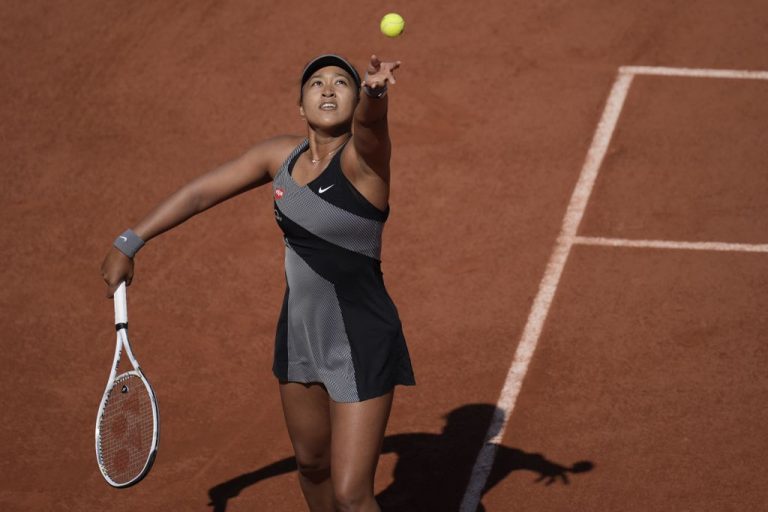
Naomi Osaka. Photo: Christophe Ena/Associated Press

By Michael Pavitt |

World number two Naomi Osaka has announced her withdrawal from the French Open, with the Japanese star saying it would allow everyone to “focus on the tennis”, amid the fallout from her decision not to attend media conferences.

Osaka was yesterday warned by Grand Slam organizers that she faces expulsion from the French Open and future Grand Slams if she continues to refuse to do media conferences.

She was fined $15,000 after refusing to “honor her contractual media obligations” following a 6-4, 7-6 (7-4) victory over Patricia Maria Tig of Romania in Paris.

The four-time Grand Slam champion had announced last week that she will not be carrying out all her media duties at Roland Garros, citing mental health concerns as the reason for her boycott.

Osaka posted on Twitter confirming her withdrawal from the tournament.

“This isn’t a situation I ever imagined or intended when I posted a few days ago,” Osaka wrote.

“I think now the best thing for the tournament, the players and my well-being is that I withdraw so that everyone can get back to focusing on the tennis going on in Paris.

“I never wanted to be a distraction and I accept that my timing was not ideal and my message could have been clearer.

“More importantly I would never trivialise mental health or use the term lightly.

“The truth is that I have suffered long bouts of depression since the US Open in 2018 and I have had a really hard time coping with that.

“Anyone that knows me knows I’m introverted, and anyone that has seen me at tournaments will notice that I’m often wearing headphones as that helps dull my social anxiety.

“Though the tennis press has always been kind to me (and I wanna apologize especially to all the cool journalists who I may have hurt), I am not a natural public speaker and get huge waves of anxiety before I speak to the world’s media.

“I get really nervous and find it stressful to always engage and give you the best answers I can.”

Osaka said that her decision to skip press conferences at the French Open was part of “self care”, adding that she also wanted to highlight her belief that the rules are “outdated in parts”.

Osaka concluded by saying she would take time away from the court, but would look to work with the Tour to “discuss ways we can make things better for the players, press and fans.”

In their statement yesterday, the four Grand Slam organisers had stressed that mental health of players was of the “utmost importance”.

The organisers insisted “a core element” of regulations for players at majors is to engage with the media “whatever the result of their match”.

Osaka’s stance has dominated the opening days of the tournament, with other leading players having been questioned about her stance.

Her withdrawal will see Romania’s Ana Bogdan advance to the third round.

Republished with permission from insidethegames.biz.
Ohtani’s Two-Way Wuccess a Joy to Behold and a Victory for Dreamers

0
Ohtani’s Two-Way Wuccess a Joy to Behold and a Victory for Dreamers
Shohei Ohtani (17) high-fives Los Angeles Angels third baseman Tommy La Stella (9) after hitting a two-run home run during a 2019 game against the Rays at Tropicana Field. [ MONICA HERNDON | Tampa Bay Times ]

By Ali Iveson |

Reading my colleague Mike Rowbottom’s recent blog post on sporting crossovers, my mind could not help but wander to Shohei Ohtani.

The Japanese star has been in my thoughts and no doubt the thoughts of countless others rather a lot of late, thanks to a historic start to the Major League Baseball (MLB) season. On this occasion I was wondering whether Ohtani may be sport’s most impressive crossover star at present.

First we should probably define what a crossover is. Merriam-Webster’s dictionary definition includes “an instance of breaking into another category” or “a broadening of the popular appeal of an artist (such as a musician) that is often the result of a change of the artist’s medium or style”. So while Ohtani is sticking one sport, baseball, a more narrow sphere than that of the athletes who dabble in multiple sports, chess or music as discussed in the previous blog post, I think he qualifies. And the results this season have been spectacular.

Ohtani, a 26-year-old superstar now in his fourth MLB season – although it does not feel as though it has been that long, thanks to a combination of needing the dreaded Tommy John surgery to repair a torn ulnar collateral ligament (UCL) and a coronavirus-shortened season – leads MLB with 14 home runs. A flashy statistic those with more detailed knowledge of baseball’s inner workings than this part-time fan may wish not to put much stock in.

But Ohtani is also a top-10 player in runs batted in, slugging percentage, runs scored, total bases, extra base hits and Baseball Reference’s wins above replacement (WAR) metric. We can agree he is good with a bat in hand.

That WAR stat is a product of the reason for this blog post, however. Ohtani does not just launch home runs, he also pitches – and pitches very well. Modern-era baseball players are not supposed to do both and to call Ohtani a once-in-a-generation talent would be hugely underselling it.

Earlier this season Ohtani became the first player in 100 years to start a game as a pitcher while leading MLB in home runs. In 2018, before the scale of the UCL injury was clear, Ohtani became the first player in 99 seasons simply to hit 15 home runs and pitch 50 innings in the same year.

On both occasions the last player to achieve the feat was Babe Ruth, and you do not need to be a baseball follower to know that matching any record of the “Bambino” – often regarded as the greatest player of all time – is some feat.

As a pitcher, Ohtani’s earned run average is 2.37 this season – more than 40 per cent better than league average. Ohtani records a strikeout almost every second batter – again considerably ahead of the league average – and another stat to demonstrate the esteemed, consigned-to-the-history-books company that he keeps comes from Sarah Langs.

Ohtani is only the fifth ever MLB player with 60 home runs as a hitter and 100 career strikeouts as a pitcher. Only one of the other five, Rick Ankiel, played after 1954, and Ankiel was not a two-way player in the same way Ohtani is. Ankiel was a pitcher who came back as a hitter after the yips effectively ended his pitching career – an incredible achievement and tale in its own right – but Ankiel was not balancing the two arts at the same time.

When you consider the odds one must overcome to be an above-average hitter or an above-average pitcher in the world’s leading baseball competition, to do both is remarkable.

No doubt some will be reading this wondering what the big deal is. It is all baseball, right? But throwing a ball and hitting a ball are two very different skills, with little overlap. Perhaps even less overlap than some of the crossovers covering multiple sports, like athletics and American football, or hockey and tennis. 

Sure, cricket is awash with talented all-rounders, who can bowl and bat and also catch a ball without using a glove. But cricket and baseball comparisons are flawed, as anyone who has tried to explain one of them to a mystified fan of the other can likely attest.

The fact you need to go back a century, to the great Ruth, to find a suitable Ohtani comparison is an illustration of how impressive this athletic feat is.

And it is an athletic feat, for there is a certain beauty to the way Ohtani is capable of crushing a baseball – left-handed of course, which for whatever reason usually makes a hitter more easy on the eye. The flick of the plant foot, the fluid and beguilingly powerful uncorking of his arms, the nonchalance which so often seems to follow a baseball sailing over the fences. 

As an English-based part-time baseball fan, waking up each day to see what outlandish pitch Ohtani threw or dispatched for a home run has been a pleasure and certainly kept me more abreast of a season that, at 162 games long before the playoffs even start, can often seem a slog.

Ohtani is doing something many thought was impossible, that practically nobody who is alive today has seen before. Those trying to downplay what Ohtani is doing will point to the small sample size – often conveniently ignoring his similar achievements in Nippon Professional Baseball or the first-ever World Baseball Softball Confederation Premier12 tournament – question his durability or shy away from the statistical categories where Ohtani’s numbers are most eye-catching.

But the joy of Ohtani is in the dream, succeeding in the face of early specialisation so prevalent in sport’s youth development. At times he seems to play as if in the imagination of a child who cannot decide what they want to be, so they are simply good at everything. In an era where athlete empowerment appears to be growing in all directions, you cannot help but wonder what impact Ohtani, who has refused to follow the status quo and make a choice between two disciplines he clearly loves, will have on those that follow. 

Ohtani is a marvel and undoubtedly one of the most impressive athletes currently operating. Perhaps trying to emulate him, in whatever field, is foolish. But no doubt many wrote off his quest for two-way domination as foolish also.

If history says this will not last, all the more reason to enjoy the show, each crushed home run or devilish splitter at a time. But equally, what a shame that show will not be coming to a home Olympics later this year. 

Ohtani will be 34 when Los Angeles, his current residence, holds the Olympics. Maybe if somebody tells Ohtani he cannot compete at those Games, he just might make it happen.

Republished with permission from insidethegames.biz.

Olympic 400m Champion and Activist Lee Evans Dies at Age 74

0
Olympic 400m Champion and Activist Lee Evans Dies at Age 74
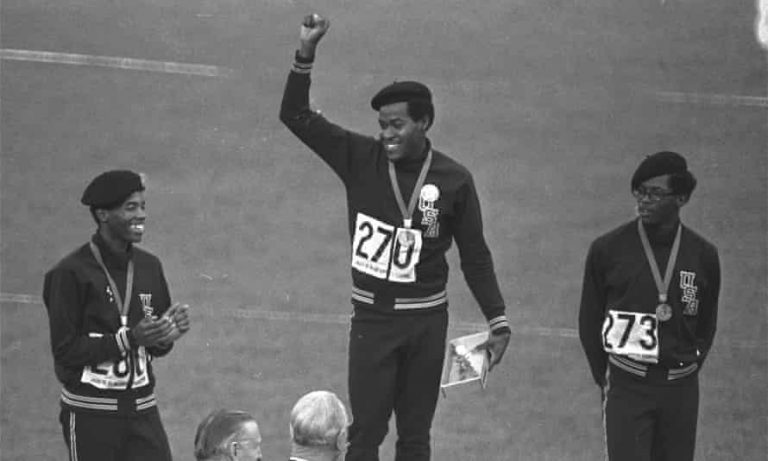
USA athletes Larry James, left, Lee Evans, center, and Ron Freeman are shown after receiving their medals for the 400m at the Mexico City Olympics in October 1968. Photograph: AP

By Michael Houston |

American 400 meter Olympic champion and anti-racism activist Lee Evans has died at the age of 74 after suffering a stroke.

The passing of Evans, who won Olympic gold in Mexico City in 1968, was confirmed by USA Track and Field.

It had been reported by the San Jose Mercury News that the 74-year-old was unconscious in hospital in Nigeria following a stroke last week.

Evans won the men’s 400m at the 1968 Olympics in 43.86sec, shattering the world record of the time.

Evans was the first person to run under 44 seconds in the event.

He then broke the 4x400m world record with Vince Matthews, Ron Freeman and Larry James as the United States won gold later at the same Games. 

Both world records stood for two decades, with Evans’ individual 400m mark being broken by compatriot Butch Reynolds in 1988.

As important as his speed on the track, Evans was a founding member of the Olympic Project for Human Rights and campaigned for human rights before and during the Games.

Before his gold-medal-winning run, Evan was said to be planning to withdraw from the 400m final after Tommie Smith and John Carlos were kicked out of the Olympics over their black power salute on the men’s 200m podium.

However, Smith and Carlos convinced him to run.

A US official warned 400m runners not to stage a similar protest to Smith and Carlos, as there were concerns the nation would be kicked out of the Olympics.

Evans led an all-American podium with James and Freeman, and all three wore black berets in support of the Black Panther Party to the medal ceremony. 

They removed them for the national anthem, knowing they had to still run the relay later in the Games.

After missing out on individual qualification for the Munich 1972 Olympics, Evans was supposed to be part of the 4x400m relay team for the Games, but the US could not field a team after Matthews and Wayne Collett were sent home by the International Olympic Committee for their own podium protest.

Matthews and Collett turned sideways to the American flag, standing together on the top spot, twirling their medals and stroking their chins, with Collect later saying that as an African-American he did not believe the words of the US anthem to be true.

Evans later coached and directed athletics programmes for decades, working in six African nations before accepting a position as head cross country and track and field coach at the University of South Alabama.

He was inducted into the US National Track and Field Hall of Fame in 1983.

Republished with permission from insidethegames.biz.
Survey Says 60 Percent of Japanese Public Favor Cancelling Olympics

0
Survey Says 60 Percent of Japanese Public Favor Cancelling Olympics
People wearing face masks to help curb the spread of the coronavirus walks by a Tokyo 2020 Olympics and Paralympics sign Sunday, Oct. 25, 2020, in Tokyo. (AP Photo/Kiichiro Sato)

By Ali Iveson |

A majority of the Japanese public want the Olympics and Paralympics to be cancelled and more than 85 percent are concerned that staging the Games will lead to an influx in coronavirus cases.

The Kyodo News poll conducted this weekend found that 59.7 percent of respondents want the Olympics – due to open on July 23 – called off.

A little more than a quarter – 25.2 percent – are in favor of the Games going ahead but without spectators allowed, while 12.6 percent voted for the Olympics and Paralympics taking place with a limited number of fans in attendance.

The poll did not offer the option of rescheduling the Games – something the International Olympic Committee (IOC) has insisted is not on the table.

These figures are the latest example of anti-Olympic sentiment in the host nation, where COVID-19 infections are on the rise and nine prefectures have been placed under a state of emergency in response to the pandemic.

Hokkaido – where the Olympic marathons and race walking is set to take place in Sapporo – Okayama and Hiroshima today joined Tokyo and five other prefectures in a state of emergency, which brings with it tougher restrictions on movement and businesses’ opening hours.

The state of emergency will last until at least May 31.

Osaka reported 620 new COVID-19 cases and 15 deaths today, overtaking Tokyo’s death toll.

Tokyo experienced a fall in new COVID-19 cases today, with 542 recorded.

The Kyodo News poll also found 87.7 per cent of respondents were concerned the Games, and the influx of foreign athletes, coaches, officials and media members that would come with the event, would lead to further spreading of the COVID-19 virus.

Almost three quarters – 71.5 per cent – said they were dissatisfied with the Government’s handling of the pandemic, ahead of an election later in the year.

The figure is a record high since Yoshihide Suga became Prime Minister, and must be a concern to the ruling Liberal Democratic Party.

Handling of the health crisis and the Olympics figures to be among the most important issues come polling day, which must take place before October 21.

More than 520 respondents were used to compile the survey results, according to Kyodo News.

A petition calling for the cancellation of Tokyo 2020 was submitted to organisers on Friday (May 14), having reached 350,000 signatures in just nine days.

It was launched by former Tokyo Gubernatorial candidate Kenji Utsunomiya, with a copy also sent to current Governor Yuriko Koike.

The IOC, International Paralympic Committee and Tokyo 2020 both insist the Olympics and the Paralympics, which are set to open exactly 100 days from today, will go ahead as planned.

Several test events have been held in recent weeks and labelled as successes, including in track and field, with World Athletics President Sebastian Coe in attendance.

All overseas arrivals will be “hermetically sealed from local people” come the Olympics, Coe has claimed.

The World Health Organization last week offered its support to the Games, praising coronavirus countermeasures outlined by organisers in their playbooks, which will guide how events will take place.

Support from the WHO was warmly received by the IOC.

Republished with permission from insidethegames.biz.
Promoting Mental Health Awareness Among Athletes

Promoting Mental Health Awareness Among Athletes
Courtesy photo

By Dr. Tomi Wahlström |

May is mental health awareness month so I feel compelled to write about this topic today. I am writing about my own experiences in an attempt to promote better understanding of mental health issues among athletes. While I have written about these issues before, I have not discussed them from the perspective of my own clinical experience. It seems like a long time ago, but I was once a clinician and a psychotherapist. I earned my undergraduate degree in psychology and attended two doctorate programs in clinical psychology. I also earned a certificate in clinical depth psychology and wrote my doctorate dissertation in archetypal psychology. During my clinical career spanning over a decade, I worked in more than ten different hospitals and mental health agencies. My most significant clinical training was through a training analysis with some of the best psychoanalysts around. I only highlight my training background here just to give some credibility to what I am about to discuss.

I once had a client that was a successful athlete and a sort of a star of his high school football team. He was a successful youngster with a beautiful girlfriend, supporting family, and a part-time job after school. He was popular and well liked.  However, he developed a panic disorder that eventually took all this away from him. When I started treating him, he was home schooling and barely left home. He was so afraid of having a panic attack that he could not play football, see his girlfriend, or hold on to his part-time job. He was getting increasingly depressed. His fear of panic attacks was making his panic attacks worse and more frequent. This is not uncommon among teenagers who are often sensitive to how others see them. He was embarrassed about his condition and did not want others to know about it. After all, there is a big stigma associated with mental illness. Having a panic attack disorder is hard enough but this stigma and the resulting fear were even more challenging problems for him.

In a typical psychoanalytic fashion, I worked with my client’s dreams. I asked him to write them down and we analyzed them together during our sessions. I also did some systematic desensitization exercises with him although I am not truly a behaviorist. However, in this case, it was needed. In addition, I employed some rational emotive behavior therapy techniques with him. We met with his parents, girlfriend, and his teammates explaining his condition. The goal was to convince him that there were not reasons to fear panic attacks and that he could learn to cope with them. He needed to see that his support system would be there. We worked together for many months and slowly he started to improve. His progress was not as fast as I would have hoped, but we were getting somewhere. I was hoping for a breakthrough, and eventually it came out of nowhere. In one of our sessions, he told me about a re-occurring dream that he had almost every night. In this dream, he was chased in the forest by a wild boar. He panicked as the boar got closer no matter how fast he ran. He saw a wooden fence and jumped on the top of it. He was balancing on the top of the fence like on a tight rope. The boar was trying to get to him on one side and on the other side he saw nothing but black emptiness. As the boar was more aggressively pushing and swaying the fence, he started falling down to the side of darkness. At that point he always woke up in a cold sweat and shaking like a leaf. However, at this one night, the dream was different. This time he did not fall into the black emptiness. Instead, he jumped on the front of the wild beast, and stood there. Immediately, the boar turned around and ran away. I was overjoyed. This was the big moment we had been waiting for. He had finally conquered his fear. He had faced his “demons” and won. The boar, in his dream, symbolized his panic attacks and he was no longer afraid of them.

After the therapeutic breakthrough, my client was able to return to playing football and resume his social life. He was also able to go back to his part time job. It didn’t all happen overnight but the progress was speedy after this peak experience. The panic attacks became increasingly rare and he learned to cope with his anxiety. He worked through them. The lesson here is that fears can be overcome and mental illnesses can be recovered from. Athletes can face these challenges like anyone else and mental health issues can end promising careers. The stigma can be worse than the illness itself. For panic disorder sufferers, the fear of a panic attack can often be the main reason for getting panic attacks. Once the stigma and the fear is removed, recovery is possible. Mental illness needs to be normalized. With my client, we got there by him realizing that his family and friends were not going to judge him and think any less of him if he had a panic attack. They were there to support him and get him through it. There was nothing to fear. Therefore, there was no reason to panic. Acceptance led to recovery.

My hope is that this case would help us all to remember to be supporting and accepting towards people suffering from mental illness. Any one of us can develop a panic disorder or any other kinds of mental illnesses. We may all know someone who is struggling. They only need us to support them and be there for them. This young man will remain in my memories for the rest of my life, and I hope that his amazing story will inspire you as well.

Dr. Tomi Wahlström is the Provost at the United States Sports Academy.

Vote Now for Academy Athlete of the Month for April

1
Vote Now for Academy Athlete of the Month for April
United States Sports Academy graphic

United States Sports Academy |

The United States Sports Academy is pleased to announce online voting is open for its Athlete of the Month ballot for the month of April, featuring 12 candidates from nine countries who made an impact in their sport during the month.

Everyone is encouraged to cast a vote on the Academy’s website at www.ussa.edu. Voting will continue until 5 p.m. Central time on Thursday, 13 May 2021.    

Male nominees are Ronald Acuña, baseball, Venezuela; Jared Butler, basketball, United States; Stephen Curry, basketball, United States; Brad Marchand, hockey, Canada; Hideki Matsuyama, golf, Japan; and Stafanos Tsitsipas, tennis, Greece.

Female nominees are Ashleigh Barty, tennis, Australia; Ruth Chepngetich, athletics, Kenya; Haley Jones, basketball, United States; Jade Jones, taekwondo, Great Britain; Madison Lilley, volleyball, United States; and Patty Tavatanakit, golf, Thailand.

VOTE NOW

Each month, the public is invited to participate in the Academy’s worldwide Athlete of the Month program by nominating athletes and then voting online during the first week of every month. The online votes are used to guide the Academy selection committee in choosing the male and female monthly winners, who then become eligible for selection to the prestigious Athlete of the Year ballot. A worldwide public vote on the annual ballot is used to guide the committee in making the final selection.

The Athlete of the Year Award is part of the United States Sports Academy’s Awards of Sport program, which each year serves as “A Tribute to the Artist and the Athlete.” The Academy presents the awards to pay tribute to those who have made significant contributions to sport, in categories as diverse as the artist and the athlete in several different arenas of sport. The Academy’s American Sport Art Museum and Archives (ASAMA) annually recognizes these men and women through its Sport Artist of the Year, Honorary Doctorates, Distinguished Service Awards, Outstanding Athletes, and Alumni of the Year awards. This is the 37th year of the Academy’s Awards of Sport program.

The United States Sports Academy is an independent, non-profit, accredited, special mission sports university created to serve the nation and world with programs in instruction, research and service. The role of the Academy is to prepare men and women for careers in the profession of sports.

Founded in 1984, ASAMA is dedicated to the preservation of sports art, history, and literature. The ASAMA collection is composed of more than 1,800 works of sport art across a variety of media, including paintings, sculptures, assemblages, prints and photographs. The museum is open free to the public from 9 a.m. to 4 p.m. weekdays. For more information, go to www.asama.org.

The Academy is based in Daphne, Ala.  For more information, call (251) 626-3303 or visit www.ussa.edu.

Teenage Bowler Converts Rare 7-10 Split

0
Teenage Bowler Converts Rare 7-10 Split
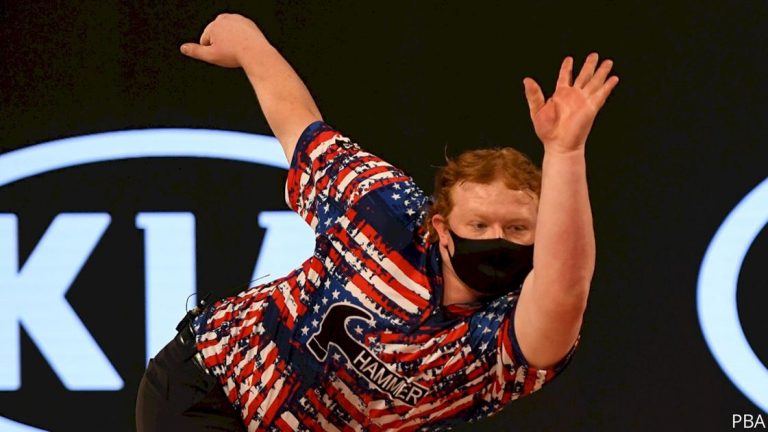
Anthony Neuer became the fourth bowler in 59 years to convert a 7-10 split on television. Photo: PBA

By Fred Cromartie, Ed.D. |

Yes, I am writing about a very rare accomplishment in the sport of bowling. Some might come at me with the argument that bowling is not a sport, but let me simply state that bowling is a major sport business and a sport with many leagues and tournaments played around the world. Bowling tournaments are held locally, regionally, nationally and globally, they have prize money for winners and tournaments and bowlers have sponsorships and many tournaments are televised. 

I’ll admit that I have watched bowling tournaments on TV often and happened to see the converted rare 7-10 split accomplished by Anthony Neuer (“Ginger Assassin”) of Lewisburg, Pa., in April. The 18-year-old converted a 7-10 split—the game’s most difficult spare—during a U.S. Open semifinal match in Reno, Nev. The feat was broadcast on Fox Sports, and it was just the fourth time in history that a professional bowler hit a 7-10 split during a televised event.  

Even in professional bowling (tenpins), the best bowlers in the world with a 15-pound ball when faced with struggle with a formation those of us who have bowled have encountered before: the 7-10 split. Also called “goal posts” or “bed posts,” this is when the back left and back right pins are left standing after the first shot.

Televised 7–10 spares are far more rare even than televised 300 games. In the history of televised bowling, there have been 32 perfect games on TV. The 7-10 is only converted about 0.7 of the time by professional bowlers.  Some bowlers say the 7-10 split is one of the hardest shots in the game.

I for one will remember the time I watched Anthony Neuer the “Ginger Assassin” make bowling history.

Dr. Cromartie is the Director of Doctoral Studies at the United States Sports Academy.

Softball at Birmingham 2022 World Games to Take Place at Hoover Met

0
Softball at Birmingham 2022 World Games to Take Place at Hoover Met
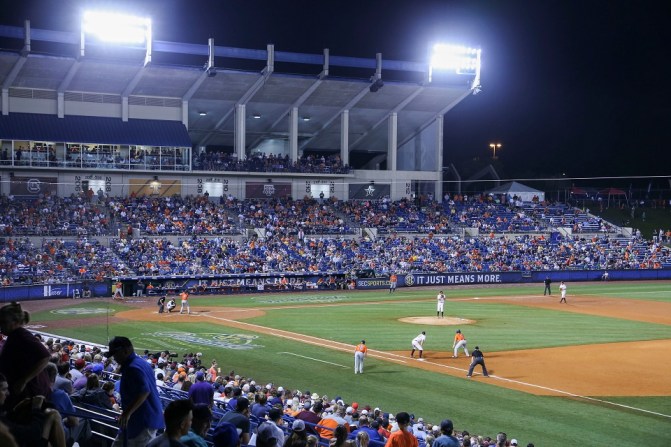
Hoover Metropolitan Stadium in Hoover, Ala. Courtesy photo

By Mike Rowbottom |

The softball competition at the Birmingham 2022 World Games will take place at the Hoover Metropolitan Complex, organisers have announced.

Opened in 1988 in Hoover, the largest suburb of Birmingham in Alabama, the Hoover Met can accommodate up to 16,000 fans.

The stadium currently serves as the host of the collegiate Southeastern Conference’s (SEC) annual Baseball Tournament and is the permanent home of Hoover High School American football games.

It was also a minor league baseball venue for more than two decades.

“The World Games 2022 will be the first major international sporting event on American soil with full venues again, and one of the most anticipated competitions on our program will be the softball games at the Hoover Met,” said Nick Sellers, chief executive of The World Games.

“We’re excited to crown both a gold medal winner for The Games as well as a world softball champion in this incredible park.

“The US Women’s Team heads to Tokyo soon to pursue gold in the Summer Olympic Games.

“And they will return to compete for gold right here.

“We expect tickets to sell fast.”

The winner of the women’s softball tournament at Birmingham 2022 will be declared world champions by the World Baseball Softball Confederation.

Hoover Mayor Frank Brocato added: “The World Games will be an incredible opportunity for all of us in the Birmingham-Hoover Metropolitan Area to show what a great place this is to live, work, play and visit.

“I’m so grateful the City of Hoover has the opportunity to be a part of this fantastic event.

“We have worked hard to establish ourselves as a great venue for events like the SEC Baseball Tournament.

“I believe a big part of our appeal at the Hoover Metropolitan Complex is the great experience the players, coaches and fans have, and we fully intend to duplicate that great experience during The World Games.”

Former Alabama softball star and Team USA member Haylie McCleney said she is thrilled for the opportunity to compete for her country, just miles from her hometown of Morris, Alabama.

“I’m excited to show off our sport even more in my home state, so close to my hometown,” McCleney said.

“It is going to be an exciting opportunity to compete at the highest level.

“Sports fans in Alabama are among the best in the world, and I have no doubt it will create an environment unlike any other when we compete for a championship in 2022.”

Republished with permission from insidethegames.biz.