Home Blog Page 59

German Olympic Sports Head Calls Coronavirus ‘Greatest Threat’ to Tokyo 2020

1
German Olympic Sports Head Calls Coronavirus ‘Greatest Threat’ to Tokyo 2020
Photo: AP

By Nancy Gillen |

German Olympic Sports Confederation (DOSB) President Alfons Hörmann described coronavirus as the “greatest threat” to the Tokyo 2020 Olympic and Paralympic Games.

The outbreak of coronavirus, which has now infected at least 4,500 people around the world and killed 106 people in China, has already forced a number of sporting events to be moved from the country. 

Hörmann described the crisis as the “greatest threat” to Tokyo 2020 at a Chinese New Year’s celebration at Frankfurt’s Römer, as reported by Spox

“This is a serious problem because there is no other area in life that lives more from international exchange than sport,” Hormann said. 

He did point out there had been a similar situation before the Rio 2016 Games with the spread of zika, however, and this was solved.

The Japanese Government today confirmed the first case of coronavirus in the country, a bus driver who drove two groups of Chinese tourists from Wuhan last month.

Seven people in Japan are now known to have been infected. 

Next month’s Asian Indoor Athletics Championships, scheduled to be held at Hangzhou, has been moved out of China. 

The International Basketball Association announced its Women’s Olympic Qualifying Tournament for Tokyo 2020 is to be moved from Foshan in China to Belgrade in Serbia, while the Women’s Olympic Football Tournament Tokyo 2020 Asian Qualifiers Final Round – Group B has been moved out of China to Sydney in Australia.

Chinese ice hockey clubs from the Supreme Hockey League have been told to play their home games in Russia due to the outbreak of coronavirus.

World Athletics are facing increased pressure to make a swift decision on the future of the World Athletics Indoor Championships, due to take place in Nanjing in China in March.    

Republished with permission from insidethegames.biz.

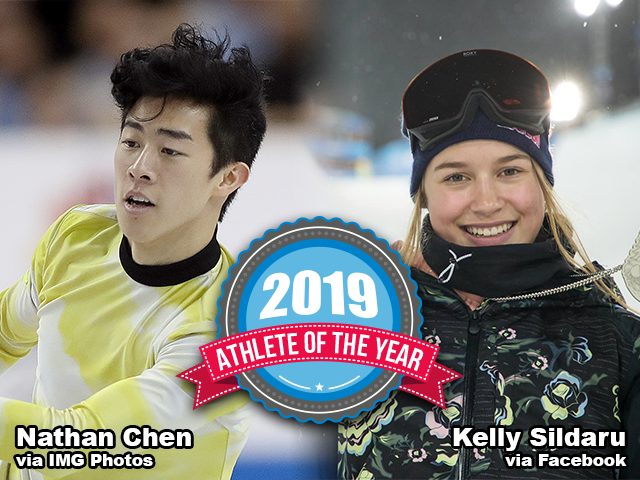
Nathan Chen, Kelly Sildaru are the Academy’s 2019 Athletes of the Year

0
Nathan Chen, Kelly Sildaru are the Academy’s 2019 Athletes of the Year
United States Sports Academy graphic

By United States Sports Academy |

Following an online voting period that garnered thousands of votes from all corners of the world, American figure skating superstar Nathan Chen and Estonian freestyle skiing sensation Kelly Sildaru were selected as the United States Sports Academy’s 2019 Male and Female Athletes of the Year.

Chen became the first American man since 1984 to win back-to-back world championships. Chen also won his third consecutive ISU Grand Prix Final and captured championships at the Internationaux de France and Skate America. He also won his third consecutive U.S. title, smashing the record for the highest margin of victory at 58.21 points. Chen started 2020 by winning his fourth consecutive U.S. title.

At age 16 Sildaru became the youngest freestyle skiing halfpipe world champion of all time when she won gold in the event at the International Ski Federation (FIS) Snowboard, Freestyle and Freeski World Championships in Utah on 10 February 2019. Sildaru completed the first-ever switch 1080 performed by a female skier and won with a high score of 95.00 points. Sildaru also won gold, silver, and bronze in ski events at the Winter X Games in Aspen, Colo., in January 2019.

The male runner-up was Argentinian soccer star Lionel Messi and third place went to Norwegian biathlete Johannes Thingnes Boe.

Messi won the Ballon d’Or, soccer’s most prestigious individual prize, for a record sixth time in 2019. Messi scored 54 goals for Barcelona and Argentina and became Europe’s top scorer for the third consecutive season.

Boe finished the 2019 biathlon season with a clean sweep of World Cup titles in sprint, pursuit, mass start and in the overall standings. Boe won gold in the sprint, relay, mixed relay and single mixed relay events at the International Biathlon Union (IBU) World Championships in Osterund, Sweden, in March.  Boe also started the 2019-2020 season with a run of three victories in 10 kilometer sprint and 12.5 kilometer pursuit events in December.

The female runner-up was American gymnast Simone Biles and third place went to American swimmer Regan Smith.

Biles won five gold medals at the 2019 FIG World Championships in Germany, improving her career total to a record 25 world medals. During the competition, she completed two skills never performed by a female gymnast in competition: a double-double dismount on beam and a triple-double on floor. She also became the first woman since 1952 to win six U.S. all-around titles.

Smith broke Missy Franklin’s 2012 world record in the women’s 200-meter backstroke with a time of 2:03.35 at the 2019 FINA World Aquatics Championships in Korea in July. Smith also swam the backstroke leg in the 4×100 medley relay and set a world record in the 100-meter backstroke in that event.  She was named USA Swimming’s Breakout Performer of the Year.

The Athlete of the Year awards are the culmination of the Academy’s yearlong selection process through which outstanding accomplishments of men and women in sports from around the globe are recognized. Each month, the public is invited to participate in the Academy’s worldwide Athlete of the Month program by nominating athletes and then voting online during the first week of every month.

The Athlete of the Year Award is part of the United States Sports Academy’s Awards of Sport program, which each year serves as “A Tribute to the Artist and the Athlete.”The Academy presents the awards to pay tribute to those who have made significant contributions to sport, in categories as diverse as the artist and the athlete in several different arenas of sport.

The awards honor exemplary achievement in coaching, all-around athletic performance, courage, humanitarian activity, fitness and media, among others. The Academy’s American Sport Art Museum and Archives (ASAMA) annually recognizes these men and women through its Sport Artist of the Year, Honorary Doctorates, Medallion Series, Distinguished Service Awards, Outstanding Athletes, and Alumni of the Year awards. This is the 35th year of the Academy’s Awards of Sport program.

The United States Sports Academy is an independent, non-profit, accredited, special mission sports university created to serve the nation and world with programs in instruction, research and service. The role of the Academy is to prepare men and women for careers in the profession of sports.

Founded in 1984, ASAMA is dedicated to the preservation of sports art, history, and literature. The ASAMA collection is composed of more than 1,800 works of sport art across a variety of media, including paintings, sculptures, assemblages, prints and photographs. The museum is open free to the public from 9 a.m. to 4 p.m. weekdays. For more information, go to www.asama.org.

The Academy is based in Daphne, Ala.  For more information, call (251) 626-3303 or visit www.ussa.edu.

Paying Respect to Basketball Legend Kobe Bryant

0
Paying Respect to Basketball Legend Kobe Bryant
Apr 8, 2016; New Orleans, LA, USA; Los Angeles Lakers forward Kobe Bryant (24) reacts against the New Orleans Pelicans during the second half of a game at the Smoothie King Center. The Pelicans defeated the Lakers 110-102. Mandatory Credit: Derick E. Hingle-USA TODAY Sports

By Dr. Brandon Spradley |

The National Basketball Association (NBA) and the entire world lost one of the greatest basketball players to ever play the game. Kobe Bryant, a 5-time NBA champion with the Los Angeles Lakers was found dead from a helicopter accident on Sunday, January 26, 2020.

Bryant was one of nine people who died when the helicopter crashed on a hillside in Calabasas, California. Also in the crash was Bryant’s 13-year old daughter Gianna. Our thoughts and prayers go out the Bryant family after this tragic news. It is also important to give our condolences to the family members of the other seven victims who lost their lives.

This is certainly a surreal moment for all of us who had the pleasure of watching Kobe over his 20-year career. At age 41, he was at a point in which he transcended basketball, becoming a global icon who was admired and respected by many people across the globe. 

Most of the current players in the NBA looked up to Kobe as a role model when it came to the sport of basketball. Nicknamed the Black Mamba, Kobe inspired players of all ages with his competitive drive and fearless attitude, which was eventually coined as “the Mamba Mentality”. Even as a 17-year old kid coming into the NBA out of high school, he was known as a fierce competitor and relentless worker. Kobe was destined for greatness.

Here is a simple reminder of just how great Kobe Bryant was as a basketball player. He is the only player in NBA history to have two numbers retired by the same team. Kobe won three NBA titles wearing No. 8 and two more titles wearing No. 24 before retiring in 2016. Let us pay respect to Kobe, his family, and all of the family and friends that lost a loved one from this tragic accident.

Dr. Brandon Spradley is the Chair of Sports Management and an Associate Professor at the United States Sports Academy.

New USOPC Agreement ‘Professionalizes’ Athletes’ Advisory Council

0
New USOPC Agreement ‘Professionalizes’ Athletes’ Advisory Council
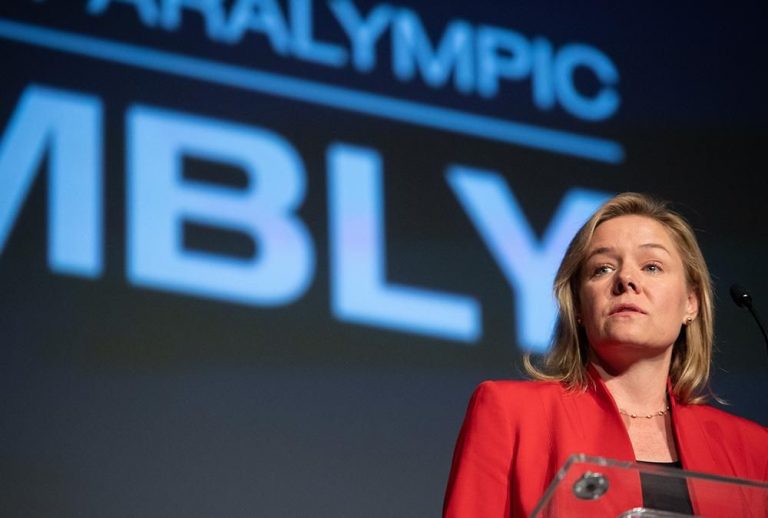
USOPC chief executive Sarah Hirshland. Photo: USOPC

By Mike Rowbottom |

The power and influence of athletes on the running of the United States Olympic & Paralympic Committee (USOPC) was extended today, with the signing of an agreement guaranteeing the Athletes’ Advisory Council (AAC) “professional, independent operational support.”

USOPC will provide AAC with an initial annual budget of $525,000, and will increase the budget 2 percent each year.

According to a USOPC release, this will provide “professional, independent operational support to enable the AAC to more effectively and professionally advise the USOPC on behalf of US Olympic and Paralympic athletes.

“The Memorandum of Understanding (MoU) provides the AAC financial and administrative resources, envisions the hiring of an executive director and gives the AAC full autonomy regarding the allocation of its budget and personnel.”

The MoU was signed by AAC Chair Han Xiao and the USOPC chief executive Sarah Hirshland.

“This agreement is another important step in our ongoing efforts to place athletes at the heart of everything we do,” Hirshland said.

“The input and feedback of the athlete community must guide our organizational decision-making and these resources will enhance that communication process.

“I’m grateful to Han Xiao and the entire AAC leadership team for their continued collaboration.

“A professional staff to assist the elected, volunteer leadership of the AAC will enable athletes to more effectively advise our team on an increasingly diverse and complex set of issues and policies and ensure that athletes’ needs and voices are well-represented.”

According to the USOPC, the funding will support staffing, projects and travel for the AAC, which will also have access to internal USOPC administrative services.

“This commitment from the USOPC to provide resources to professionalise the AAC has the potential to be an incredibly significant moment in the history of the organisation,” Xiao said.

“Today’s elite athletes are facing more numerous and complex issues than ever before, which means that the AAC must evolve and adapt to provide robust voice and representation for those athletes moving forward.

“This agreement is an important step towards that goal.

“We would like to thank Sarah Hirshland for engaging us in earnest and productive conversations that led to this exciting development, and we look forward to using our new resources and staff in the coming years to better serve the athletes we represent.”

The MoU, signed by Hirshland and Xiao, is initially effective through to December 31 2024, and will be annually reviewed by the AAC and USOPC.

The MoU follows a 2019 restructuring of the USOPC internal organisation as part of the most sweeping governance reforms in nearly two decades, underscoring a commitment to athlete representation, athlete safety and governance best practice.

Republished with permission from insidethegames.biz.

Developing Your Coaching Philosophy

1
Developing Your Coaching Philosophy
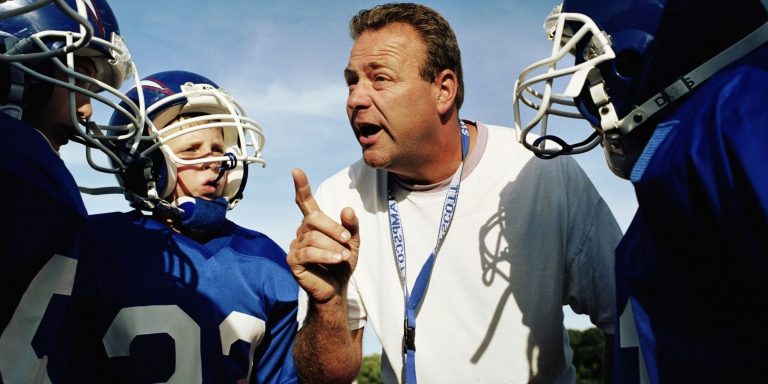
Coach talking to pee wee football team. Photo: https://footballscoop.com/

By Dr. Michael J. Hahesy |

“Coaches who can show moves on the mat are a dime a dozen!  The good ones, the ones who win, the best ones, can get inside their players heads and motivate them to bigger and better things both in sports and more importantly in life.”

After being a coach for many years, I am starting to wonder how many drills, wrestling strategies, and practice plans I have stored in my brain. I have given hundreds of pre-game speeches, wrestled and coached in countless matches, and spent too many hours in the wrestling room to even begin to count.  Through all of my experiences, both the good and the bad, I have gradually developed my own coaching philosophy.  In addition, I’ve come up with six questions to ask oneself when developing a coaching philosophy.

#1 – Can you live this philosophy?  It’s easy to create a philosophy that looks good on paper, but is it realistic?  Are you prepared to stand by this coaching philosophy with the same level of integrity on the last day of the season as you were on the first day of tryouts?  Can you hold the best kid and the worst kid to the same standard?

#2 – Does this philosophy align to a value statement?  All coaches are tied to some organization; mine is and has always been an academic institution. If your coaching philosophy goes against the values of that institution, are you willing to adapt your approach?

#3 – Does this philosophy reflect the goals of your athletes or team?  Knowing the type of athlete or team that you will be coaching is important.  If you can present a coaching philosophy that aligns with your athletes’ goals, it will be easier to get their buy-in.

#4 – What have you learned from past experiences?   I have been so fortunate in my wresting experiences to have been coached by some of the greatest wrestling coaches in history – Ron James, Dan Gable, J Robinson, Chuck Yagla, Mark Johnson, Keith Mourlam, Mike DeAnna, and Bruce Baumgartner and many other assistants.  My philosophy is not mine at all, but rather a combination of what I’ve learned from these coaches.

#5 – Can you change with the times?  I remember my first year of coaching one of the highly successful local coaches told me the following “these damn kids anymore, they are lazy, don’t work hard, and they just don’t listen”.  I didn’t know what he was talking about then but I do now.  Times have changed, but did he?  You must be open to evolving with the times and adjusting your coaching philosophy accordingly.

#6 – Develop a relationship with your athletes!  In order to reach your athletes you must develop a relationship with them.  “Remember, they don’t care how much you know until they know how much you care”.  Open up to your team – let them get to know you and make an effort to get to know them.

Dr. Michael J. Hahesy is an Assistant Professor at Edinboro University of Pennsylvania and the head wrestling coach at Erie Cathedral Preparatory High School. He is also a member of the United States Sports Academy’s national faculty, credentialed to teach the institution’s post-seconary, non-degree programs overseas.

Armour: NFL Wraps Up 100 Year Celebration with Super Bowl Featuring Future

0
Armour: NFL Wraps Up 100 Year Celebration with Super Bowl Featuring Future
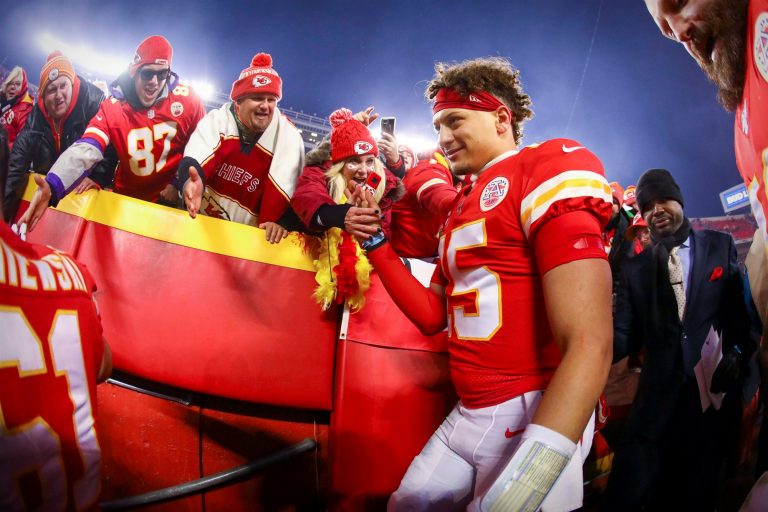
Kansas City Chiefs quarterback Patrick Mahomes (15) celebrates with the fans as he leaves the field after defeating the Houston Texans in the AFC Divisional Round playoff football game at Arrowhead Stadium on Jan. 12, 2020. Photo: Jay Biggerstaff / USA Today Sports via Reuters

By Nancy Armour |

There’s no better way for the NFL to wrap up its celebration of its first 100 years than by showcasing its future.

The Kansas City Chiefs and the San Francisco 49ers might not have been the Super Bowl matchup anyone expected when the playoffs began. Certainly not when the season began. But it’s fitting in this, the 100th season of the NFL, the Super Bowl will feature the game’s best young quarterback in Kansas City’s Patrick Mahomes and its best young defensive player in San Francisco’s Nick Bosa.

“I knew I wanted to be in this moment,” Mahomes said of what he learned from falling short in last year’s AFC title game, “being able to play for this game to get to the Super Bowl.”

The NFL is driven as much by its star players as its marquee teams. And for much of the last 20 years, it has been in the very capable hands of Peyton Manning, Tom Brady, Drew Brees, Aaron Rodgers and Russell Wilson. But eras inevitably end, and the looming void has been hanging over the NFL’s head the last few seasons.

If this year has shown anything, however, it’s that the NFL will be just fine.

Mahomes is the reigning MVP, and now has the chance to become the first player to win the MVP and a Super Bowl title before he’s 25. Every Chiefs game features at least one, “Did he really just do that?” moment, be it his four touchdown passes in the second quarter last week or his 27-yard twisting, tightrope-walking TD run Sunday.

“The best quarterback in the National Football League right there, baby,” Chiefs tight end Travis Kelce said. “And he shows it every time.”

Bosa, meanwhile, has energized a 49ers franchise that won all of four games just last year. The No. 2 pick in the draft, he had quarterbacks across the league looking over their shoulders with nine sacks, an interception and two recovered fumbles. He was the only rookie named as a starter for the Pro Bowl.

In the NFC championship, the Packers still had a chance to make a game of it, trailing by just a touchdown late in the first quarter, when Bosa snagged Rodgers by the ankle on third-and-seven and spun him to the ground for a 13-yard sack. Though there was still plenty of game left, it felt as if it was already over, and by halftime it was.

“Bosa has definitely been a difference maker,” 49ers coach Kyle Shanahan said last week. “I’m very glad we have him. I don’t wish 4-12 on anybody, but after going through it, it’s nice what it brought us.”

It is not hard to imagine Mahomes and Bosa, along with Baltimore Ravens quarterback Lamar Jackson, as the poster boys of the NFL for the next decade. And just as Brady and Manning’s recurring rivalry bolstered their star power, so, too, will Mahomes and Bosa facing each other, the best being tested by the best, the one’s ability a measure of the other’s.

But unlike Brady and Manning, who played each other almost every season from 2001 to 2015 and met four times in the AFC championships, Mahomes and Bosa are only assured of playing each other once every four seasons. The only way they’ll see each other in the postseason is in the Super Bowl, heightening the stakes for the Feb. 2 game in Miami.

It isn’t just on the field where the NFL could be – should be – getting a glimpse of its future. While much will be made about Shanahan reaching the Super Bowl at 40 and the young wave of coaches, it is coordinators for both the 49ers and Chiefs who deserve notice.

Robert Saleh, San Francisco’s defensive coordinator, and Eric Bieniemy, Kansas City’s offensive coordinator, are not only the architects of the best units in the NFL but also as responsible as anyone for the development of their team’s young stars. And yet, because both are minorities, they have repeatedly been passed over for head coaching jobs in favor of white candidates with thinner resumes.

This whole season has been focused on the NFL’s glorious past. If this Super Bowl is a preview, its future can be even better. 

This article was republished with permission from the original author and 2015 Ronald Reagan Media Award recipient, Nancy Armour, and the original publisher, USA Today. Follow columnist Nancy Armour on Twitter @nrarmour.

Experiential Learning at the 2020 College Football National Championship

0
Experiential Learning at the 2020 College Football National Championship
Photo: Robert L. Herron

By Craig DeAngelis and Robert L. Herron |

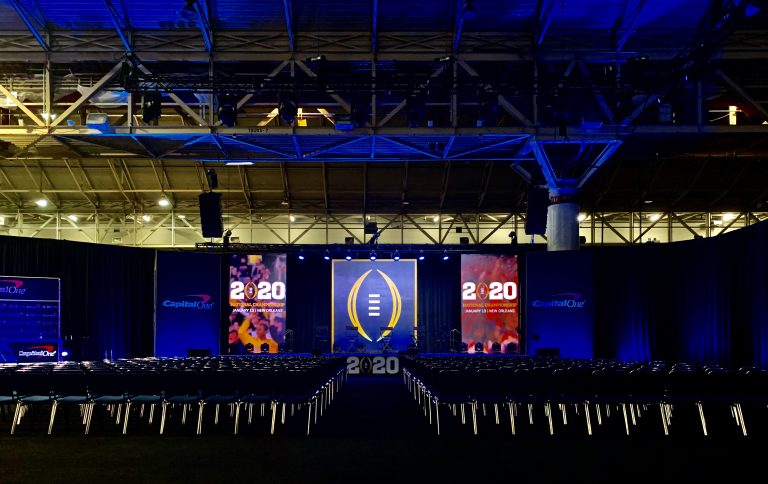
On a typical weekend, the city of New Orleans offers steamboat rides on the Mississippi, access to eclectic street performers, a number of Bourbon Street entertainment options, and some of the best food in the world.  Last week, the city also played host for the 2020 College Football Playoff Championship game, which featured a highly anticipated matchup between the Tigers of Clemson and the Tigers of LSU. However, for a group of students at the United States Sports Academy, the city of New Orleans became a classroom – of sorts – as it offered a first-class, experiential-based learning experience for those interested in working in sports.

Academy students worked as part of the Greater New Orleans Sports Foundation’s Host Committee team, which provided support to a number of nationally-prominent events over the course of the weekend. Students of the Academy were actively engaged with operational logistics during the pre-game concert series sponsored by AT&T, experienced Media Day, and acted in support of the three-day fan fest held at the New Orleans Convention Center. Additionally, after attending training sessions, Academy students participated in front of house hospitality efforts as well as with other miscellaneous CFP initiative-based assignments in and around the Mercedes-Benz Superdome for the duration of the contest (i.e., Playoff Green, etc.).

The Academy provides comprehensive-content knowledge to students through each course offering. But being part of the Host Committee afforded our Academy learners a chance to experience large-scale event operations in a pressure-filled, practical fashion. Burtrue Harris, a student completing his undergraduate degree and made the trip all the way down from New York, on his experience, “I had a lot of fun and it was a great learning networking opportunity.”  The experiential learning, which took place over the course of the weekend, serves as an important supplement to the learning which takes places in the online classroom. For our students, fundamental concepts were tested in real-world settings thus providing an opportunity to develop further knowledge, skills, and experience that will benefit them in their careers. Additionally, the experience served as a valuable, professional-networking opportunity.  We encourage students to seek and get involved in similar opportunities when possible. 

Craig DeAngelis is a former teacher, coach, and athletic administrator who is currently a faculty member at Manhattanville College.  Craig is a doctoral candidate at the United States Sports Academy.  [email protected]

Robert L. Herron is a faculty member at the United States Sports Academy.  Robert is a Certified Strength and Conditioning Specialist® with distinction from the National Strength and Conditioning Association (NSCA-CSCS*D®) and a Clinical Exercise Physiologist through the American College of Sports Medicine (ACSM-CEP®). [email protected]

Discovering the Cultural Elements of Martial Arts

4
Discovering the Cultural Elements of Martial Arts
Photo: https://www.master-sh-yu.com/articles/benefits-of-martial-arts-training-for-adults/

By Holly Park, MS, M.Ed. |

Martial arts within the United States is one of the largest markets for youth and adult extracurricular activities. No matter where you live, it is likely that a martial arts academy is accessible to you. Martial arts offers many valuable and unique tenets to help with focus, strength, perseverance, self-defense, and confidence, which contribute to overall moral character and behavior.

As a 4th degree black belt in Taekwondo and former Instructor and academy owner, I have found myself in many situations where students of martial arts cannot describe their art correctly and often use incorrect terminology to describe what they practice. The fact that they cannot distinguish one martial art from another indicates that either they have not been taught correctly or that they just didn’t pay attention during their instruction. One of the benefits of practicing martial arts is that it is infused with the cultural from which it originated. Karate, Taekwondo, Jiu Jitsu, Muay Thai, Kung-fu, Krav Maga, and Tai Chi are a few of America’s favorites. However, many of the cultural elements have gotten lost in the for-profit business culture that has overwhelmingly swept through the nation. Many students attain high ranks within a discipline without even knowing proper terminology or historical elements that define and cultivate the unique traditions of each style.

A common mistake is referring to all martial arts as “Karate,” the place of training as “Dojo,” instructors as “Sensei,” and uniforms as “Gi.” These are Japanese terms that are associated with Karate only. Students of Taekwondo should know that they practice a style of traditional Korean martial arts and therefore should use the proper Korean terminology. Taekwondo students should refer to their place of training as “Dojang,” uniforms as “Dobok,” instructors as “Sabeum.” Counting and commands within the training facility should also be reflective of the proper cultural language of the art. Most martial arts originate from languages other than English, so it is important to learn from an instructor who has also studied the language, since most transliterations differ from person to person. Blackbelt Wiki offers a listing of common marital arts terminologies.

The culture and history behind a martial art is one of the things that makes it unique and each has an advantage that should be known and highly regarded by individuals practicing the art. Students of martial arts should have pride in their style and preference of art and taking the time to learn history and culture will strengthen the student as well as connect them to the values that each discipline is built upon. Students who take time to reflect of the core values of the art they practice will be much more successful in our global society.

Gillen: Is Rapinoe the Biggest Threat to Political Neutrality at Tokyo 2020?

0
Gillen: Is Rapinoe the Biggest Threat to Political Neutrality at Tokyo 2020?
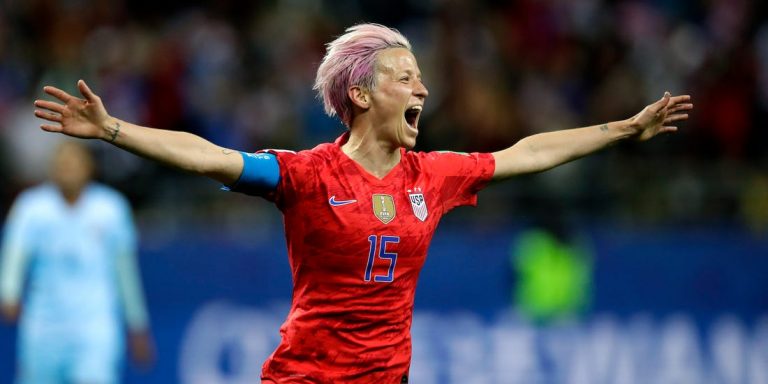
Megan Rapinoe. Photo: Alessandra Tarantino/AP

By Nancy Gillen |

The International Olympic Committee’s (IOC) stance on political neutrality and podium protests has caused something of a stir recently.

Much has been discussed and written on the subject, encouraged by President Thomas Bach’s repeated words of discouragement to athletes thinking of promoting a political message at Tokyo 2020.

Any athlete that show anything other than political neutrality could face punishment, apparently. The response to this has been disparaging, condemning the IOC for such a seemingly hypocritical stance.

Even for those in agreement with the IOC, the furore has now created an atmosphere which will see everyone wait with bated breath each time an athlete stands atop a medal podium during the three weeks of the Games.

It is the question that is not going to disappear in the now seven-month lead-up to Tokyo 2020 – will an athlete go against the repeated warnings of the IOC and stage a podium protest?

Sixty per cent of insidethegames readers think there will be one, according to a poll we are currently running. I would be intrigued to see the response if asked whether they had a particular athlete in mind.

To stage such a protest, an athlete would have to be unafraid of making political statements or headlines and comfortable going against those in charge. At the same time, it will need to be an athlete who is likely to achieve a significant amount of success at Tokyo 2020. 

Athletes will only be able to stage an effective protest if they have the platform and the eyes of the world on them.

My own answer came to me as I was scrolling through Twitter at the height of the reaction to the IOC’s latest warning. I saw yet another post from an athlete criticising the organisation’s stance. The athlete in question was American footballer Megan Rapinoe.

Rapinoe had posted an image of the five Olympic rings, each encircling a clenched fist.

“So much being done about the protests. So little being done about what we are protesting about. We will not be silenced,” Rapinoe had written below. 

It had completely slipped my mind that Rapinoe is likely to be competing at Tokyo 2020. What’s more, she could very easily be standing on top of the podium for the women’s football competition.

The United States are yet to book a place at Tokyo 2020, but should easily win the CONCACAF Olympic Qualifying Championship beginning later this month. Once at the Olympics, the four-time winners are the firm favourites, having claimed the world title just last year in France.

And of course Rapinoe. Rapinoe, with her shock of pink hair, who refused to visit President of the United States Donald Trump at the White House after their World Cup triumph. 

Her statement on social media was as uncompromising as always, and suggests the IOC may really have something to worry about with Rapinoe. 

Before we even get to the question of a podium protest, Rapinoe has refused to sing the American national anthem before every match since 2016. This is in support of compatriot Colin Kaepernick, who takes the knee during the national anthem to protest alleged racism and police brutality in the US. 

As Rapinoe’s words suggest, it does not sound like she is going to have a change of heart just for the Olympics. If she continues to refuse to sing the national anthem at the Games, this constitutes a political protest. 

To make the situation worse, the group stage of the women’s football competition begins on July 22, two days before the start of Tokyo 2020. The IOC could have a protest on their hands before the Games even get under way properly.

And what could the organisation even do? The reason I forgot that Rapinoe would be at Tokyo 2020 is because the majority of her career is completely separate from the Olympics. 

Unlike a lot of athletes, for which the Olympics are the pinnacle of their career, the Games is just one more tournament in a congested four-year cycle of events for Rapinoe. 

She is now 34-years-old and so is unlikely to be playing at Paris 2024. She already has an Olympic gold medal from London 2012. What could the IOC genuinely do to deter Rapinoe from standing up for her beliefs, as she has always done? 

Up until now, Rapinoe has been applauded for her actions, winning countless awards which have as much to do with what she has done off the pitch as on it. 

When receiving such accolades, such as the Ballon d’Or, Sports Illustrated Sportsperson of the Year or FIFA Best Player of the Year, Rapinoe has again used her platform to speak out on issues important to her. She also took the opportunity to encourage her fellow athletes to do the same. 

“We have a unique opportunity in football, different to any other sport in the world, to use this beautiful game to actually change the world for better,” Rapinoe said at the FIFA Best award ceremony. 

“That’s my charge to everyone. I hope you take that to heart and just do something. Do anything.”

The footballer is celebrated for being so outspoken, and this will not change for the Olympics. Any punishment directed towards Rapinoe is likely to incur criticism for the IOC. 

Her actions may also give fellow athletes courage to take a stand, potentially triggering a domino effect that could see the IOC’s attempt to eradicate politics from the Olympics crumble.

I will be watching Rapinoe earnestly throughout Tokyo 2020. The IOC have inadvertently created her biggest platform yet, and she is sure to take advantage of this.     

Republished with permission from insidethegames.biz.

Nightengale: Rose Supports MLB in Astros Scandal, Wonders if Players Should be Punished

1
Nightengale: Rose Supports MLB in Astros Scandal, Wonders if Players Should be Punished
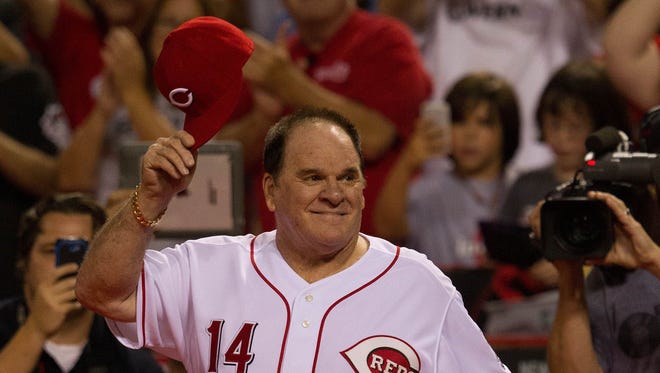
Pete Rose. Photo: USA Today Sports

By Bob Nightengale |

Pete Rose, banned from baseball 30 years ago, doesn’t believe the Houston Astros’ cheating scandal will dramatically change his fate.

Commissioner Rob Manfred isn’t going to suddenly pick up the phone, tell him the Astros’ antics were far worse than gambling on his own Cincinnati Reds team, reinstate him and make him eligible for the Hall of Fame.

Still, his supporters can’t help but wondering how Rose can be suspended for life when not a single player from the Astros will be disciplined in this scandal that rocked the baseball world.

“I understand the gambling in baseball, and I was wrong, absolutely wrong,’’ Rose told USA TODAY Sports Tuesday in a 45-minute telephone interview. “There are no similarities in these two cases. The only thing is that we both got in trouble. We both made mistakes.

“I came along too early and paid a bigger price.

“Still, don’t you have to do something to those players?’’

Cheating in baseball, Rose concedes, has been going on since the day he put on a baseball uniform. Teammates flashed signs from second base to home plate, stole signs from third-base coaches, and picked up pitchers’ pitches.

Hitters used corked bats. Pitchers scuffed baseballs. And players used performance-enhancing drugs.

Now, we’ve gone to the electronic age of cheating.

“People today are still finding ways to break rules,’’ said Rose, baseball’s hit king.

Rose praised Manfred for his penalties against the Astros, particularly the one-year suspensions of Astros GM Jeff Luhnow and manager A.J. Hinch, with Astros owner Jim Crane doubling down and firing them.

“When you screw around the integrity of baseball,’’ Rose said, “baseball is going to come down hard on you. They came down hard on me. They came down hard on them.

“I’m always willing to give people a second chance, but integrity-wise, who’s going to hire these guys? The manager probably won’t find another job. The same with [Boston Red Sox manager] Alex Cora, too.’’

“They can say all you want that they weren’t part of it, but that’s a reflection of the manager. I would think if the manager tells these guys to stop doing it, they would stop. I don’t understand why he didn’t.’’

Rose still can’t fathom how sophisticated the cheating was with the Astros. It boggles his mind teams had enough time to steal the sign electronically, let someone in the dugout know, relay the pitch to the hitter, all in a matter of seconds.

“With the Astros doing this, do we really believe they are that much smarter than everyone else? You don’t know if this is going on in a number of cities.’’

Perhaps the most encouraging aspect of the Astros’ scandal, Rose says, is that Manfred and the MLB investigative team did something about it. It was a huge help that Oakland A’s pitcher Mike Fiers told about the Astros’ scheme to The Athletic, but when Rose played, he said cheating was largely ignored.

“We played a game against the Astros once with Mike Scott pitching, and we took 19 balls out of the game,’’ Rose said. “Well guess what, 17 of them had scratches in the same spot because he was scuffing the baseball.

“We sent all of the balls to [MLB] and they didn’t do anything about it.’’

Now, there is more at stake.

Baseball is an $11 billion industry. Baseball is an official gaming partner with MGM.

Managers must send in their starting lineups to the commissioner’s office, which is distributed to MGM sporting books. Official scorers are advised to make quick scoring calls. Everyone can gamble on baseball with the exception of its employees.

That, of course, has never changed.

“Take my word, you don’t want baseball investigating you,’’ Rose said.  “I hope everything comes out well for baseball, I really do.’’

Who knows, with so many players implicated in performance-enhancing drug investigations and now the Astros’ scandal, maybe there’ll come a day Rose will be forgiven.

“I don’t look for that to happen,’’ Rose, 78, said. “I’ve got no animosity towards the commissioner. But if it happens, it better happen in a hurry. I’m running out of time.

“You can only live so long in this world.

“Really, I’m on borrowed time right now.’’

This article was republished with permission from the original publisher, USA Today. Follow Bob Nightengale on Twitter and Facebook.